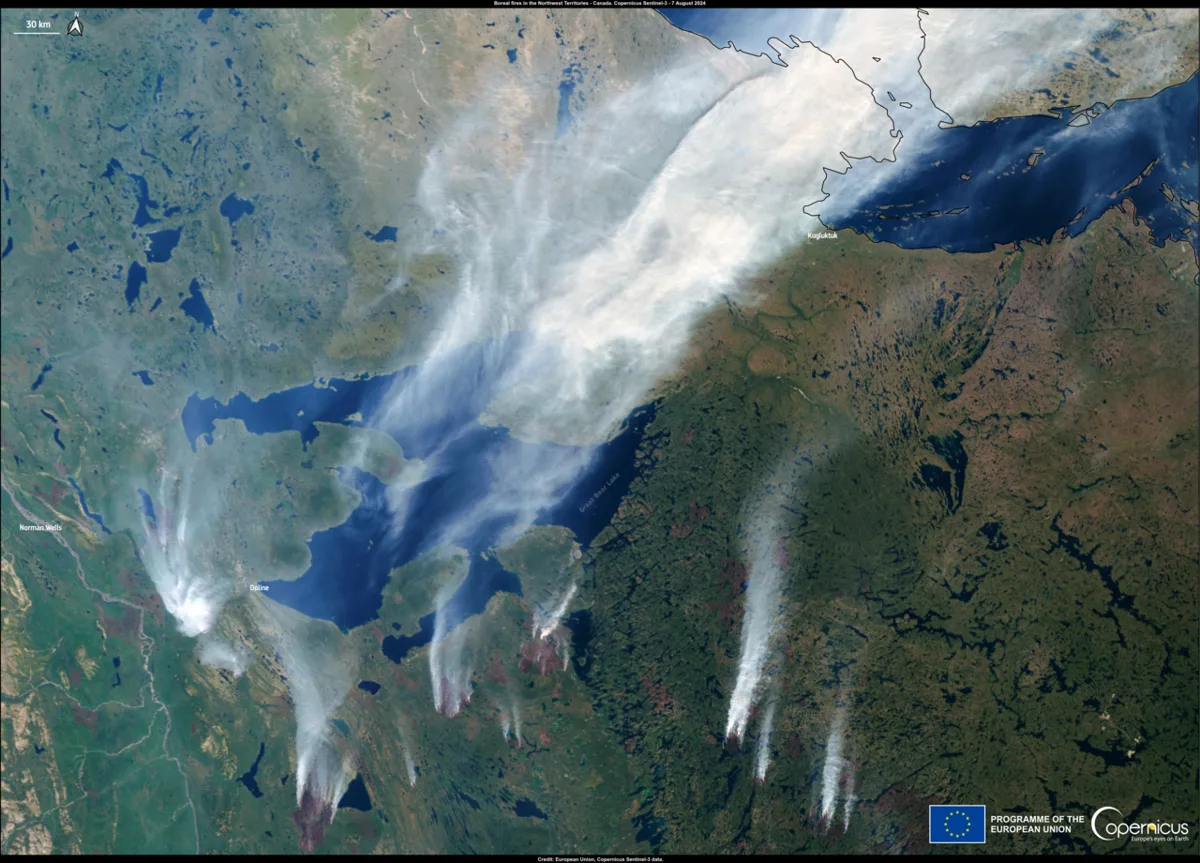
Fires are ripping through the hills around Spokane, Washington right now, and the Trump administration would like you to know that everything is totally fine. The U.S. Forest Service announced this week that it has exceeded its wildland firefighter hiring targets for the summer, which sounds reassuring until you remember that the same agency quietly lost 6,000 permanent staff to layoffs, buyouts, and early retirements since Trump took office.
The Numbers They Want You to See
According to NPR, the Forest Service told the agency this week that 11,550 seasonal staff are now either in training or ready to deploy. That's about 200 more than their initial target and roughly 6% ahead of schedule compared to recent years. Forest Service Chief Tom Schultz is crediting recent pay raises for wildland firefighters with driving those solid hiring numbers.
Schultz told NPR, quote, "I think the conditions we have are alarming. But the Forest Service will be prepared for this season." Good. Great. Love the confidence. Now let's talk about everything else.
The Numbers They'd Rather You Ignore
Here is where it gets uncomfortable. As NPR reports, the Trump administration has presided over the loss of close to 6,000 permanent Forest Service employees since January 2025. Those are rangers. Timber technicians. Scientists. People with institutional knowledge of specific forests, specific terrain, specific fire behavior patterns built up over careers. Gone.
The agency is also in the middle of a massive reorganization, which includes relocating its headquarters to Utah and shutting down or consolidating dozens of research facilities and regional offices around the country. The administration's stated logic is that it wants the agency physically closer to the forests it manages. The actual effect is that it has spent the most dangerous stretch of the fire season turning the agency inside out.
The Red Card Problem No One in Washington Wants to Talk About
Here is the part that should genuinely alarm you. A significant but uncounted number of those 6,000 departed permanent employees held what are called red cards, as NPR explains. A red card isn't just a credential. It means that person, whatever their normal job title, was trained and certified to drop everything and deploy to an active wildfire when things got bad enough.
When you lay off a ranger or a timber technician, you're not just losing their day-to-day function. You're losing a trained firefighter who exists in reserve. That's the reservoir that fills in during a catastrophic season when demand for bodies on fire lines overwhelms the seasonal workforce. Washington state's elected public lands commissioner Dave Upthegrove told NPR directly: "If we have a bad year for fire throughout the United States it could mean a shortage of these federal teams. We are preparing contingency plans." Contingency plans. In June. With fires already burning.
States Are on Their Own and They Know It
Upthegrove, who oversees public lands for the state of Washington, isn't hedging when he talks about what the federal downsizing means on the ground. He told NPR that the layoffs at the federal level "are presenting risk as to our ability to respond to major wildfires." His specific concern is about elite incident command teams, the highly specialized federal units that states rely on when fires scale beyond local capacity.
Those teams draw from the permanent federal workforce. The same workforce the Trump administration has spent 18 months hollowing out. Washington state is already drawing up contingency plans because it has apparently done the math and does not love what it came up with.
Meanwhile, NPR reports that Western states are historically dry right now, and fast-moving wildfires are already igniting in and around populated areas near Spokane. This is not a theoretical future risk. This is happening today.
Seasonal Hires Are Not a Substitute for Institutional Capacity
The Forest Service's argument, essentially, is that seasonal hiring numbers are up and pay has improved, so the critics should relax. But seasonal firefighters and permanent staff are not interchangeable parts. Seasonal hires are brought in every year specifically for fire suppression during peak season. Permanent staff are the connective tissue of the agency, the people who know the forests year-round, manage the relationships with local governments, conduct prescribed burns in the off-season, and yes, hold red cards for surge capacity during disasters.
Hitting your seasonal hiring target after gutting your permanent workforce is a little like a hospital announcing it hired plenty of traveling nurses for the summer after firing half its doctors. The seasonal numbers look fine. The underlying capacity is a different question entirely.
The Dingo Take
The Trump administration spent a year and a half running a chainsaw through one of the federal agencies most directly responsible for keeping Western communities from burning down, and its response to criticism is to point at a seasonal hiring spreadsheet. That is the move. That is the whole play. Look at this number. Don't look at the other number.
What makes this particularly maddening is that the people raising alarms aren't environmentalists or Democratic senators. They're state public lands commissioners who have to actually manage these emergencies, and former agency employees who know exactly what institutional knowledge walked out the door with those 6,000 people. Upthegrove isn't speculating about political optics. He's telling you his state is already building contingency plans because he doesn't trust that the federal cavalry is coming if things go sideways this summer.
Wildfires near Spokane are burning right now. The West is historically dry. And the agency responsible for coordinating the federal response to catastrophic fire has spent the last year relocating its headquarters, shutting research stations, and processing separation paperwork for thousands of people who held red cards. If this summer gets bad, and the drought maps suggest it absolutely might, we're going to have a very direct test of whether a staffing spreadsheet is the same thing as being prepared. The communities in the path of those fires will find out the answer before anyone in Washington even checks their phone.



Comments