New documents suggest the Trump administration's attempt to strip legal protections from more than 330,000 Haitian immigrants was, according to lawyers for those immigrants, a "preordained outcome" that career DHS staff actively warned against. Lawyers filed a motion Tuesday asking the Supreme Court to throw out the whole case until a full investigation is complete. The internal paper trail, apparently, is not flattering.
What TPS Is and Why It Exists
Temporary Protected Status is not a loophole or a gray area. Congress created it in 1990, specifically to protect people who cannot safely return home because of natural disasters or civil unrest. It is a legal program with a legal process. You apply, you qualify, you stay.
Haiti has held TPS designation since 2010, the year a catastrophic earthquake killed more than 200,000 people and, as NPR has reported, left the country to contend with roving gangs, cholera outbreaks, and the complete absence of a functioning government. Those conditions have not meaningfully improved. The 330,000 Haitians currently protected by TPS are not hiding in the shadows. They are here legally, under a program that exists because their home country is, by almost any measure, not safe to return to.
The Administration Wanted the Answer Before It Asked the Question
Here is where things get genuinely ugly. The motion filed Tuesday by immigrants' lawyers cites new DHS documents that, according to NPR's Nina Totenberg and Grady Martin, contain evidence that "the termination of Haiti's TPS designation was a preordained outcome." Career staff at DHS recommended against ending the designation. A political appointee overruled them. Standard processes were allegedly bypassed.
Read that again slowly. The people at DHS whose job it is to make this call said: do not do this. And someone installed by the Trump administration said: do it anyway. That is not a policy disagreement. That is the conclusion being reached before the review even started, and then the review being performed as theater.
This is also why the lawyers are asking the Supreme Court to pump the brakes. New documents keep surfacing. Discovery is still ongoing. The immigrants' motion argues plainly that "until discovery is complete, the Court lacks a firm factual foundation on which to judge the merits of respondents' claims." You cannot fairly adjudicate a case when the government's internal evidence is still trickling out.
The Supreme Court Stepped In Early, and Now It's Stuck
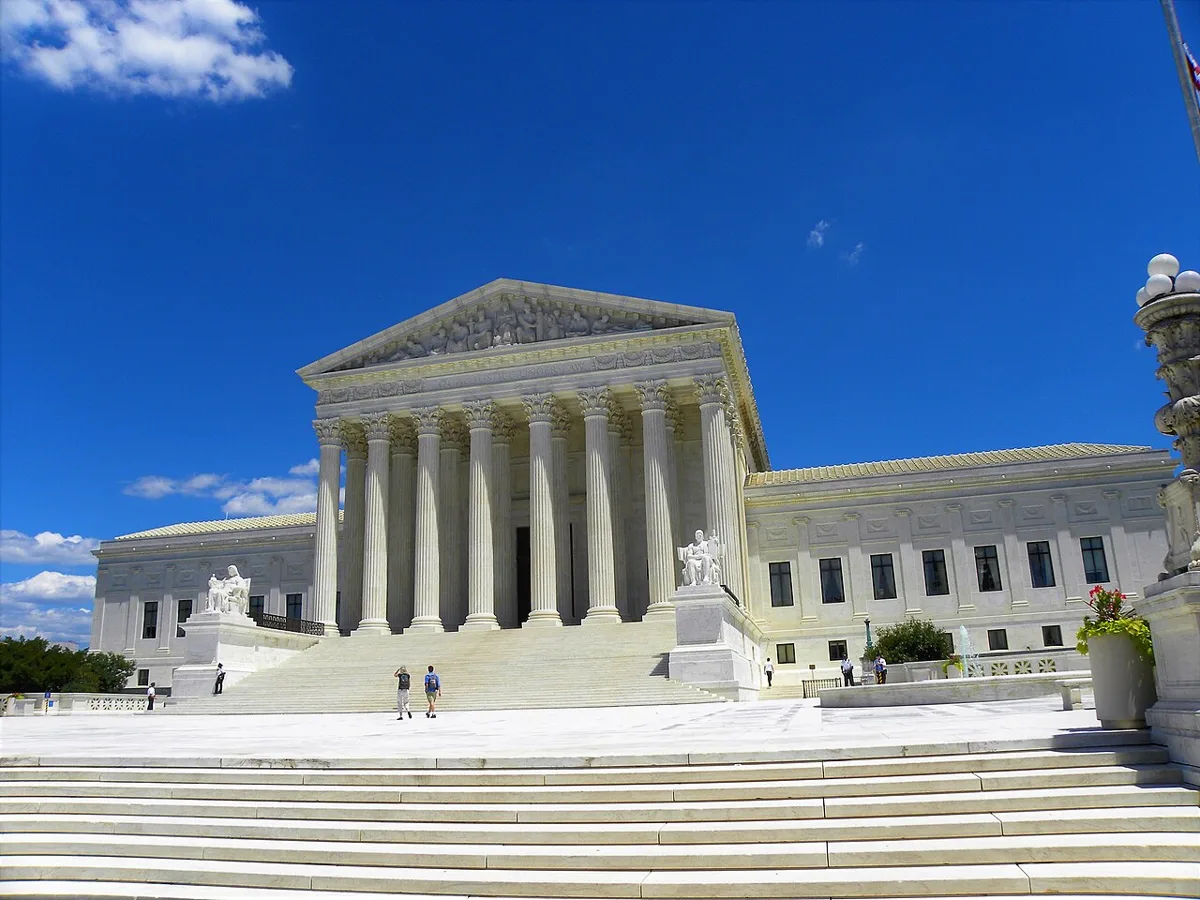
The Court made an unusual procedural choice here. It agreed to take up the TPS case before the lower federal appeals court had a chance to review it. That is not standard practice. The justices essentially skipped a step to get to this faster, and now the factual record underneath the case is shifting.
A decision was expected by the end of June. Whether the new motion changes that timeline is unclear. The Court will almost certainly ask the Trump administration to respond to the dismissal request before doing anything else, according to NPR.
Amy Coney Barrett Asked the Right Question
At oral argument, the administration's position was breathtaking in its simplicity: courts cannot review executive branch decisions about TPS at all. Full stop. The president decides, and no judge gets to check the work.
Justice Amy Coney Barrett pressed solicitor general John Sauer on this, and he blinked. As NPR reports, Sauer conceded that courts can review allegations of racial discrimination. Which is a significant thing to admit, because the Haitian immigrants in this case have made exactly that argument. They argue the Trump administration revoked their TPS because of their race.
So the administration's own lawyer, at the Supreme Court, confirmed that racial discrimination claims are reviewable. And the immigrants' lawyers now say they have new documents suggesting the decision was rigged from the start. You can see why they want more time.
330,000 People Are Waiting for This
It is easy to get lost in the procedural weeds and forget what is actually at stake. More than 330,000 human beings, who came to the United States legally, who have built lives here, who are protected under a law passed by Congress, are waiting to find out if the government can simply decide to remove them because a political appointee overruled career staff and a president does not like where they are from.
Many of these people have been in the U.S. for years or decades. Many have American-born children. Haiti remains, by any serious assessment, dangerous and unstable. The conditions that qualified it for TPS in 2010 have not gone away. They have, in many respects, gotten worse.
The Dingo Take
Let's just be direct about what the new evidence is describing. The DHS career staff, the people who do this for a living and have no particular political stake in the outcome, looked at Haiti's conditions and said: these people should keep their protections. A political appointee said: no. And then the administration went to the Supreme Court and argued, with a straight face, that no court anywhere can second-guess that call. That is not an immigration policy. That is a loyalty test administered to 330,000 people who had the bad luck of coming from a country the president has described with a slur.
The motion to dismiss is a smart legal move, but it is also something more uncomfortable: it is a reminder that we are watching a live document dump in a case that will determine the fate of hundreds of thousands of people. More evidence keeps appearing. The story keeps getting worse for the government. And the Supreme Court, which jumped the line to hear this case faster, is now holding a case whose factual foundation is actively eroding beneath it.
The Court will ask the administration to respond. The administration will say the documents do not mean what they clearly appear to mean. The justices will decide whether 330,000 legally present people get to stay in the country where they have built their lives, or get deported to a country with no functioning government, active gang warfare, and a cholera problem. No pressure.





Comments