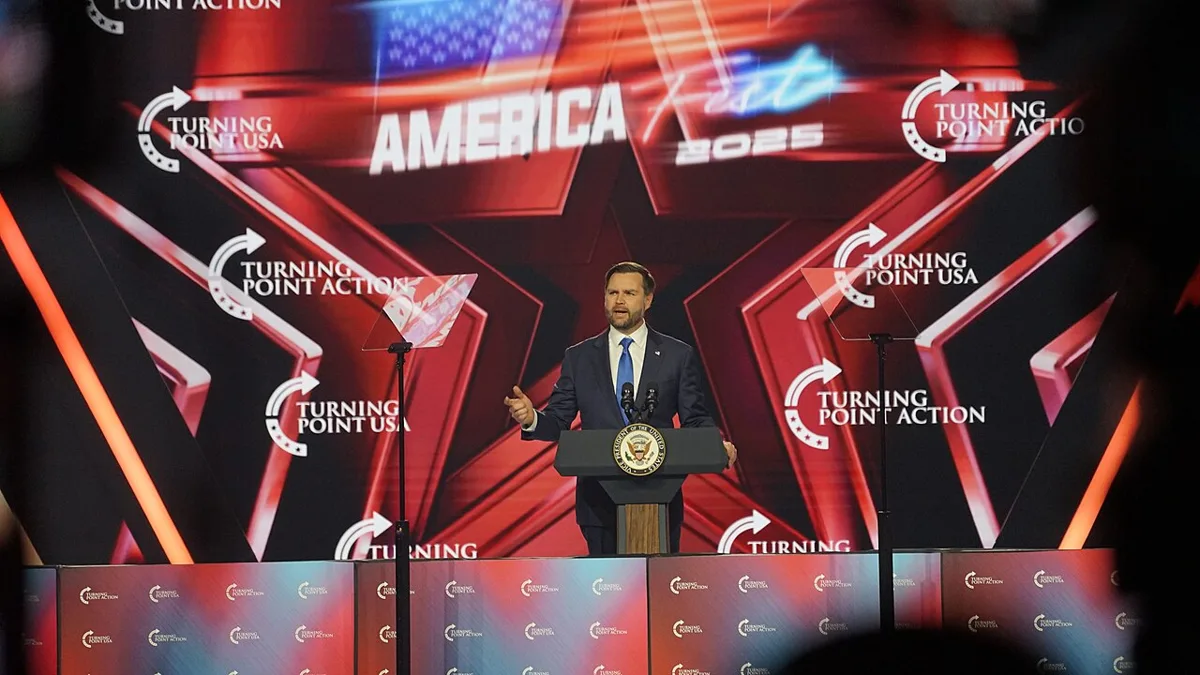
The Vice President of the United States walked up to a podium at the White House, looked into the cameras, and said the quiet part so loud it rattled windows: "Words don't matter, ladies and gentlemen." This was his defense of a diplomatic agreement. A document made entirely of words.
The Man Selling the Deal Doesn't Want You Reading the Deal
JD Vance spent Thursday doing the full White House press offensive, pitching the preliminary ceasefire agreement with Iran as a "win for the American people." According to the New York Times, he was responding to a growing wave of criticism that the deal rewards Iran without actually delivering the core objectives Trump laid out when the fighting started.
The problem, as the Times reports, is that the memorandum of understanding the two sides released Wednesday appears to hand Iran a stack of immediate, concrete benefits. So Vance's strategy was to steer everyone away from the actual text of the agreement and toward a rosier hypothetical future that hasn't happened yet and may never happen.
This is the diplomatic equivalent of a used car dealer telling you not to worry about the Carfax.
'Words Don't Matter' Said the Guy Whose Entire Job is Words
Let's sit with this for a second. The Vice President of the United States, defending a written diplomatic agreement, told reporters: "Words don't matter, ladies and gentlemen. We're about verification."
The New York Times is reporting this as a real thing that was said, by a real person, in the White House, on purpose. Vance was apparently trying to pivot from what the deal actually says to what he insists it will eventually mean. A bold rhetorical move when the document in question is, again, words.
Vance also assured the room that "we have all the cards" and that if Iran doesn't comply with U.S. demands in the next round of negotiations, it's "no skin off our backs." The confidence is remarkable for a man actively downplaying the written terms of the agreement he just signed onto.
There Is Some Actually Good News in Here, Which Makes This Worse
To be fair, and we will be, the deal did reopen the Strait of Hormuz. And according to the Times, oil and gas prices dropped Thursday to levels not seen since the early days of the war. That's real. People will feel that at the pump. The administration deserves some credit for getting there.
The trouble is that Vance is not content to sell the genuine wins. He has to dress it up in claims the Times characterizes as "aspirational, vague and misleading." When you have something real to point to and you still can't stop yourself from overselling, that's usually a sign the real thing isn't quite enough on its own.
What the Next Round of Talks Actually Has to Cover
The Times reports that Vance insisted Iran would gain little if it fails to agree to U.S. demands in the next phase of negotiations, which will involve Iran's nuclear program. That's the main event. The nuclear question was supposed to be the whole point of this confrontation, and it remains unresolved.
So what we have right now is a ceasefire, an open shipping lane, and a promise that the hard part is coming. Vance is betting the American public will bank the gas price relief and not ask too many questions about what Iran got in writing versus what the U.S. is still hoping to get in a future meeting. That bet might even pay off. Americans have a notoriously short attention span for the details of Middle East diplomacy.
But the critics the Times references have a point. Locking in benefits for Iran now, in exchange for goodwill in negotiations that haven't started yet, is a structure that has a pretty mixed track record historically.
Vance's Growing Role as the Deal's Hype Man
The Times notes Vance's "increasingly prominent role" as the public defender of this agreement, which tracks with the broader pattern of the second Trump term. Vance has become the administration's most reliable television presence when something needs explaining to a skeptical audience.
He's good at it, too, which is part of what makes this frustrating. The guy is sharp. He can hold a press conference. He can construct an argument. Using that ability to tell people that the words in a written agreement are not the point of the written agreement is a choice, and it's not a great one.
The Dingo Take
Here is the actual situation: the Trump administration struck a deal that has real upsides and real concessions to Iran, and rather than defend the tradeoffs honestly, Vance went out there and told everyone that words are basically irrelevant. The Vice President of the United States said that. About a diplomatic document. On camera. In the White House briefing room.
The gas prices are down and that's good. The Strait of Hormuz is open and that's good. If the next round of negotiations produces something on Iran's nuclear program, that would be genuinely significant. But none of that requires lying about the deal you just made. The decision to spin this into a triumphant total victory rather than a complicated first step is going to make the next round of talks harder, not easier, because Iran also watched that press conference.
"Words don't matter" is the kind of line that follows a politician for the rest of their career. And it should. Because when the guy negotiating with a nuclear-adjacent adversarial state tells you words don't matter, the only rational response is to ask: then why are we writing any of this down?


Comments