A federal judge has ordered the release of the president of Wisconsin's largest mosque, finding that immigration officials almost certainly arrested him not because he was dangerous, but because he said things the Trump administration didn't like. Salah Sarsour, a legal permanent resident for nearly 30 years, lost 30 pounds in ICE custody while the government scrambled to justify why it had grabbed him in the first place. Marco Rubio personally signed the memo that set this whole thing in motion.
Ten Unmarked Cars for One Mosque President
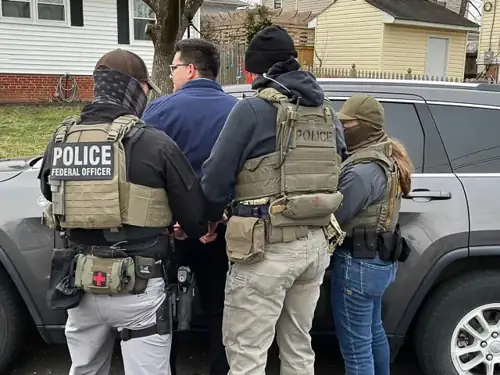
On March 30th of this year, a group of plainclothed ICE officers poured out of at least 10 unmarked vehicles and swarmed Sarsour, arresting him and shipping him to Clay County Jail in Indiana. He had lived in the United States for more than three decades. He held a green card. He had no pending criminal charges.
The government's case against him, as The Guardian reports, rested on two convictions from his youth in Israel, more than 30 years ago, one for throwing a Molotov cocktail and one for attempting to store weapons. Sarsour denies committing those crimes. More to the point, US District Judge James Patrick Hanlon noted that the federal government has known about those convictions since the 1990s, approved his legal permanent residency anyway, and later approved his citizenship application too. They just never got around to actually issuing citizenship, which is the only reason he was even deportable on paper.
The government's sudden rediscovery of three-decade-old charges from a foreign country lands somewhere between legally embarrassing and operationally absurd.
Rubio's Memo and the Heritage Foundation Blueprint
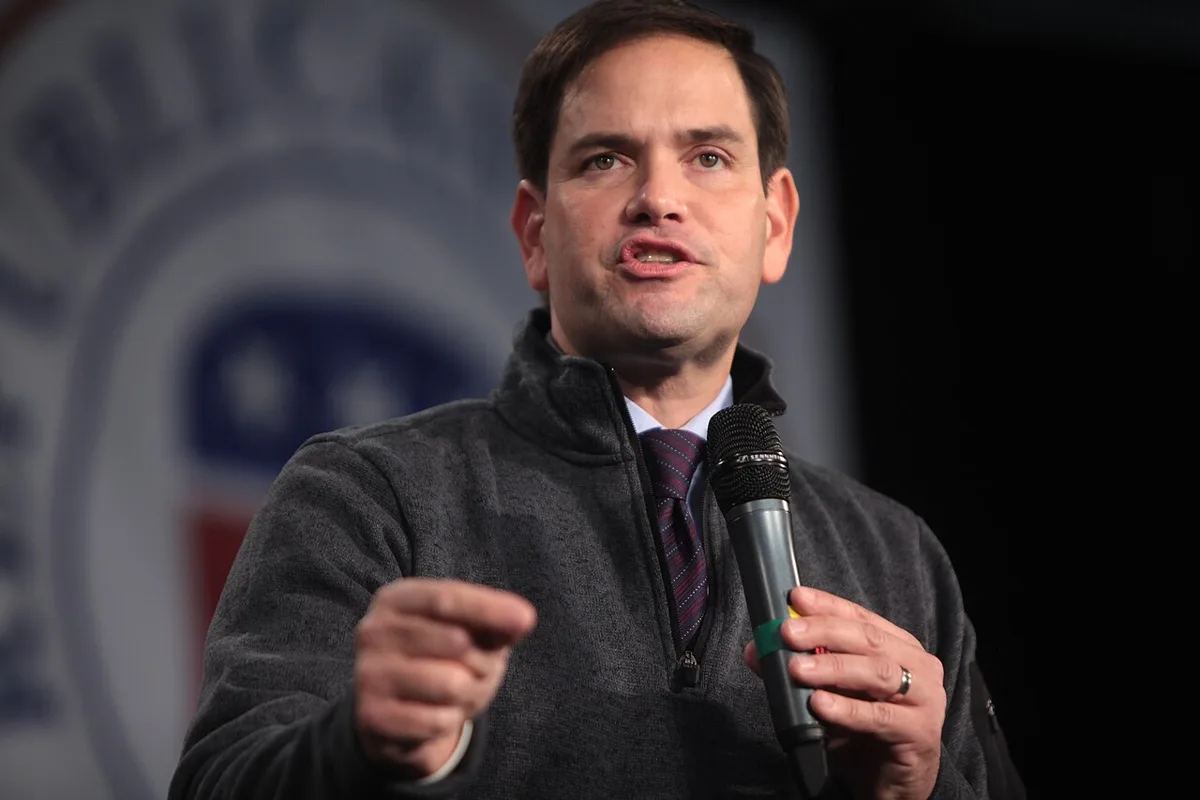
Here's where it gets uglier. Rubio personally signed a memo to the Department of Homeland Security describing Sarsour as deportable despite his green card, on the grounds that "his actions undermine US foreign policy to combat antisemitism around the world." The memo also accused his advocacy group, American Muslims for Palestine, of "being found to have been involved in activities providing funds to Hamas."
Judge Hanlon's order cites both a New York Times story and, remarkably, the Heritage Foundation's own website in explaining where this strategy came from. According to that reporting, the Heritage Foundation, the conservative think tank behind Project 2025, presented the White House with a plan to target prominent foreign-born Muslims and Palestinian rights leaders, painting them as terrorists in order to deport them, sue them, or pressure their employers to fire them. Sarsour was likely among the intended targets of that campaign, the order says.
So to recap: a think tank wrote a plan to destroy the lives of people advocating for Palestinian rights. The Secretary of State signed off on it. ICE showed up with ten vehicles. A man lost 30 pounds in jail. And a federal judge had to step in and say, out loud, in a written order, that this is not how the United States is supposed to work.
Diabetic, Detained, and Checked Once a Month
While Sarsour sat in Clay County Jail, his lawyers told the court he was "at constant risk of developing serious complications from diabetes" because medical staff checked his blood sugar levels only once a month. Anyone who has managed diabetes, or knows someone who has, understands what that means. Proper diabetes management requires checking glucose levels multiple times daily. Once a month is not medical care. It is a liability waiver with a pulse.
He lost 30 pounds during his detention. His family was separated. And the government's position, maintained through its lawyers, was that he should stay locked up or at minimum pay a $25,000 bond, wear an ankle monitor, check in regularly with ICE, and stay confined to his home.
The Judge Wasn't Having Any of It
Judge Hanlon ordered Sarsour released on personal recognizance. No cash bond. No ankle monitor. He has to stay in Wisconsin, but he goes home to his family.
The order is direct about what happened here. Sarsour's speech on Palestinian rights, Hanlon wrote, "is core political speech and squarely within the scope of the First Amendment." The evidence allowed "a reasonable inference" that his protected speech was "at least a motivating factor" in the decision to detain him. That is a federal judge saying, in plain language, that the government arrested a man for his opinions.
A DHS spokesperson responded to the ruling by calling Sarsour a "terrorist" and pointing back to the decades-old Israeli convictions. The same convictions the government knew about when it gave him a green card. The same convictions it knew about when it approved his citizenship application. Right.
What His Lawyers Said
"Salah Sarsour, who has lived in this country for more than three decades and served as a core pillar in his community without any issues, should never have been detained in the first place," his legal team wrote after the ruling, as The Guardian reports. "While we continue to fight these baseless claims in court, today is about celebrating a family being reunited."
They also said something worth sitting with: "If the government can target Mr. Sarsour, everyone's free speech rights are at risk." That is not hyperbole. That is the actual legal logic of what just happened. The government tried to establish that a legal permanent resident could be imprisoned and deported for political advocacy, that First Amendment protections simply do not apply to non-citizens. A judge pushed back. Hard. But the attempt was made, it was coordinated, it was planned at the think-tank level and executed by Cabinet officials, and it will be attempted again.
The Dingo Take
The Trump administration did not accidentally grab the wrong guy here. This was a plan. Heritage Foundation staff wrote it down, presumably in a conference room with decent coffee and good parking. Rubio signed his name to it. ICE sent ten cars. The goal was to make an example of a mosque president who had the audacity to hold public opinions about Gaza, and to signal to every other foreign-born activist in this country that their green card is only as good as their political silence.
The fact that a federal judge stopped it this time is good. It is genuinely good. But the apparatus that produced it is still fully operational. The memos are still being written. The unmarked vehicles are still in the fleet. And the administration has shown zero interest in the distinction between 'this man is dangerous' and 'this man disagrees with us,' because for them, those are the same thing.
Sarsour is home. His family is together. He should not have spent a single day in that jail. The people who put him there still have their jobs, their titles, and their plans for the next person on the list.



Comments