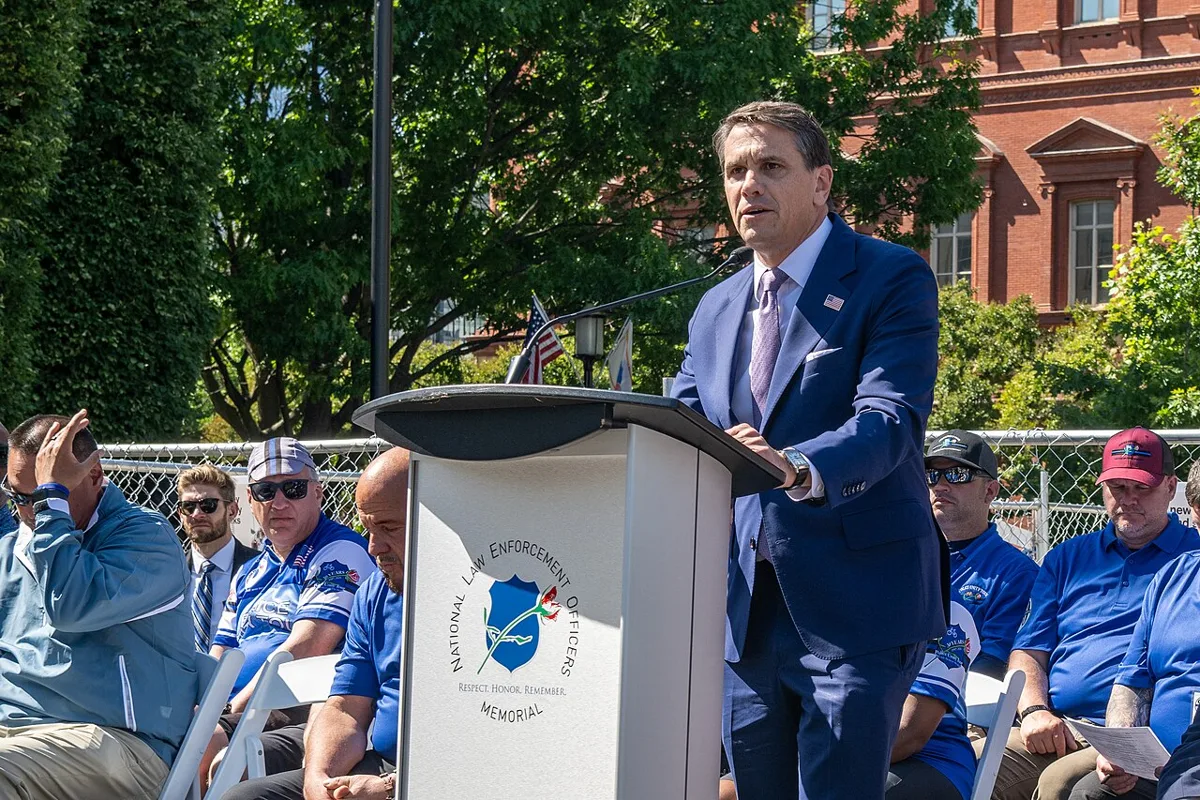
The Trump Justice Department created a $1.8 billion fund, got sued over it, told Congress it was dead, told a judge it was dead, and is now refusing to say any of that under penalty of perjury. Their argument, delivered with apparent sincerity to a federal judge, is essentially: we already said it, so just relax. The judge is not relaxing.
What We're Actually Talking About
Let's back up. The "anti-weaponization" fund was a $1.776 billion program the Trump administration cooked up as part of a settlement in a lawsuit Trump personally filed against the IRS over the leak of his tax returns. As CBS News reports, the fund was supposed to "provide a systematic process to hear and redress claims of others who suffered weaponization and lawfare." In plain English: a nearly two-billion-dollar government fund to pay out people who felt the federal government had been mean to them, with the Trump DOJ deciding who qualifies.
The fund blew up politically almost immediately. Republicans on Capitol Hill got nervous when it became clear that participants in the January 6th attack on the Capitol could potentially collect payments from it. That's the kind of headline that tends to complicate your midterm messaging, so the pressure mounted fast.
Blanche Says It's Dead, Just Not in Writing
Acting Attorney General Todd Blanche told a House committee earlier this month that the Justice Department is "not moving forward with the fund." Full stop. Period. Done. Except, as CBS News notes, he refused to put that commitment in writing, which is a genuinely strange thing to do if you're confident you're telling the truth.
The DOJ has made similar assurances in court filings across multiple cases, including one before U.S. District Judge Leonie Brinkema in Alexandria, Virginia. Brinkema, for her part, has already slapped a preliminary injunction on the fund, blocking the Justice Department from taking any action to create or operate it. That injunction is still in place. The judge isn't impressed by verbal commitments, and she has extremely good reasons not to be.
The Judge Asked for Something Reasonable. The DOJ Said No.
Last week, Brinkema offered the administration a clean off-ramp. Sign a declaration under penalty of perjury, she said, that the fund won't proceed "in any manner, or under any name." Get Blanche, Treasury Secretary Scott Bessent, and Associate AG Stanley Woodward to sign it. Done. Lawsuit potentially moot. Everyone goes home.
The administration's response, filed Friday, was to decline. Senior counsel Andrew Block told the court the declaration is "unnecessary" and that compelling testimony from senior executive branch officials raises "serious separation of powers concerns." He pointed to Blanche's congressional testimony and existing court filings as sufficient proof that the fund is finished. Brinkema had specifically noted that none of those prior statements were made under penalty of perjury. That is not a minor distinction. That is, in fact, the entire distinction.
The Other Side Has Thoughts
Skye Perryman, president and CEO of Democracy Forward, which is representing the plaintiffs in this case, did not mince words. "It is telling that even after the federal court gave them a week, the Acting Attorney General and other senior administration officials continue to refuse to say under oath that the Slush Fund is dead and won't operate in the future," she said in a statement, per CBS News.
The plaintiffs in Brinkema's courtroom include a former federal prosecutor who worked January 6th cases, the city of New Haven, Connecticut, Common Cause, and the National Abortion Federation. These are not frivolous parties bringing a nuisance suit. The lawsuit exists because a multi-billion-dollar government program materialized out of a presidential tax return lawsuit with essentially no congressional authorization, and the people running it won't promise a judge, on the record and under oath, that they won't try to run it again.
Where This Goes From Here
CBS News reports that Brinkema warned the administration directly: if they opted not to file the declaration, the lawsuit moves forward. That's exactly where things stand now. Whether Block's separation of powers argument persuades the judge to drop the case anyway remains to be seen, but the legal logic is a stretch. Courts compel testimony from executive branch officials. It happens. "This feels constitutionally uncomfortable for us" is not traditionally a winning motion.
There are also parallel challenges playing out in Washington, D.C. and California. In one of the D.C. cases, a federal judge declined to temporarily halt the fund's operation, so the administration isn't losing every round. But the cumulative picture is an administration that announced a massive, legally dubious slush fund, watched it detonate politically, claimed it was cancelled, and is now working very hard to avoid being legally locked into that cancellation.
The Dingo Take
Here is the simplest possible way to understand what is happening. If the fund is genuinely dead and gone forever, signing a piece of paper saying so costs the administration absolutely nothing. The only reason not to sign it is if you want to preserve the option to bring it back, under a different name, at a more convenient moment. The DOJ's "separation of powers" argument is a legal fig leaf stretched over what is, in practice, a refusal to be held accountable for a promise they're loudly claiming to have already made.
Blanche told Congress the fund is "not going forward, period." Periods, it turns out, have conditions. The condition is that no one with a gavel gets to hold him to it.
This administration has made a habit of treating judicial oversight as an inconvenience to be worked around rather than a feature of the constitutional system they swore to uphold. A judge offered them the most reasonable possible deal: say what you're already saying, just say it in a way that actually means something. They said no. Whatever happens next in that Alexandria courtroom, that refusal tells you everything you need to know about how dead this fund really is.




Comments