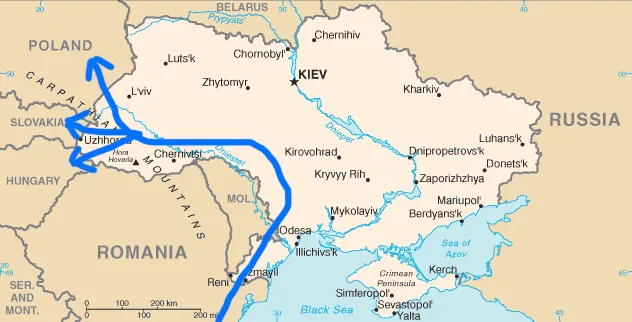
Russia-occupied Crimea just suspended all civilian gasoline sales after Ukrainian strikes created the worst fuel crisis the peninsula has seen since Russia illegally annexed it in 2014. The Kremlin-appointed governor went on social media to tell motorists to stay calm, which is exactly what someone says when things are profoundly not calm. Meanwhile, Ukrainians are calling it their "long-range sanctions" policy, which is honestly a fantastic bit of branding for blowing up oil depots.
No Gas for You, Comrade
According to the Associated Press, Crimea's Kremlin-appointed governor Sergey Aksyonov announced Sunday that gas stations would halt all sales to private individuals and non-state companies for an indefinite period. The only entities allowed to buy fuel are government agencies. Everyone else is just going to have to figure it out.
This did not come out of nowhere. At the end of May, authorities had already restricted sales to 20 liters per vehicle per week, distributed through prepaid coupons on an official messaging app. Those coupons were gone the moment they were released. Motorists sat in line for hours. And that was the manageable version of the crisis.
Now there are no sales at all. For civilians. In a territory Russia has claimed as its own sovereign land for twelve years. Let that sit with you for a second.
What Ukraine Is Actually Doing Here
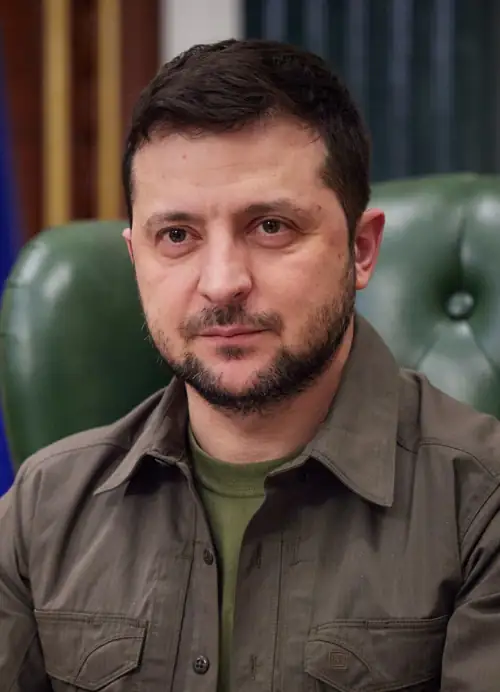
Ukrainian President Volodymyr Zelenskyy confirmed Sunday that overnight strikes hit a Crimean oil depot as well as an oil transport facility in Russia's Krasnodar region. He described the campaign as Ukraine's "long-range sanctions" against Russian energy infrastructure. Per the Associated Press, Russian officials in Krasnodar reported a drone strike that sparked a fire at a Black Sea oil terminal in the village of Chushka, and Ukrainian attacks also struck a ferry, killing one person.
Zelenskyy's framing is worth paying attention to. He's not calling these random military strikes. He's positioning them as economic warfare, as a deliberate campaign to squeeze Russia's ability to fuel its own occupied territories. "Russia understands only strength, and our long-range strength is certainly working for peace," he wrote. It's a cold line, but given the circumstances, it's hard to argue with the logic.
Ukraine has been targeting Crimean fuel supplies for weeks now. The strikes haven't let up. And Russia, for all its bluster about reconstituting a great empire, cannot keep gas in the tanks of the civilians it claims to be liberating.
The Scene on the Ground Is Genuinely Chaotic
NPR reports that social media in Crimea has been flooded with people asking where to find gas and sharing tips on what stations might still have any. Authorities actually launched a hotline specifically for tourists who have found themselves stranded on the peninsula without fuel. A tourist hotline. For people who drove somewhere and can now not drive back.
Some drivers have taken to hauling gas in from Krasnodar across the Kerch bridge, but they are limited to 100 liters per vehicle. And because capitalism finds a way even inside a war zone, speculators have moved in. Fuel is reportedly being sold on the black market at double the normal price. So if you are a Crimean resident right now, your options are: wait in a line that leads nowhere, pay twice the price to a guy who drove it in himself, or walk.
The Kremlin, in what the Associated Press describes as a rare public acknowledgment, has recognized the scope of the problem and promised to fix it quickly. The Kremlin promising to fix something quickly is not exactly a track record that inspires confidence.
A War That Has Now Outlasted World War I
Here is a number that deserves its own paragraph: on June 11, Russia's full-scale invasion of Ukraine reached its 1,569th day. That is longer than World War I lasted. Longer than the war that reshaped every border in Europe, killed seventeen million people, and ended four empires. Russia launched what it called a "special military operation" that was supposed to wrap up in days, and it has now dragged past one of the bloodiest conflicts in modern history.
And where are things? According to the Associated Press, Russia's advances have ground to a near halt. Ukraine, outgunned and outmanned on paper, has spent the last several weeks proving it can reach deep into Russian-held territory and make life genuinely miserable for the people living there. That is not nothing. That is actually a significant shift in what this war looks like.
The Dingo Take
Let's be honest about what is happening in Crimea right now. Russia annexed the peninsula in 2014, promised its residents protection and prosperity under the glorious motherland, and twelve years later those same residents cannot buy a tank of gas. Civilians are rationing fuel with coupons. Tourists are calling a government hotline because they cannot drive home. The governor is on social media begging people not to panic. This is the advertisement for Russian occupation.
Ukraine figured out something that a lot of Western analysts were slow to credit: you do not have to win every battle on the front line if you can make the occupied territory ungovernable and unsustainable. Hit the fuel supply hard enough and often enough, and the story stops being about military gains on a map and starts being about whether Russia can actually hold what it claims to own. Right now, the answer is looking increasingly like no.
The war is 1,569 days old and counting. Russia promised a quick victory and got a grinding nightmare that has now outlasted World War I. Ukraine is blowing up oil depots and calling it sanctions. And in Crimea, which Vladimir Putin called an inseparable part of Russia, people are lining up for gasoline coupons that run out before the line does. This is what a stalemate looks like when one side stops playing defense.


Comments