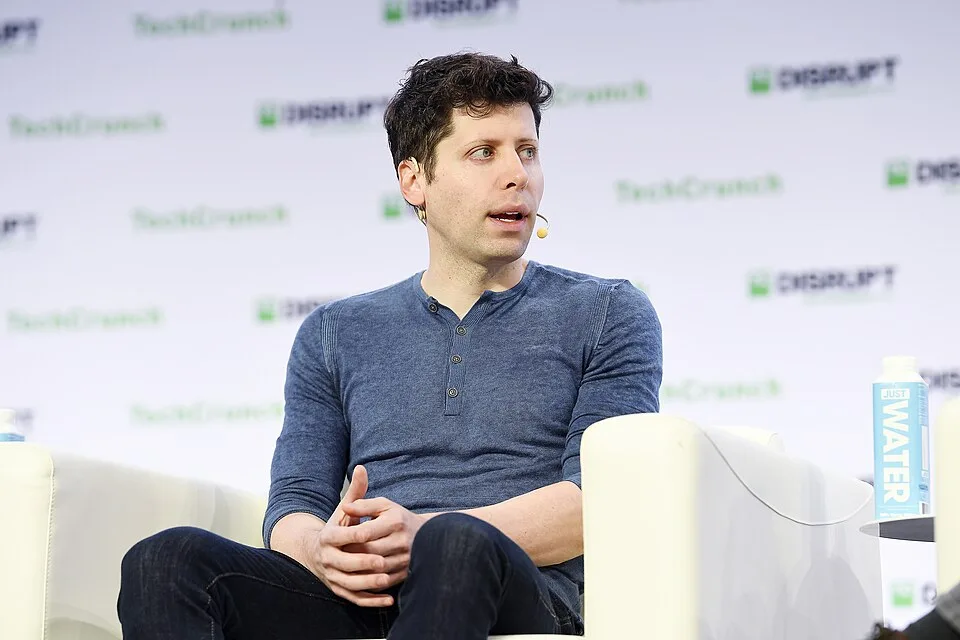
Sam Altman, the guy who spent years telling Congress that AI would save humanity, is now reportedly offering Donald Trump a 5% slice of OpenAI just to stay on the right side of the man. The Financial Times broke the story Thursday, and if you squint at it hard enough, it looks less like a policy proposal and more like a protection racket with better branding.
The Basic Facts, Which Are Somehow Real
According to the Financial Times, Altman met with Trump, Commerce Secretary Howard Lutnick, and Treasury Secretary Scott Bessent to discuss a plan under which OpenAI would hand over a 5% stake to the U.S. government. The catch: Altman says he only does it if Meta, Google, and Anthropic all chip in 5% of their companies too. One big Silicon Valley garage sale, with the federal government as the buyer.
Fox News reports that Altman also sat down with Senator Bernie Sanders, who has proposed that U.S. taxpayers should own up to half of all AI companies. That is a pretty wide gap between Bernie's vision and Altman's offer, but hey, at least they're talking. Two men who could not be more different ideologically, united by the suspicion that the people building the most powerful technology in human history probably shouldn't own all of it.
Trump Is Buying the Country One Company at a Time
Here is some important context the Financial Times provided that Fox News also cited: this is not even close to the first time the Trump administration has bought a stake in a private company. In August 2025, the U.S. acquired a 10% stake in Intel. Before that, it picked up 15% equity in MP Minerals. Then came U.S. Steel, then a handful of quantum computing companies. Donald Trump, the man who spent decades telling you government should get out of business, is now apparently running the largest sovereign wealth fund in American history while filing executive orders between rounds of golf.
The Financial Times pointed out that Trump had previously been critical of Intel and its CEO right up until the government bought in. After that? Smooth sailing. If you're looking for a lesson here, Altman has clearly already learned it.
Altman Is Trying to Buy Political Insurance
Fox News reports that Altman is openly seeking to place himself and OpenAI in Trump's good graces, which, good for him for saying the quiet part out loud, I suppose. The Financial Times piece frames the public stake offer as a way for Altman to avoid the fate of Anthropic, which spent a chunk of time on a Pentagon supply chain risk blacklist before recently patching things up with the White House and getting itself removed.
Both OpenAI and Anthropic are reportedly moving toward going public soon. When your IPO is on the horizon and the federal government has demonstrated that it will either embrace you or blacklist you depending on the mood of one man in Washington, offering up 5% starts to look less like generosity and more like a very rational business decision. That does not make it any less strange.
The 'Good for America' Wrapper on a Corporate Power Play
Altman's stated reasoning, per the Financial Times as reported by Fox News, is that partial public ownership of AI companies is the best way to spread the economic benefits of the sector to ordinary Americans. That is a real argument with real merit behind it. The concentration of AI wealth in a handful of companies, in a handful of zip codes, controlled by a handful of people, is a genuine problem worth solving.
But let's be honest about the full picture here. Altman is not proposing this because he had a midnight epiphany about economic justice. He is proposing it because the alternative, watching the administration cozy up to his competitors while he gets frozen out of government contracts and defense relationships, is worse for his bottom line. Good outcomes can come from self-interested motives. They can also be used as cover for them. This story is probably both things at once.
What the Competitors Have to Say
Altman's 5% offer comes with the condition that Meta, Google, and Anthropic match it, which is a clever move. It lets him look principled rather than desperate, and it puts pressure on rivals who might not want to hand over equity to a government that is already very comfortable with picking corporate winners and losers. Fox News reached out to OpenAI and the White House for comment and had not received a response by publication.
Anthropics' recent rehabilitation with the White House is worth keeping an eye on here. The company went from Pentagon blacklist to renewed government cooperation in what appears to be a fairly short window, which tells you everything about how these relationships actually work. You're either in the club or you're not, and the membership fee is apparently negotiable.
The Dingo Take
Let's call this what it is. The most powerful AI company in the world, run by a man who testified before Congress about responsible development and the existential stakes of artificial intelligence, is now trying to buy its way into a functional relationship with a president who has already demonstrated he will use the federal government's purchasing power as a loyalty test. This is not disruption. This is not innovation. This is old-fashioned Washington influence-peddling wearing a very expensive hoodie.
And the worst part is, Altman might be right. Not right in the principled sense, but right in the practical sense. If the choice is between offering 5% of your company to the government or watching a rival get exclusive defense contracts while you get blacklisted, you hand over the equity and you smile while you do it. The system is producing exactly the incentives you would expect from a system this broken.
The U.S. government is now a stakeholder in chipmakers, steel companies, mineral miners, quantum startups, and possibly soon the company building the AI that might run everything else. Nobody voted on this. Nobody held hearings about whether the executive branch should be acquiring equity stakes in the defining technologies of the next century. It is just happening, deal by deal, meeting by meeting, until one day you look up and realize the most powerful man in Washington does not just set the rules for American industry. He owns pieces of it.



Comments