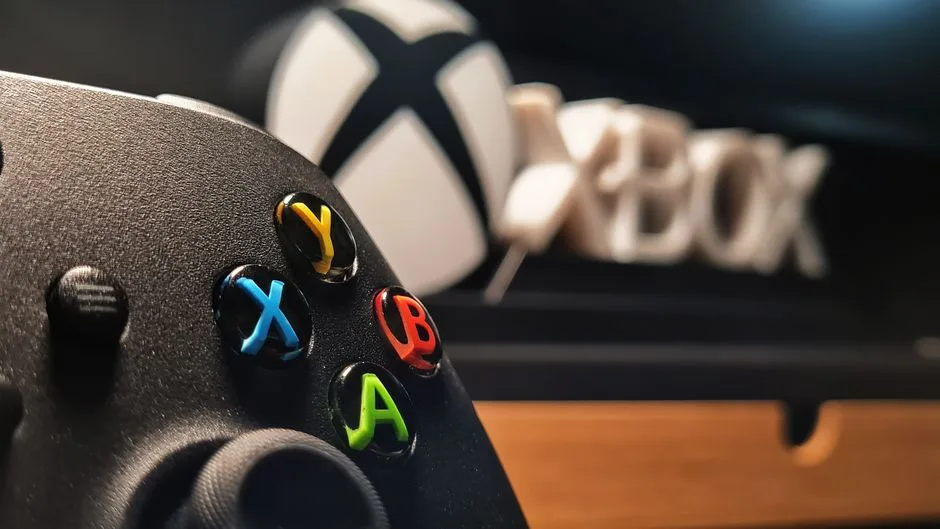
Microsoft's new Xbox CEO just sent a memo to her employees that read, and we are quoting directly here, 'Our business today is not healthy.' Then the company laid off 3,200 people. Nothing like a little corporate candor paired with a mass firing to start your Monday.
The Memo That Launched a Thousand Pink Slips
CBS News reports that Microsoft will cut 3,200 jobs from its Xbox video game division, starting with 1,600 positions eliminated immediately. The remaining cuts come as four studios exit the Xbox unit entirely.
Asha Sharma, the new Xbox CEO who took over the gaming division earlier this year, sent employees a memo that Microsoft then released publicly, which is a bold choice when the memo contains lines like 'we are operating at margins that are 3-10x lower than comparable platform and publishing businesses.' That's not spin. That's a distress flare.
To her credit, Sharma did not sugarcoat it. She admitted that investments in Game Pass, Microsoft's subscription gaming service, and multi-platform expansion grew more slowly than expected. Then, rather than pretending everything was fine, the company did the thing corporations always do when they admit things are not fine: laid off thousands of people who had nothing to do with the executive decisions that made things not fine.
Game Pass Was Supposed to Save Everything
The whole bet Microsoft made on Xbox over the last several years was that Game Pass would become the Netflix of gaming. Pay a monthly fee, get access to a huge library, grow subscribers, profit. It made intuitive sense and the early numbers looked promising enough that Microsoft spent nearly $69 billion to acquire Activision Blizzard in 2023, the largest gaming acquisition in history.
According to CBS News, Sharma acknowledged in her memo that Game Pass and multi-platform services 'have grown more slowly than expected.' That's the polite version. What she is describing is a core strategic thesis that did not pan out the way anyone hoped, while the costs of pursuing it kept climbing.
'As that happened, our core business weakened, and we added more teams, more investment, and more time, hoping for a better outcome,' Sharma wrote. That sentence deserves a moment of silence. That is a CEO describing, with painful clarity, the cycle of doubling down on a failing strategy while hoping the math would eventually change. It did not change.
Oh, and Your Console Just Got More Expensive
In case 3,200 layoffs were not enough bad news for Xbox fans, CBS News also reports that Microsoft announced in June it would raise Xbox console prices starting August 1. The 512 GB model goes up $100 to nearly $500. The 1 TB model climbs $150.
Microsoft cited rising costs of storage and memory components, which is a real thing happening across the electronics industry. That does not make it any less painful for a consumer trying to decide whether a $500 Xbox is worth it when the whole pitch of the platform is also in the middle of an identity crisis.
Sharma's memo referenced 'the most severe hardware crisis in its history' facing the gaming industry. That is a remarkable thing to say out loud. It is also the kind of remark that sounds very different depending on whether you still have a job.
What This Actually Means for Xbox as a Thing That Exists
Here is the question nobody wants to answer directly: Is Xbox still a console business, or is Microsoft quietly turning it into a software and subscription platform that happens to sell hardware as an afterthought? Because those are very different companies with very different futures.
The job cuts, the studio departures, the Game Pass-first strategy, the multi-platform push that puts Xbox games on PlayStation and PC, it all points in one direction. Microsoft may be slowly and awkwardly admitting that the box under your TV is not the point anymore. The problem is they have not come out and said that clearly, so thousands of employees spent years working toward a hardware future the company was already quietly abandoning.
That is not a hardware crisis. That is a leadership and communication failure that eventually became a hardware crisis.
The Dingo Take
Let's be honest about what a memo like Sharma's actually represents. She was handed a broken business, inherited someone else's strategic wreckage, and instead of putting out a press release full of phrases like 'strategic realignment' and 'optimizing for long-term value creation,' she told her employees the truth. That is genuinely unusual in corporate America and deserves at least a footnote of credit.
But the 3,200 people losing their jobs did not make the calls that got Xbox here. The executives who greenlit years of bloated spending, bet the farm on subscriber growth that never materialized, and kept adding headcount to cover for strategy problems they could not fix, most of them are not in this layoff announcement. They rarely are. The people who get cut are almost never the people who made the decisions.
Xbox built an enormous amount of goodwill with gamers over the past decade. Game Pass is genuinely one of the best deals in entertainment when it works. None of that saves you when the business model underneath it is running at margins that are, per the CEO's own memo, up to ten times worse than your competitors. Microsoft has the cash reserves to absorb this and restructure. The 3,200 people who just lost their jobs do not have that cushion. That asymmetry is the actual story here.


Comments