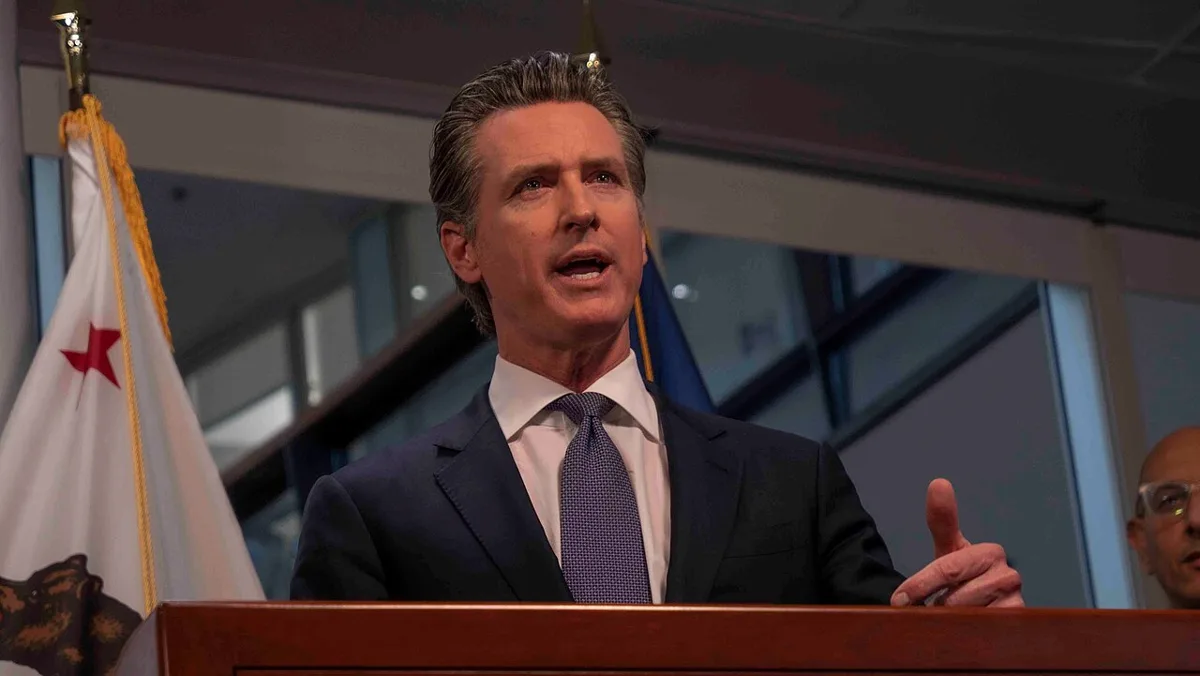
California Governor Gavin Newsom held a big press conference to announce a multimillion-dollar state contract to hand out free co-branded diapers to new parents. That was two months ago. He still won't let you see the contract. CBS California Investigates has been waiting 56 days and counting, and the state's response on the deadline day was an automated email sent at 5:09 pm on a state holiday asking for two more weeks.
The Deal Newsom Won't Explain
Back on May 8, Newsom announced the Golden State Diaper program with the fanfare you'd expect from a governor who is very publicly not running for president but is absolutely running for president. The contract went to Baby2Baby, a nonprofit that already had existing ties to the Newsom administration and the First Partner. Multimillion dollars, millions of California co-branded diapers, new parents across the state.
That announcement came with a press conference. It did not come with the contract. Or the competitive bid records. Or really any documentation at all explaining how this deal was reached, how proposals were scored, or why Baby2Baby specifically got the nod.
Four days after the announcement, CBS California Investigates filed a formal records request. That was May 12. We are now in July. The state has not produced the documents.
A 24-Day Warm-Up Just to Say 'Sure, Fine, You Can See It'
Here is how California handled a simple public records request for a contract the governor himself announced at a press conference. The Newsom administration spent 24 days deciding whether it would even allow the public to see the records at all. Not gathering them. Not reviewing them. Just determining whether Californians were allowed to look.
California law gives agencies a maximum of ten days to notify a requester whether the records are disclosable and provide an estimated delivery date. The state took more than twice that long just to say yes. After that, it asked for 28 more days to actually produce the documents.
On day 28, at 5:09 pm on July 3, a state holiday, CBS California received what appeared to be an automated email informing them the state needed another two weeks. That is the accountability infrastructure of a government that is very confident you will eventually stop asking.
The Law That Would Make All This Even Slower
You might think: okay, California has a transparency problem, but at least there's a legal framework forcing the state to move. Sure. And that framework is currently being weakened in the legislature, right now, as this diaper contract sits in a drawer somewhere.
Assemblymember Blanca Pacheco introduced Assembly Bill 1821, which would extend the existing time windows for agencies to respond to public records requests from calendar days to business days. In its original form, CBS California reports, the bill was even more aggressive: it would have allowed agencies to sue requesters they deemed "malicious" and charge up to $66 an hour to provide public records. That version got ripped apart in committee after pushback from the ACLU, the First Amendment Coalition, Common Cause California, the League of Women Voters, and the Howard Jarvis Taxpayers Association, which is a genuinely remarkable coalition of people who agree on almost nothing else.
The Senate Judiciary Committee stripped the worst provisions before moving it forward. But the version that survived still gives agencies more time to stall. Senate Judiciary Chair Tom Umberg, to his credit, said the quiet part out loud: "People shouldn't have to tell us why they want that information. People shouldn't have to pay to get information from public officials." He said that about a bill his own committee advanced.
What Transparency Actually Looks Like
Ginny LaRoe of the First Amendment Coalition put it as plainly as anyone could. According to CBS California, LaRoe said a multimillion-dollar state contract should have been publicly accessible the day Newsom announced it: "You should have that document in your hands. You should've had it in your hand the day they were talking about it."
Her suggestion: the state should just proactively upload finalized contracts online with basic redactions for personal information. No request required. No 24-day determination period. No holiday-timed automated delay emails. Just the records, where the public can see them, because the public paid for them.
Umberg told CBS California he's open to requiring that kind of automated disclosure. "I think there's a world where we make them do that," he said. Cool. Let us know when that world arrives.
Why This Actually Matters
The underlying controversy here is not really about diapers. It's about a governor who already has a famously cozy relationship with well-connected nonprofits and insider-adjacent organizations, awarding a multimillion-dollar contract to one of them, and then refusing to show anyone the paperwork.
Baby2Baby already had ties to the Newsom administration and the First Partner before this deal. That's not a disqualifier on its own. But it is exactly the kind of situation where competitive bid records and contract terms need to be publicly visible, immediately and without a two-month fight. The whole point of transparency law is to prevent governments from doing favors for their friends and then papering over the process.
Instead, what CBS California's investigation has found is an administration that waited 24 days to confirm records were disclosable, sent a deadline-busting delay notice on a holiday at 5:09 pm, and is operating in a legislative environment actively working to give agencies even more room to stall. That is not a transparency framework. That is the appearance of one.
The Dingo Take
Let's be direct about what's happening here. Gavin Newsom stood at a Capitol podium and announced a public program using public money, given to a nonprofit with existing ties to his own administration. Then, when reporters tried to see the contract behind that announcement, the state spent nearly a month deciding whether that was even allowed, and has now strung CBS California along for over two months with delay after delay, including one dispatched via automated email on a state holiday. If this deal was clean, showing the contract would help Newsom. The refusal to show it does the opposite.
And the legislature's response to all of this is to advance a bill making it easier for agencies to take longer to respond to records requests. The original version of that bill would have let agencies bill you $66 an hour for the privilege of seeing documents your taxes paid for. The coalition that killed those provisions included both the ACLU and the Howard Jarvis Taxpayers Association. When those two groups agree that a transparency bill is an attack on the public, you have managed to write something truly special.
California loves to position itself as the responsible, functional alternative to the chaos machine in Washington. That case gets harder to make when the governor announces a multimillion-dollar contract at a press conference and then spends two months explaining why you can't see it. The diapers are free. The accountability, apparently, costs considerably more.



Comments