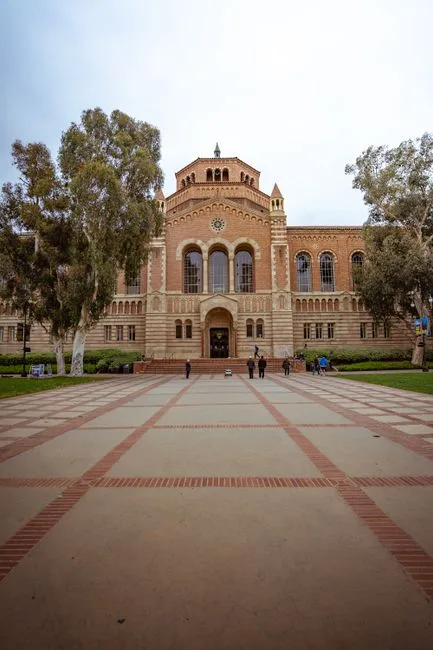
A California man spent roughly seven months swapping priceless ancient Chinese manuscripts from UCLA's rare book collection with hand-crafted fakes, flying back and forth to China, and checking out irreplaceable 14th-century literature under made-up names. He got one month in jail. The manuscripts — some dating to 1393 — are still missing.
The Scheme Was Genuinely Impressive, In a Terrible Way
According to the BBC, Jeffrey Ying, 39, of Fremont in the San Francisco Bay Area, pulled off what prosecutors describe as an elaborate theft operation targeting UCLA's rare book and manuscript collection between December 2024 and July 2025. He didn't smash a case or bribe anyone. He checked the books out. Like a regular library patron. Then he returned convincing fakes.
Prosecutors say Ying traveled to and from China within days of the thefts, which raises questions about where exactly these manuscripts were going and who, if anyone, was waiting for them on the other end. The criminal complaint doesn't charge him with anything beyond a single count related to one Qing dynasty manuscript, and it does not say what happened to the rest of the stolen pieces. Which is a spectacular loose end to leave dangling.
The stolen literature included documents dated to 1393 and 1575. To be clear about what that means: one of those manuscripts is older than the printing press reaching widespread use in Europe. These are not replaceable objects. You cannot order replacements from a catalog.
Three Fake Names, One Very Exposed Library System
The BBC reports that Ying used at least three aliases to check out the rare materials: Jason Wang, Alan Fujimori, and Austin Chen. Surveillance footage caught the same face behind every fake name. When authorities searched his hotel room near UCLA, they found blank manuscripts and paperwork crafted to mimic the style of the books he'd been stealing, materials prosecutors say he used to create the dummy books returned in place of the originals.
Here's the detail that should make every rare book librarian in America feel a cold sweat: until recently, UCLA had allowed members of the public to apply for a library card online without showing any government-issued identification. None. You typed in a name, any name, and you got access to manuscripts that survived centuries of wars, floods, and dynastic collapses. Jeffrey Ying found this out and apparently considered it a professional opportunity.
Authorities also found a fraudulent California ID in the name of Austin Chen on Ying at the time of his arrest in August 2025, along with library cards for two of his aliases. The man came prepared. You have to give him that, begrudgingly and through gritted teeth.
UCLA Caught On Because the Fakes Were Eventually Spotted
The BBC reports that the UCLA Library only uncovered the plot after several recently returned pieces were identified as forgeries. This means the scheme worked for a while. Multiple fakes made it back onto the shelves and sat there, undetected, until someone looked closely enough to realize they were holding a reproduction instead of a 600-year-old Chinese manuscript.
UCLA's rare book collection is described as expansive. The library holds materials that scholars travel internationally to examine. The idea that someone was systematically hollowing out that collection, piece by piece, for seven months before anyone noticed is not a knock on any individual librarian. It is a structural failure, and one that the university has presumably now scrambled to address by, at minimum, requiring people to prove they exist before handing them irreplaceable artifacts.
The Sentence: One Month, Then Go Home
Ying pleaded guilty to one count of stealing a 17th-century manuscript from China's Qing dynasty. For this, the BBC reports, he was sentenced to time served, which amounts to approximately one month in jail, followed by one year of home confinement and three years of supervised release. No fine was issued. Restitution has not yet been determined.
Let's do the math here. The criminal complaint estimates approximately $216,000 worth of manuscripts were stolen. Ying was convicted on one count. The other stolen items, the 1393 document, the 1575 document, whatever else walked out of UCLA in a bag while a convincing fake took its place on the shelf, are not accounted for in the charges. The court documents do not say where those pieces are. They may be in private collections in China. They may be anywhere. The sentence does not appear to have been contingent on getting them back.
The Dingo Take
Here is what this story actually is: a man systematically looted irreplaceable pieces of Chinese cultural heritage from a public university, traveled internationally to move them, and received a sentence lighter than what some people get for shoplifting electronics. One month. Then home. For stealing manuscripts that survived the Ming dynasty but could not survive one guy with a library card and a forgery kit.
The UCLA library system deserves some scrutiny here too. Allowing public access to rare materials is a genuinely admirable institutional commitment, but 'no ID required, just type a name' was always going to be a vulnerability that someone would eventually exploit. Ying just happened to exploit it at scale, with planning, with fake documents, and with what sounds like an international pipeline. The good news, if there is any, is that the fakes were eventually detected. The bad news is that some of the real manuscripts remain unaccounted for, and a one-month jail sentence is not exactly a thundering deterrent to the next person who thinks rare book collections are underguarded targets.
The manuscripts that are still missing are not coming back because of home confinement. They are sitting somewhere, in a private collection or a storage unit or a dealer's inventory, having outlasted wars and empires and centuries of chaos, only to be pried out of a public library by a man with three fake IDs and a very good eye for papermaking. That is, depending on your tolerance for dark irony, either extremely funny or genuinely depressing. It is probably both.





Comments