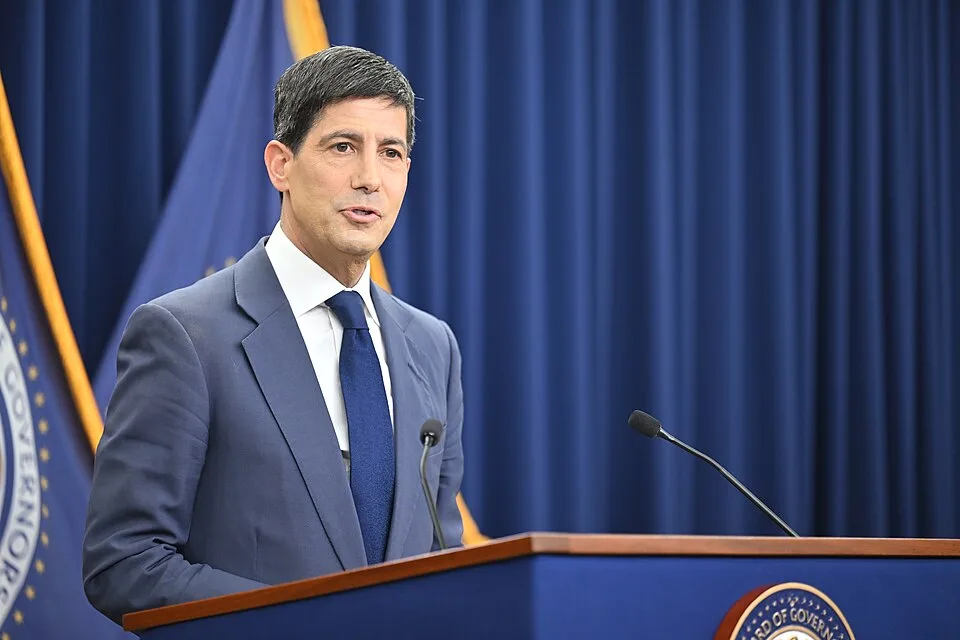
The Federal Reserve, an institution that has spent decades perfecting the art of talking to itself, is about to hear from some people who have never worked there. Fed Chair Kevin Warsh has quietly assembled five task forces to rethink how the central bank actually makes its decisions, and in a move that is either refreshing or alarming depending on your priors, he deliberately stocked them with outsiders.
What Warsh Actually Did Here
According to Axios, Warsh created five separate task forces specifically to reimagine the Fed's policymaking process. Each task force has three members and operates with support from Fed staff. That's lean by any institutional standard, and it reads like someone who actually wanted these groups to move fast and think weird, rather than generate a 400-page report that gets shelved next to the last 400-page report.
The membership criteria is the interesting part. Axios describes the task force members as economists and business leaders with serious credibility who are explicitly not part of what sources are calling the 'Fed Borg.' That phrase alone should tell you something about how insiders view the institution's tendency to clone its own thinking generation after generation. You don't get a nickname like 'the Borg' by being known for intellectual humility and openness to new ideas.
Why the Fed Has a Groupthink Problem Worth Solving
Here's the thing about the Federal Reserve's policymaking culture: it is incredibly good at producing people who think like Federal Reserve policymakers. The pipeline from elite PhD programs to regional Fed banks to FOMC committees has been running for so long that it has developed its own center of gravity. People rotate through. Ideas recirculate. The Overton window of acceptable monetary thought narrows over time without anyone really noticing, because everyone in the room went to the same conferences.
This is not a knock on competence. The Fed is full of genuinely brilliant people. But competence and independent thinking are not the same thing, and when you're setting interest rates for the largest economy on earth, having seventeen variations of the same fundamental worldview in one room is a real problem. Warsh, whatever else you want to say about him, apparently read that diagnosis and agreed with it.
The task forces are supposed to bring outside-the-box ideas, per Axios's reporting. Which sounds like boilerplate until you remember that 'outside the box' at the Federal Reserve means something quite specific: it means thinking that didn't originate inside the Federal Reserve.
Who Is Kevin Warsh and Why Does This Matter
Warsh is not a typical Fed chair. He's a former Fed governor and a Hoover Institution fellow who spent years as a prominent critic of the kind of institutionalized caution and consensus-worship that has defined the central bank for much of its recent history. His appointment by Trump was always going to mean some version of this: someone coming in from outside the inner sanctum and immediately asking why things are done the way they're done.
That framing cuts two ways. Genuine institutional reform at the Fed is overdue and would be welcomed by serious economists across the ideological spectrum. But 'disrupting the Fed' has also been a talking point for people who want to bring the central bank under more direct political control, which is a genuinely dangerous idea with genuinely dangerous consequences for inflation, interest rates, and the independence that makes the dollar worth trusting. Warsh's move here looks more like the former than the latter, but it's worth watching closely.
What These Task Forces Might Actually Change
The Axios report notes that the task forces are focused on the FOMC's policymaking process specifically. That's the committee that votes on interest rates, which means we're talking about potentially reexamining how rate decisions get made, how the Fed communicates those decisions, and possibly how it thinks about its dual mandate of maximum employment and price stability.
All of that is genuinely consequential. The Fed's communication strategy alone has been a subject of intense debate for years. Forward guidance, dot plots, press conferences where Jerome Powell once accidentally torched global markets with a single adjective, all of it is on the table if you're rethinking the process from the ground up. Three-person teams with outside perspectives and no institutional loyalty to the current system could produce interesting things. They could also produce chaos. The distance between those two outcomes is narrower than it looks.
The Dingo Take
Look, the Federal Reserve desperately needs some fresh air. An institution that spent years confidently assuring everyone that inflation was transitory before it very much wasn't, that has operated for decades as a sort of self-referential intellectual monastery, probably benefits from having some people walk through the doors who didn't spend their careers inside those doors. On that narrow point, Warsh is right, and the task force structure he's chosen, small teams, outside credibility, explicit distance from the 'Fed Borg,' suggests he actually thought about this rather than just performing disruption for an audience.
The concern is context. This is happening inside the Trump administration, which has been loudly and repeatedly hostile to Fed independence whenever independence means interest rates don't do what the White House wants. Warsh has so far maintained more distance from that pressure than Trump's most aggressive instincts would prefer, but 'rethinking the policymaking process' is the kind of phrase that can mean very different things depending on where it ends up. Reforming how the Fed thinks is legitimate. Reforming how the Fed thinks so it thinks more like the guy in the Oval Office is a financial catastrophe waiting to happen.
So we'll watch the task forces. We'll read what they produce when they produce it. And we'll reserve the right to circle back with considerably more rage if 'outside the box' turns out to mean 'inside the White House.' For now, this is a genuine institutional experiment at one of the most powerful economic institutions on the planet, being run by someone who at least understands why the experiment is necessary. That's more than you can say about most things coming out of Washington right now, which is either encouraging or a sign of how low the bar has gotten. Probably both.


Comments