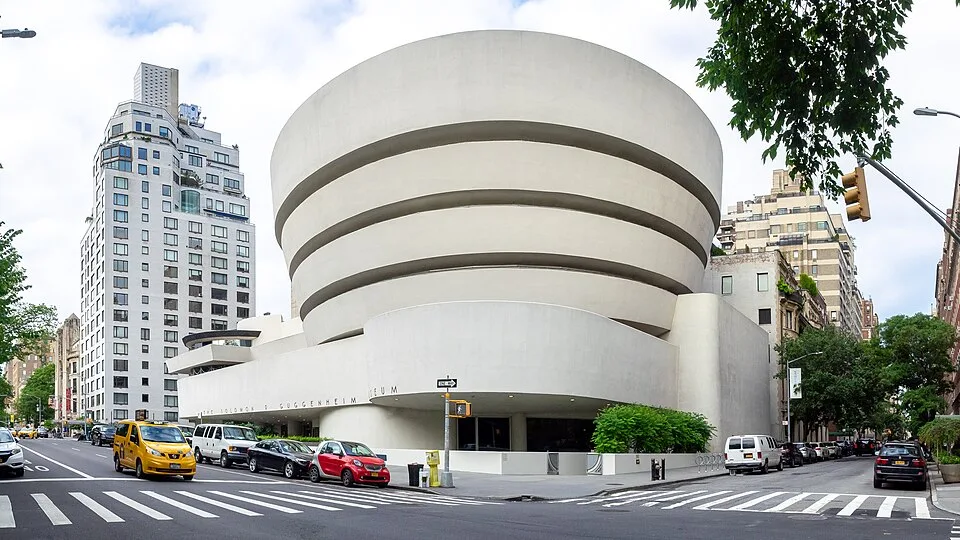
The Solomon R. Guggenheim Museum, one of the most recognizable buildings on earth, a UNESCO World Heritage Site, a Frank Lloyd Wright masterpiece that has graced a million postcards, tested positive for the bacteria that causes Legionnaires' disease. More than 50 people on the Upper East Side have now been diagnosed with the illness as part of the latest outbreak to hit New York City, and health officials are still trying to figure out where it started.
31 Buildings, One Very Famous One
The New York City health department released a list on Friday of 31 buildings on the Upper East Side that have been ordered to clean and disinfect their cooling towers. The Guggenheim was among them. According to The Guardian, 19 of those buildings, including the museum, had already completed the required remediation by the time the list went public.
City officials were careful to note that a positive test does not confirm any building as the actual source of the outbreak. The testing method used cannot distinguish between live and dead bacteria, which means the presence of Legionella in a cooling tower tells you something was once wrong but not necessarily what is still actively making people sick.
The museum, for its part, issued a statement Saturday saying the city confirmed there is no additional action needed and that the building poses no risk to anyone inside it. The Guggenheim also noted it has an outside company conducting regular monthly testing and treatment of its cooling tower. None of this stopped the story from being, at minimum, deeply uncomfortable to read on a Saturday morning.
What a Cooling Tower Actually Is
Here is a fact that is somehow not common knowledge despite being critically important: cooling towers sit on the roofs of buildings and regulate temperatures for systems like refrigeration. They do not affect drinking water. They do not affect indoor air. They do not affect air conditioning inside a building.
Legionella bacteria thrive in warm water and spread through mist. People contract Legionnaires' disease by breathing in tiny contaminated water droplets, not by drinking the water or by being near someone who is sick. The disease is not transmitted person-to-person, full stop.
The Guggenheim was never closed because of the positive test or the remediation work, according to city health officials. So if you visited the museum this week and spent an hour staring at a Kandinsky, you were probably fine inside the building. The risk, if it existed at all, was ambient and airborne outside, which is a sentence that sounds terrifying but maps onto how these outbreaks actually work.
50 People Sick, Nobody Dead Yet
The most recent data from the city health department puts the number of diagnosed cases connected to this Upper East Side cluster at more than 50. Fewer than 20 remain hospitalized. No deaths have been reported as of the latest update.
That last part matters a lot, given the city's recent history with this disease. As The Guardian reports, seven people died and more than 100 were sickened during a major outbreak in Harlem last year. That one was eventually traced to cooling towers on top of Harlem Hospital and a nearby construction site where the city's public health lab is located. The city's public health lab. Let that sit for a second.
By comparison, the current Upper East Side situation looks, for now, like it is being managed more quickly. The remediation orders went out, the buildings complied, and the case count has not exploded into triple digits. That is not a guarantee the situation is under control, but it is at least a better trajectory than what happened in Harlem.
A Brief, Grim History of This Disease's Name
Legionnaires' disease gets its name from a 1976 outbreak that hit attendees of an American Legion convention in Philadelphia. Hundreds of people got sick. Dozens died. Nobody knew what was causing it for months. Scientists eventually identified the bacterium responsible, named it Legionella pneumophila, and that was how a veterans' convention in a Bicentennial-year Philadelphia became permanently attached to a serious form of pneumonia.
According to the CDC, symptoms usually develop two days to two weeks after exposure and include cough, fever, headaches, muscle aches, and shortness of breath. People at elevated risk include anyone over 50, smokers and vapers, people with chronic lung disease, and people with compromised immune systems. Which, in New York City in summer, describes a non-trivial slice of the population walking around the Upper East Side at any given moment.
The Dingo Take
The Guggenheim testing positive for Legionella is one of those headlines that sounds like satire until you read past the first sentence. It is not satire. It is a building inspection result in a city that has now had two significant Legionnaires' outbreaks in consecutive years, one of which killed seven people and was traced, of all places, to the building that houses the people whose job it is to stop disease outbreaks. You genuinely cannot make this up.
The good news is that this time around, the city appears to be moving faster. The remediation list went out, the buildings acted, the Guggenheim was never shuttered, and the case count has not spiraled into the kind of numbers that get mayors on television sweating through their suits. The bad news is that more than 50 people are still sick, and health officials still have not identified the definitive source of the outbreak. Those two things are both true at the same time.
Look, Legionnaires' disease is preventable. Cooling towers require regular maintenance and testing, which is not complicated or expensive relative to what happens when you skip it. What it requires is attention, and that is apparently the scarcest resource in any city's public health infrastructure. The Guggenheim, at least, had an outside testing company already. The rest of the 31 buildings on that list? Someone needs to ask harder questions about why it took an outbreak to get them cleaned.



Comments