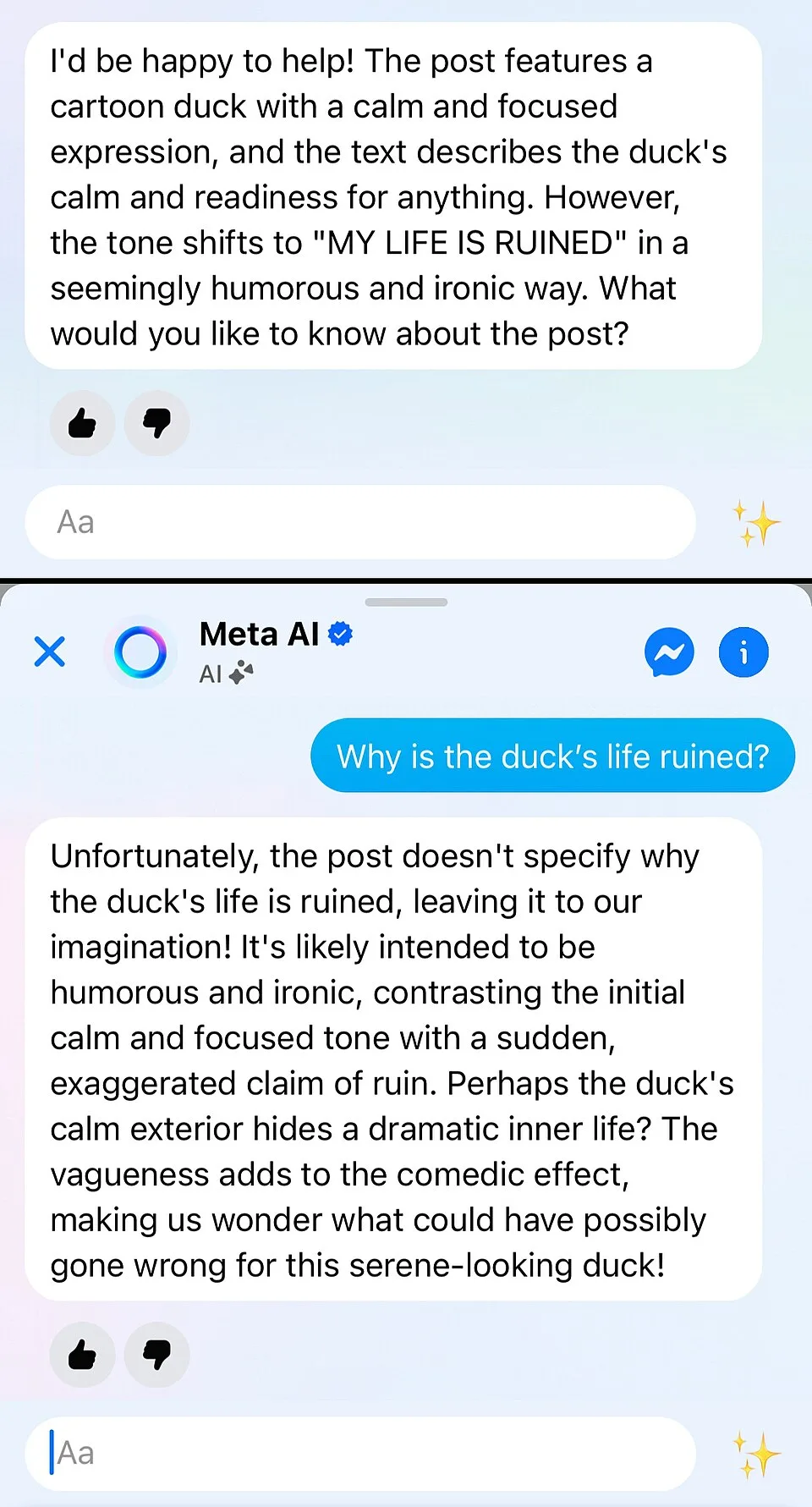
Meta spent roughly 48 hours pretending it had invented a great new AI image tool before Hollywood reminded them that automatically using people's photos without asking is, in fact, not a creative feature. It is a nightmare. The company pulled Muse Image on Thursday after a swift and very public flogging that included actors, unions, and a lot of furious Instagram users who had no idea they'd been opted in.
What Meta Actually Did Here
On Tuesday, Meta launched Muse Image, the first image-generation model from its newly formed Meta Superintelligence Labs. According to ABC, the tool was integrated into Meta's AI chatbot, could use photos as input, and let users edit generated images through sketches. Sounds fine on paper. The problem was the part where Meta just quietly switched it on for everyone.
The feature was automatic opt-in, meaning Meta decided your public Instagram photos were available as source material for AI generation without asking you first. Meta's position, apparently, was that if you posted something publicly, that was close enough to consent. The public disagreed. Loudly.
Emmy Winners and Hollywood Unions Did Not Take It Well
Hannah Einbinder, the Emmy-winning actor from the HBO series Hacks, was among the first to call it out publicly. She posted on Instagram pointing out the feature had been turned on automatically and urged her followers to go switch it off. When a celebrity is telling their audience to actively undo something your company just did, that is not a product launch. That is a crisis.
SAG-AFTRA, the union representing actors and a vast range of other media professionals, followed on Thursday with its own statement urging members and Instagram users broadly to opt out. The union's language was pointed: "Anything other than a clear and conspicuous opt-in for these types of uses of Instagram users' images is unacceptable, and an utter miscalculation of public sentiment regarding the obvious dangers and harms inherent in such use." That is union-speak for: you knew exactly what you were doing and you did it anyway.
Meta Folded Faster Than a Cheap Deck Chair
By Thursday, it was over. Meta pulled Muse Image and issued a statement that reads like something written by someone who very much does not want to be sued. "Our intent was to provide a useful creative tool and to give people control over whether their public content could be referenced in this way," the company said, per ABC. "We've heard the feedback that this feature missed the mark, so it's no longer available."
That last sentence is doing an enormous amount of heavy lifting. "Missed the mark" is the corporate way of saying they launched something millions of people found deeply violating and had to kill it before the story got any worse. To be fair, Meta did kill it fast. But the speed of the reversal only underlines how thoroughly they understood what they were doing when they rolled it out auto-opted.
SAG-AFTRA Declared Victory, Sort Of
After Meta pulled the feature, SAG-AFTRA put out another statement, this one considerably more gracious. "With the dangers of non-consensual digital replicas well known to all, a feature that encouraged that behaviour is unwise," a union spokesperson said, as ABC reported. "We appreciate its discontinuance. It is the responsible thing to do."
Read that phrase again: "the dangers of non-consensual digital replicas well known to all." The union is making a point here that goes beyond this one feature. These dangers are not new. The conversation about AI-generated likenesses, fake images, deepfakes, and the general horror show of what happens when someone's face becomes a tool without their permission has been happening loudly and publicly for years. Meta was not operating in ignorance. They made a call, the call blew up, and now they are pretending they simply heard some feedback.
The Bigger Picture Nobody Should Miss
This is not the first time a tech company has tried to slide a significant privacy-eroding feature into a product through automatic enrollment and hoped nobody would notice. It is a strategy that has worked before. You bury the change in settings, you make opting out require three menus and a prayer, and most users never find it.
The difference now is that AI image generation is visible in a way that data harvesting is not. People can see their photos being used. Actors and performers have very specific, very painful reasons to care about their digital likenesses being replicated without consent. And SAG-AFTRA has been one of the most organized and aggressive unions in the country on exactly this issue for the last several years. Meta picked a fight with a group that was already primed, organized, and looking for exactly this kind of example. That was not smart.
The Dingo Take
Here is what actually happened: Meta built a tool, knew it would be controversial, launched it as opt-out instead of opt-in because they figured most people would never notice, and got caught almost immediately. The 48-hour turnaround is not a story about a company that listened to feedback. It is a story about a company that got caught before the thing could quietly embed itself into user behavior and become the new normal.
The opt-in versus opt-out distinction is not a technical footnote. It is the entire ballgame. Default opt-in means Meta gets to harvest the benefits of your content until the moment enough people raise hell to stop them. Default opt-out means they have to actually convince you it is worth participating. One of those is respectful. The other is what they did. You do not accidentally choose the wrong one.
Meta will try something like this again. They always do. The feature will be slightly less obvious, the rollout will be slightly quieter, and they will be counting on the news cycle having moved on. The only thing that stopped this one was that the people most immediately harmed also happened to have large platforms and a well-organized union behind them. Most users do not have either. That should bother you considerably more than this particular story, which at least has a tidy ending.



Comments