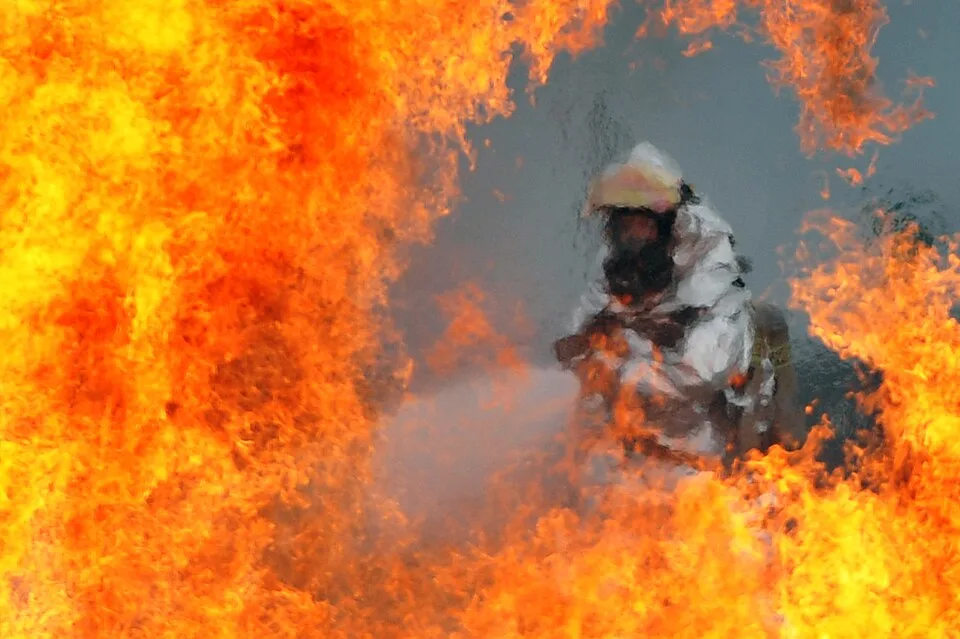
For roughly four decades, firefighters across New Jersey ran into burning buildings wearing PFAS-soaked gear and blasting PFAS-laced foam at the flames, then went home and wondered why their cancer rates kept climbing. Now the state is trying to clean up the mess, 150,000 gallons at a time. The foam is finally getting destroyed. The damage to the people who used it is a lot harder to undo.
The Bomb Sitting in the Firehouse
Jacobstown Volunteer Fire Chief Robert Gancarz put it about as plainly as anyone can. "It was like sitting on a bomb," he told CBS News. His department had been storing aqueous film-forming foam, known as AFFF, since the mid-1980s. When the call finally came to get rid of it, he didn't hesitate. All 580 gallons went.
AFFF works. That's the brutal irony at the center of this story. The stuff genuinely puts out fires, particularly fuel fires, which is why it became standard issue across fire departments and military installations for decades. It also happens to be saturated with per- and polyfluoroalkyl substances, the class of synthetic chemicals known as PFAS, or forever chemicals. They're called that because they don't break down. Not in the environment. Not in your body.
Studies have linked AFFF exposure to higher cancer rates among firefighters. So the tool that was supposed to save lives has spent the better part of half a century quietly threatening them instead.
A Father, a Son, and a Colon Cancer Diagnosis
Robert Gancarz's father, 76-year-old "Boots" Gancarz, spent his entire adult life fighting fires. Boots didn't just use the foam. He wore the gear, which CBS News reports also contained PFAS, every time he suited up and answered a call. "It was in the gear and everything," Boots told CBS News. "I had that every time you put it on and went to a call."
In 2024, doctors told Boots he had colon cancer. To his credit, the man has exactly zero plans to quit. "I'm going to beat this," he said. "They ain't shoveling dirt in my face yet." That's the kind of stubbornness that makes a great firefighter. It is less useful as a public health policy.
Meanwhile, his son Robert has already been blood-tested. His PFAS levels came back higher than those of the average American. When CBS News asked if he's worried about his own potential cancer diagnosis, Gancarz said: "It's definitely a scary, scary thing to think about." That sentence should be hung on the wall of every corporate boardroom that ever greenlit a PFAS product.
What New Jersey Is Actually Doing About It
New Jersey is now one of more than a dozen states actively working to collect, remove, and destroy their stockpiles of AFFF. According to CBS News, the state has so far pulled more than 150,000 gallons out of fire stations across the state. All of it gets trucked to Revive Environmental, an Ohio company that built its entire business model around cleaning up this particular catastrophe.
Revive Environmental CEO Rick Gillespie described the process to CBS News: the foam goes into supercritical water reactors, and clean water comes out. That's the pitch, anyway. The company says it can actually break down PFAS at the molecular level, which would make it one of the few technologies on Earth capable of doing so. Whether that scales to the full scope of the national PFAS contamination problem is a much longer conversation.
Back in Jacobstown, Robert Gancarz showed CBS News the department's new foam. It's made from soybeans. He acknowledged it takes a bit more product to get the job done, but said it can still put out a fire. Progress, of a sort.
This Wasn't a Secret, It Just Didn't Matter Enough
Here's what makes this story genuinely enraging rather than just sad. PFAS chemicals were not some mysterious unknown quantity that snuck up on the scientific community overnight. The health concerns around these compounds have been building in the research literature for years. The firefighting industry knew AFFF had a PFAS problem. The gear manufacturers knew PFAS was going into the turnout coats and helmets.
And yet, for decades, the people who ran into burning buildings kept suiting up in contaminated gear and spraying contaminated foam, because what were they supposed to do, let the building burn? The calculus that was being made, mostly by people who weren't firefighters, was that the foam's effectiveness outweighed the risk. Easy math when you're not the one doing the bleeding.
Now states are paying to truck away the evidence and destroy it in specialized reactors in Ohio. The firefighters who absorbed those chemicals into their bloodstreams over thirty or forty years of service don't get a supercritical water reactor. They get a blood test and a wait-and-see.
The Dingo Take
Let's be very clear about what happened here. An industry produced a product it knew contained chemicals with serious health implications. That product got sold to fire departments across the country and became standard equipment. The people using it had no meaningful choice in the matter. They were told this was the gear, this was the foam, suit up and do your job. Boots Gancarz did exactly that for his entire adult life. Now he has colon cancer at 76 and his son is waiting to find out if he's next.
New Jersey rounding up 150,000 gallons of foam and sending it to Ohio to get destroyed is not a solution. It's a cleanup. The solution would have been not building four decades of firefighting infrastructure around chemicals that accumulate in human tissue and don't leave. That ship has sailed. What's left is the question of what we owe the people who got poisoned in the process, and historically, the answer from the corporations and agencies involved has been some version of: as little as possible, and preferably after a long legal fight.
Robert Gancarz's new soybean foam is a better product than what came before it. That's genuinely good. The fact that it took this long, and this many sick firefighters, to get there is not good. It is, in fact, the entire story.



Comments