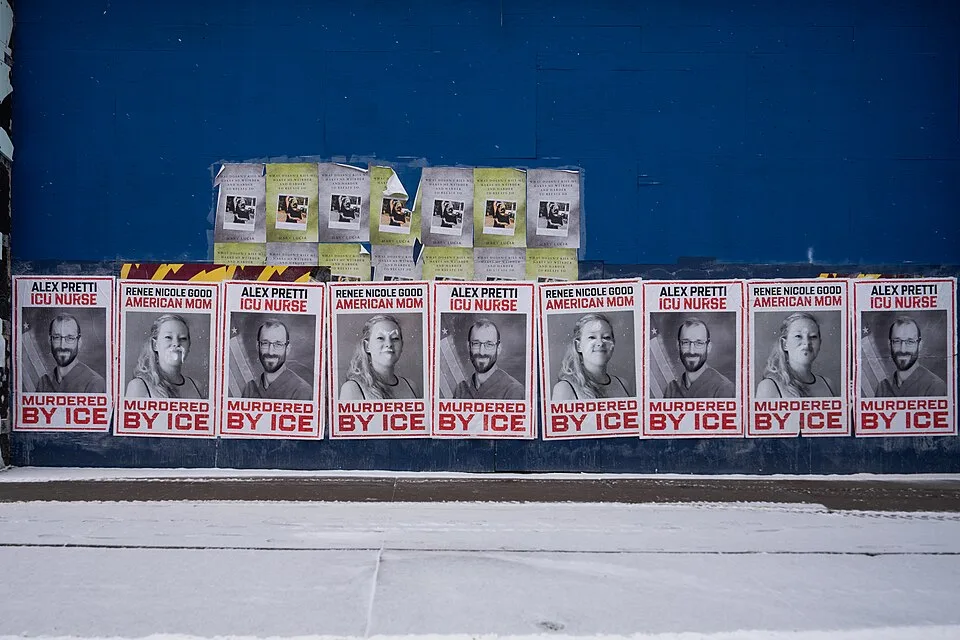
The federal government spent more than six months refusing to hand over body camera footage and other evidence from its own agents' fatal shootings of two protesters in Minneapolis. Minnesota prosecutors finally got it this week, but only because they had to essentially hold a hostage to make it happen. Nine people are dead from immigration enforcement actions. No one has been charged.
What it took to get basic evidence in two killings
Hennepin County Attorney Mary Moriarty announced Monday that federal investigators had finally turned over hard drives containing statements, police body camera footage, and other materials related to the deaths of Renee Good and Alex Pretti. They also returned Good's badly damaged SUV. "The wonderful thing now is we have all the evidence," Moriarty said.
Here's what it took to get there. According to AP News, Minnesota prosecutors had to threaten to withhold their own evidence in a separate ICE assault case before the feds blinked. State Bureau of Criminal Apprehension Superintendent Drew Evans laid it out in a legal filing: "We are willing to share evidence with you if the exchange is reciprocal. Each of the federal agencies with whom we have discussed sharing evidence in this case has declined to do so thus far. None has provided any substantive reason for its refusal aside from relaying the perspective that these shootings are solely 'federal' matters."
So: federal agents kill two people at protests. State investigators ask for evidence. The feds say no, this is a federal matter, go pound sand. For six months. That's the story right there.
Who Renee Good and Alex Pretti were
Renee Good was 37 years old and a mother of three. AP News reports she was shot and killed in her vehicle while leaving an anti-immigration enforcement protest in Minneapolis on January 7. Three weeks later, on January 24, Alex Pretti, also 37 and an intensive care nurse, was shot and killed by federal officers during another protest in the same city.
Two people in their late thirties. One a nurse. One a mom. Both shot dead by agents of the United States government during protests against the United States government's own enforcement actions. Their deaths triggered outrage nationwide and a wave of calls to rein in ICE's expanding operations in the state.
How the evidence finally shook loose
The breakthrough, as AP News pieced together from court documents, traces back to an unrelated ICE shooting. Agent Christian Castro, 52, was charged with assault and falsely reporting a crime after prosecutors say he fired through a home's front door on January 14 and shot a man named Julio Cesar Sosa-Celis in the thigh while chasing someone else entirely. When federal officials asked Minnesota for evidence in Castro's case, state and local prosecutors saw their opening: you want ours, give us yours first.
Minnesota officials had also filed a lawsuit against the Homeland Security and Justice departments demanding access to the evidence. When Hennepin County Attorney Moriarty and Attorney General Keith Ellison amended that suit in June to specifically document the federal government's refusal, something apparently shifted in Washington. Four days later, Ellison and Moriarty were asking the court to push back deadlines because federal and state officials had "recently re-engaged in discussions." Within weeks, the hard drives arrived.
Ellison said Monday he remains "deeply troubled" it took this long, given that federal and state agencies routinely cooperate on major investigations without this kind of standoff. "It should never have taken this long," he said. "I hope that this is the beginning of a major course correction on the part of the federal government." That's a polite way of saying: what you did was outrageous and everyone knows it.
Minnesota isn't the only place this is happening
While Minnesota was getting its evidence, Houston prosecutors were publicly complaining that the feds are still stonewalling them in their investigation into the death of Lorenzo Salgado Araujo, a Mexican national who had lived in the United States for decades and was shot by an ICE officer last week. The Department of Homeland Security has acknowledged its officers stopped Salgado Araujo while they were actually looking for someone else entirely, but maintains he rammed an ICE vehicle trying to leave.
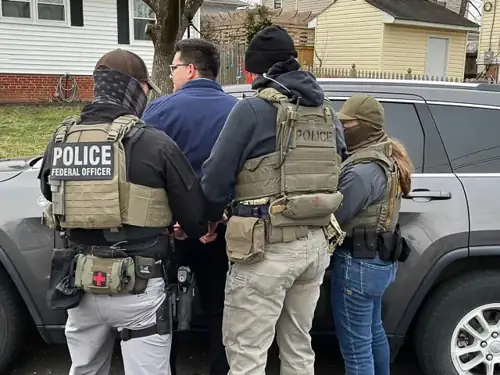
And on Monday, the same day Minnesota announced its evidence breakthrough, AP News reports that an ICE agent shot and killed yet another motorist in Maine. That makes at least nine people killed since the Trump administration's immigration enforcement campaign began. Nine. No federal agent has been charged in connection with any of those deaths. The administration has argued, with a straight face, that state prosecutors simply don't have jurisdiction to investigate federal officers.
The body camera problem hiding in plain sight
There's a detail worth sitting with. Congress gave DHS $20 million specifically for body cameras for ICE agents. AP News has reported that the ICE agents involved in the fatal Houston shooting last week had none. Zero. Twenty million dollars allocated, and the agents at the scene of a killing weren't wearing cameras.
So we have federal agents conducting what the Trump administration called the largest immigration enforcement operation in American history, shooting people, and in at least some of those cases not wearing the cameras that were specifically funded to create accountability. And when local investigators ask for whatever footage does exist, the government's opening position is: no. That's not a bug. That's a choice.
The Dingo Take
Let's be clear about what six months of evidence suppression actually means. It means that while Good's family grieved and Pretti's colleagues tried to make sense of a colleague killed at a protest, the federal government sat on the materials that could explain exactly what happened and why. Not because of any legitimate legal principle. Because they could. The only reason any of this moved is that state prosecutors found a piece of leverage and used it. That is not how a government accountable to its citizens is supposed to work.
The administration's position that state prosecutors lack jurisdiction to investigate federal officers isn't just legally aggressive, it's functionally a claim that federal agents who kill people on American soil answer to no one outside Washington. And given that Washington hasn't charged anyone either, the practical result is that nine people are dead and the accountability score stands at zero. The Trump administration has described this as federal officers doing their jobs. Their jobs, apparently, include shooting a nurse, shooting a mother of three, and then spending half a year making sure no one outside the executive branch can find out exactly how it happened.
Houston is still waiting. Maine just had another one. And somewhere in the DHS bureaucracy, someone looked at a $20 million body camera budget and decided the agents kicking in doors and stopping motorists they weren't even looking for didn't need them. Whatever course correction Ellison is hoping for, it isn't coming from this administration voluntarily. It never was.


Comments