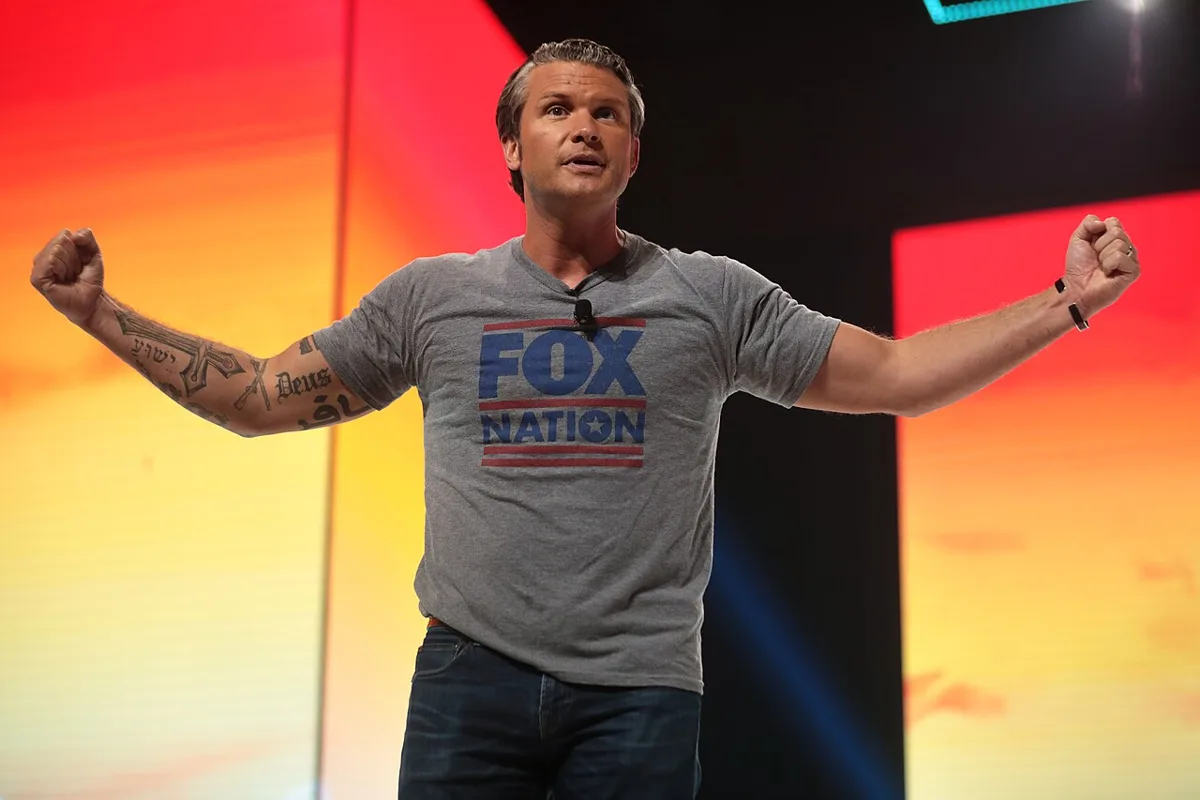
Pete Hegseth, a man who was confirmed to run the United States military despite having no relevant qualifications, has now decided the real threat to national security is journalists doing their jobs. On Monday, he announced a joint Pentagon-DOJ taskforce specifically designed to hunt down and prosecute the sources behind press leaks, just days after the New York Times revealed it had been hit with federal grand jury subpoenas over stories about Donald Trump's Qatari-gifted plane.
What Hegseth Actually Said
In a video posted to X, because of course that's where defense policy gets announced now, Hegseth said he has "delegated tasking authority" to the Pentagon's office of general counsel, giving them power to pull "all information, records and support across the department concerning media leak investigations." He called access to classified information "a sacred trust" and promised that anyone who breaks it will be "met with the full force of the law."
He also took a moment to thank acting attorney general Todd Blanche for his help with the project and noted that the two departments are "working together closer than we have ever before." Which, given that Blanche previously defended Donald Trump in two separate criminal cases, is either a reassuring sign of institutional cooperation or an extremely on-brand description of how the administration views the DOJ's purpose.
The taskforce has no announced sunset date, no defined scope limitations, and no apparent mechanism for oversight. What it does have is a very clear target: anyone inside the government who talks to a reporter.
The Subpoenas That Kicked This Off
The announcement did not come out of nowhere. The Guardian reports that over the weekend, the New York Times disclosed that several of its journalists had received subpoenas compelling them to testify before a federal grand jury in Manhattan, all stemming from the paper's coverage of Trump's new Boeing 747, gifted to him by Qatar.
The Times had reported, citing anonymous sources, that Trump flew back from Turkey on the old Air Force One rather than the Qatari plane because the Secret Service raised security concerns. A follow-up story detailed that the new aircraft lacks some of the advanced security features of the older one. Both stories were, by any reasonable measure, legitimate public interest journalism about the safety of the president's official aircraft.
Before the first story ran, according to the Times, a senior FBI official contacted a reporter and a senior editor and asked them to kill it, citing national security, while refusing to explain what the actual security concern was. The official also asked the Times to hand over its sources. The Times said no to both requests, published the stories, and then got subpoenaed anyway.
The DOJ's Defense Is Not Very Convincing
A DOJ spokesperson told the New York Times on Saturday that "reporters are not the targets, those leaking classified information are." The spokesperson added that the DOJ "values and appreciates the important role that the press plays in this country."
That statement would carry more weight if federal agents hadn't already raided the home of a Washington Post reporter in January as part of an investigation into a government contractor. Or if the DOJ hadn't already tried to compel testimony from journalists at the Wall Street Journal and the Washington Post earlier this year, only withdrawing those subpoenas after both outlets legally challenged them. There is a pattern here, and it is not a pattern that screams deep respect for press freedom.
Subpoenaing reporters to testify before a grand jury is a legally recognized way of pressuring them to identify their sources. The reporters are not "the targets" in the technical sense that prosecutors aren't planning to charge them personally, but compelling a journalist to burn a confidential source in front of a federal grand jury is not exactly how you demonstrate that you appreciate the important role the press plays.
What the Press Freedom Community Is Saying
The response from press freedom advocates has been direct. David McCraw, the New York Times's top newsroom lawyer, said in a statement that the "appearance of federal law enforcement agents on the doorstep of news reporters should shock the conscience of any American who believes in the Constitution and the press freedom it protects." The Times itself described the subpoenas as an "extraordinary escalation" in Trump's effort to threaten and intimidate independent news organizations.
The National Press Club, based in Washington DC, said the subpoenas "should alarm every American because it threatens the public's constitutional right to an independent press." That is not a statement the National Press Club makes lightly. These are not people prone to hyperbole.
The practical consequence of all this, if the administration gets what it wants, is that government employees will stop talking to reporters. Not because they are disloyal, but because they will correctly understand that doing so carries serious legal risk. Less information will reach the public. Fewer stories will get told. The government will be less accountable. That is, of course, exactly the point.
This Is Not Normal and Hasn't Been for a While
Leak investigations are not new. Every administration has conducted them. The Obama administration was criticized, fairly, for prosecuting leakers more aggressively than any of its predecessors. But there is a meaningful difference between targeting leakers through standard investigative channels and building a dedicated Pentagon-DOJ joint taskforce, announcing it on social media, simultaneously subpoenaing the reporters who received the leaked information, and doing all of this over stories about whether the president's free plane is safe.
The specific trigger matters here. This wasn't coverage of troop movements or covert operations abroad. This was journalism about the safety and security features of a luxury aircraft that a foreign government handed to an American president as a gift, which is itself a story that raises serious constitutional and ethical questions that nobody in the administration seems eager to answer.
The Dingo Take
Here is what the administration is actually building: a system where anyone inside the federal government who tells a journalist something the White House doesn't want published faces prosecution, while the journalists themselves live under the threat of grand jury subpoenas until they give up whoever talked to them. The chilling effect doesn't require a single successful prosecution. The threat alone is the mechanism. Sources dry up, reporters self-censor, and the public loses its window into what the government is actually doing. Pete Hegseth calling this "protecting the joint force" is one of the more cynical framings of press intimidation you will ever see.
The Qatari plane coverage is a perfect illustration of why this matters. The Secret Service had concerns about the security of the president's aircraft. Reporters found that out and published it. The public learned something true and relevant about how their government is operating. Under the logic of this new taskforce, that entire chain of events, the source, the reporter, the editor, the story, is something to be investigated and punished. The government's position is essentially that you should trust them on matters of national security and stop asking questions. Given recent history, that is a genuinely incredible ask.
Todd Blanche, whose previous job was keeping Donald Trump out of prison, is now the acting attorney general helping design a system to prosecute people who talk to the press. Pete Hegseth, whose confirmation hearings included credible allegations of sexual misconduct and alcohol abuse, is lecturing the country about sacred trusts. The people running this operation are not exactly models of institutional integrity. But they have a taskforce now, they have subpoena power, and they have shown they are willing to use it. That should bother you considerably more than whatever was in those Air Force One stories.


Comments