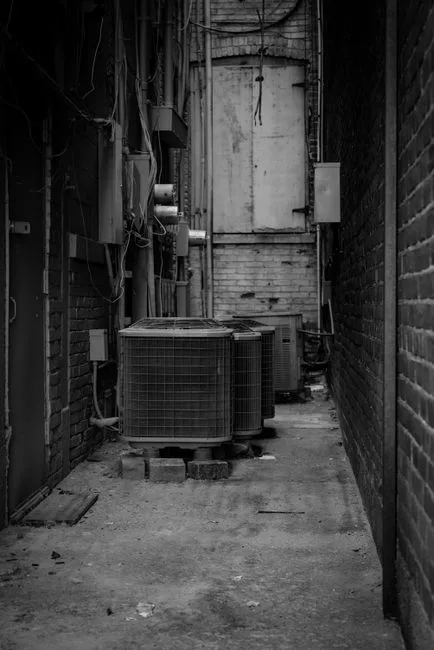
Europe's heat dome killed more than 1,300 people in less than two weeks this June. The United States loses around 2,000 people a year to extreme heat. The advice from public officials in both cases is the same: stay inside and turn on the air conditioning. Great advice, if you can afford it.
The Survival Gap Nobody Wants to Talk About
Here's the thing about extreme heat: it is the most democratic killer in theory and the most ruthless class enforcer in practice. The sun doesn't check your bank account. But your ability to survive what it does to the air around you absolutely depends on one.
Writing in The Guardian, Mark Wolfe, executive director of the National Energy Assistance Directors Association, lays it out with uncomfortable clarity. Across both wealthy and developing nations, the question of who lives through a brutal summer is increasingly simple: can you pay your way out of the heat? In the United States and Europe, millions of households already struggle to cover their electric bills. Add record temperatures that demand more cooling just to stay alive, and you have a slow-motion humanitarian crisis happening inside the richest countries on earth.
And that's before you get to the global south, where the situation is not a crisis in slow motion. It's already a catastrophe in progress.
When the Grid Can't Save You
The Lancet estimates that hundreds of thousands of people already die from heat each year globally, with the burden growing fastest in south Asia and Africa. The United Nations has flagged extreme heat as a driver of inequality, an economic drag, and a compounding death sentence for populations that contributed the least to the emissions causing it.
Wolfe visited India recently and came back with a specific observation worth sitting with: government officials there knew exactly what needed to be done. Better electricity infrastructure, improved housing, access to efficient cooling, stronger public health systems. They weren't short on ideas. They were short on money. That distinction matters enormously, because the conversation in wealthier countries tends to treat the global south's climate vulnerability as a knowledge problem when it's actually a resources problem.
And no, the answer isn't shipping a container ship full of window units to Mumbai. As Wolfe points out in The Guardian, in many of these countries the electrical grid couldn't support widespread air conditioning even if every family could somehow afford one. You can't run a solution off infrastructure that doesn't exist.
The US Can't Even Help Its Own People
Before anyone in Washington starts feeling smug about America's relative advantages here, consider this number: the primary federal program that helps low-income US households pay their energy bills reaches approximately one out of every six eligible families. One in six. The other five are left to figure it out during heat events that can kill you.
That's not a resource problem in the way that India faces one. The United States has the money. What it doesn't have, as Wolfe writes, is the political will to spend it on poor people's electric bills when there are tax cuts to hand out and defense contractors to keep happy. It is a choice. A specific, documentable, politically motivated choice that leaves vulnerable Americans to sweat it out or worse every summer.
So when officials deliver their heat advisory boilerplate about staying cool and hydrated, it would be useful if they also explained what families are supposed to do when the cooling part costs more than they have.
This Is Also a Geopolitics Problem
Wolfe makes a point that should cut through the noise for anyone who thinks climate adaptation funding is just soft-hearted charity: if the United States and Europe don't become real partners in financing clean energy infrastructure across the developing world, other countries will. And those countries will collect the economic influence and geopolitical loyalty that come with it.
This isn't a hypothetical. It's a pattern that's been playing out for years in Africa, South Asia, and Latin America, where major powers less squeamish about long-term infrastructure investment have been building relationships that the US has largely ceded. Climate adaptation finance isn't just the right thing to do. For anyone keeping score geopolitically, it's also the strategically obvious thing to do. The fact that it still hasn't happened at meaningful scale says something depressing about whose interests actually drive Western foreign policy.
What Adaptation Actually Requires
The framework Wolfe outlines in The Guardian is not complicated: development banks, international climate funds, private investors, and wealthy nations need to co-finance the next generation of climate resilience infrastructure in countries that cannot build it alone. Reliable electricity. Affordable cooling. Heat-resistant housing and public health systems.
He's explicit that this shouldn't be thought of as traditional foreign aid, which has always been politically toxic and chronically underfunded. It's an investment, with returns measured in global health outcomes, economic stability, and the kind of geopolitical trust that takes generations to build and minutes to lose.
The climate conversation has been dominated for decades by emissions reduction targets, carbon budgets, and net-zero timelines. All of that still matters. But the emissions that are already baked into the atmosphere are going to keep killing people for decades regardless of what any government pledges at the next COP summit. The question now is whether the world's wealthiest countries are willing to help the people who are already in the path of consequences they didn't create.
The Dingo Take
Let's be honest about what we're describing here. The wealthiest societies in human history have produced a problem, exported the worst of its consequences to people with the fewest resources to survive it, and are now engaged in a leisurely political debate about whether helping those people constitutes a worthwhile priority. Meanwhile, the Lancet is counting the bodies in the hundreds of thousands annually and the number is going up.
In the United States, the political will to fund energy assistance at a level that actually reaches eligible families has never materialized, even as the deaths pile up and the summers get worse. That's not an accident or an oversight. That's a values statement. A government that can find money for anything it actually wants to fund has decided, repeatedly, that keeping poor people alive in the summer heat doesn't clear the bar.
The divide Wolfe identifies in The Guardian is coming whether we engage with it or not. The only variable is whether wealthy nations show up as partners or watch from the air-conditioned sidelines while the rest of the world burns. History is going to have very specific opinions about which choice we made.




Comments