A Canadian crypto mogul bought a 64,000-square-foot Cold War nuclear bunker for roughly the price of a used Honda Civic and is now converting it into luxury doomsday condos for billionaires who want gourmet dining and a cigar lounge while civilization collapses outside. Eleven units have already sold. The price is a secret, naturally, because if you have to ask, you probably aren't the target demographic for bunker-adjacent apocalypse chic.
Twenty-Two Grand for the Bunker, Untold Millions for the Vibes
Jonathan Baha'i, described by BBC News as a Canadian crypto mogul, picked up the Debert bunker in Nova Scotia back in 2013 for C$31,300, which works out to about $22,000 USD. The place is a Cold War relic originally built on orders from former Canadian Prime Minister John Diefenbaker, designed to shelter 329 government officials for 30 days after a near-miss nuclear explosion. Baha'i got it for less than a lot of people spend on a kitchen renovation.
His first idea involved laser tag and historical tours. Which, honestly, sounds like a better afternoon than whatever is coming next. But somewhere between 2013 and now, the global mood shifted, and Baha'i found a more lucrative use for 64,000 square feet of reinforced concrete: selling rich people a place to hide.
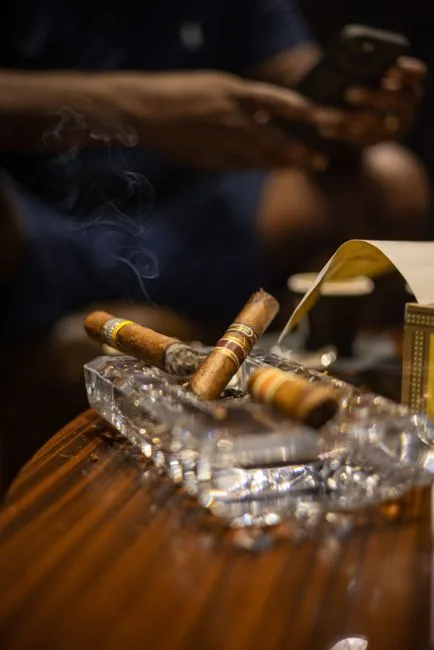
The rebranded project, run through his company Fallout Complex Inc., will offer 50 condo units with amenities including gourmet dining from a self-sustaining food source, biometric access, 24-hour surveillance, onsite medical services, OLED lighting designed to simulate sunlight underground, a spa, a yoga room, and a cigar lounge. Because if a nuclear event or Category 5 hurricane is bearing down, you are going to want somewhere to smoke a Cohiba in peace.
The Security Team Has Some Impressive References
According to BBC News, the project will work with a German firm called Bespoke Home and Yacht Security. Project co-owner Paul Mansfield told local council that Bespoke has provided security for US Vice President JD Vance and reality television personality Kim Kardashian. Their full client list is not public, but that pairing alone tells you everything you need to know about the range of people who feel they need serious protection from the outside world.
Bespoke's recommended security measures for the bunker complex include flying drones to survey the perimeter. So not only will the ultra-wealthy be sealed inside a reinforced Cold War shelter while the rest of us improvise, they will also have robot sentinels patrolling above to make sure nobody uninvited gets close enough to knock on the blast door.
What Happens to the Hotel Guest When Things Go Sideways
Here is where the business model gets philosophically interesting. When condo owners are not in residence, their units will be rented out as hotel rooms, with profits shared. The purchase price and rental rates are both confidential. You find out what it costs when someone decides you are worth telling.
BBC News asked the obvious question: what happens to a regular hotel guest if they are staying in a unit and a genuine catastrophe strikes? Mansfield's answer was admirably blunt. "If somebody was renting it as a hotel room and something happened and they had to get kicked out, they would get kicked out." So if you somehow manage to afford a night in the apocalypse hotel and the apocalypse actually starts, you are back outside with the rest of us. The spa towels stay with the owners.
The Bunker That Was Already Obsolete Before It Was Finished
The history of the Debert bunker is its own dark joke. BBC News reports that Diefenbaker commissioned seven of these shelters across Canada from the late 1950s to the mid-1960s. By the time they were actually built, long-range missile technology had already advanced to the point where the bunkers were considered useless. Nuclear bombs had gotten too powerful. The shelters were obsolete before anyone ever had to use them.
The Debert bunker spent some years as a provincial emergency warning center before shutting down in 1996 as a cost-cutting measure. The BBC notes that a similarly sized bunker in Nanaimo, British Columbia, was eventually flooded on purpose after years of attracting urban explorers. Another in Alberta was demolished because officials feared the Hells Angels would buy it for a clubhouse. The Canadian government's Cold War legacy: several large concrete holes that nobody wanted and one that a crypto investor turned into a billionaire retreat.
Business Is Booming Because the World Feels Exactly Like This
The Debert project is not operating in a vacuum. According to BBC News, the disaster preparedness industry in the United States alone is now worth at least $500 million by some projections, and estimates of how many Americans are actively prepping for catastrophe range from 20 million to more than 70 million people. Developers are building new homes with bunkers pre-installed. Old military infrastructure is getting snapped up across the continent.
In Virginia's Black Hills, a former Air Force base has become the Vivos condominium complex, marketed as a survivalist gated community. In Kansas, the Atlas survival condo was carved out of a repurposed Army missile silo. The pattern is consistent: military infrastructure built during one era of paranoia gets recycled for a new and equally terrified generation.
Mansfield told local council last autumn that there has been more uncertainty in the world in the last two years than in the last 30, and that this had led to a rebirth of interest in having an insurance policy. That framing is doing a lot of work. An insurance policy is a monthly premium and a call center. What Baha'i is selling is a reinforced concrete room with a yoga mat and drone coverage, which is either the future of disaster planning or the most expensive way to feel slightly better about reading the news.
The Dingo Take
The funniest and most honest thing about this entire story is that Baha'i genuinely does not want to call it a doomsday bunker. He has said repeatedly that it is not about the end of the world, that it is about practical storm preparedness, that it is, and this is a direct quote per BBC News, "exactly like owning a really secure, beautiful Airbnb." This is the pitch. This is what is moving units. Eleven of them, already. Billionaires are out here buying apocalypse Airbnbs in Nova Scotia because the world has become the kind of place where that sentence makes complete sense.
And look, Baha'i is not wrong that uncertainty is up. He is also not wrong that the bunker worked fine when Hurricane Fiona hit in 2022 and he opened it to coworkers. That is a genuinely useful thing to have. The problem is not the bunker. The problem is the economy of fear that makes this the logical endpoint of wealth in 2026: not philanthropy, not infrastructure investment, not any collective solution to the actual problems driving the uncertainty. Just a hardened room with OLED lighting and a cigar lounge that will kick the hotel guest out when things get real.
The disaster prepping industry is worth half a billion dollars and growing because a lot of people have correctly identified that systems are fragile and powerful people do not have their interests at heart. What they are building in response is more systems that exclude most people and protect a few. The bunker was built with public money to shelter government officials from a threat that never came. Now it shelters whoever can afford not to tell you what it costs. History does not repeat itself, but it does occasionally get converted into luxury condos with drone security.



Comments