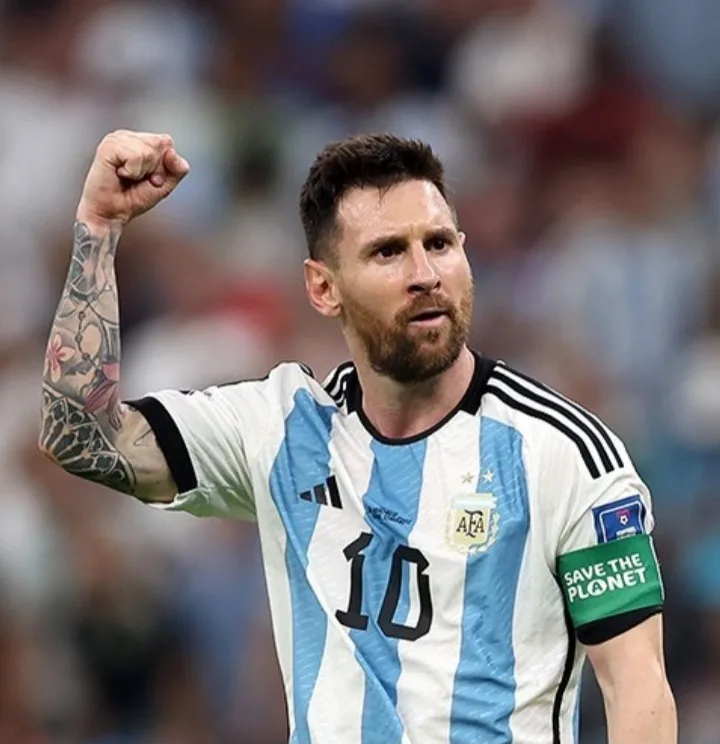
England led. England had sixty good minutes. England had Harry Kane and Jude Bellingham and an entire nation praying at the altar of 'this time.' Then a 39-year-old man named Lionel Messi crossed a ball in stoppage time, and England's sixty-year wait to return to a World Cup final got sixty minutes longer. Argentina wins 2-1. Again. Always.
What Happened, For Those Who Can Bear to Read It
Argentina defeated England 2-1 in the World Cup semifinal on Wednesday at Mercedes-Benz Stadium in Atlanta, advancing to Sunday's final against Spain. England's Anthony Gordon tapped in a cross in the 55th minute to take the lead, and for a while, it genuinely looked like this might be England's day.
It was not England's day. Enzo Fernández equalized in the 85th minute with what NPR describes as a rocket from outside the penalty area. Then, in stoppage time, Lautaro Martínez headed in a cross from Messi to complete the comeback. Messi, who is thirty-nine years old, a fact the universe seems to find hilarious, assisted on both goals.
England captain Harry Kane's postgame quote deserves to be read slowly and in full: 'It's a similar story to what's happened in previous tournaments. We'd done so well for that 60 minutes. We scored. We deserved to be ahead. And then, for one reason or another, we struggled to keep the ball.' For one reason or another. England is going to be saying that phrase in therapy for a while.
Argentina Has Now Survived Four Consecutive Near-Death Experiences
This Argentina team does not do comfortable wins. Per NPR's reporting, this was the fourth straight knockout game where they nearly didn't make it. Cape Verde took them to extra time. Egypt went up 2-0 before Argentina somehow came back. A shorthanded Switzerland squad forced extra time in the quarterfinal despite playing with ten men from the 72nd minute on. And now England, who led with half an hour to play.
Argentina coach Lionel Scaloni offered a characteristically unhinged explanation for all of this, as NPR reports: 'I think that this team plays the best when we are facing a difficult situation, with adversity. We had a challenging game, a challenging situation. There was blood in the water, and we went for it.' Blood in the water. This man coaches a soccer team. He sounds like he's directing a nature documentary about sharks.
The thing is, he's right. You can mock the style all you want, but Argentina is in a second consecutive World Cup final. They are defending champions who just knocked out England in Atlanta with two late goals. Scaloni can speak in whatever wildlife metaphors he likes.
The History Between These Two Teams Is a Lot
Wednesday was the sixth time Argentina and England have met at the men's World Cup, and the history between these programs is genuinely unhinged. NPR's piece lays it out: the infamous 'Hand of God' goal from Diego Maradona in 1986, scored four years after a shooting war between the two countries over the Falkland Islands. The British won the war. The territory is still disputed. Maradona punched a ball into the net with his hand, the referee missed it, and Argentina won the game. International relations are complicated.
England coach Thomas Tuchel went into Wednesday's match claiming none of that mattered. 'We respect our opponent, but we don't dip in historic events, and we don't make it bigger than it is,' he told reporters. Which is a perfectly reasonable thing to say and a very good way to ensure the Argentine players were absolutely thinking about all of it.
For his part, Argentina coach Scaloni was asked about the Hand of God and pulled off a move that would make a diplomat proud. NPR reports he said: 'I think all of the world remembers that game, remembers Diego's performance, remembers above all the second goal.' The second goal, for the uninitiated, was one of the greatest goals ever scored in any sport by any human being. The first goal was a straight-up cheat. Scaloni knows exactly what he was doing there.
Someone Unfurled a Falklands Banner on the Pitch
After the game, with Argentina celebrating on the field, midfielder Giovani Lo Celso, who didn't even play in the match, unfurled a white banner reading 'Las Malvinas son Argentinas,' which translates to 'the Malvinas are Argentine.' The Malvinas is the Argentine name for the Falkland Islands. NPR reports the banner appeared to originate with Argentine fans in the stands.
So to recap the postgame scene: Argentina players celebrating a World Cup final berth, English players gutted on the pitch, and a substitute who didn't play waving a territorial sovereignty banner. This is what a rivalry looks like when it has forty years of genuinely complicated history behind it. The FIFA disciplinary committee is going to have a fun morning.
England's Long Walk Continues
England has not been to a World Cup final since 1966, when they won the whole thing on home soil. That is sixty years of waiting. In that time they have lost a Falklands war over some islands in the South Atlantic, watched Maradona cheat them with his hand and then score on them with his feet, and lost in the Euros final in both 2020 and 2024. And now this: leading a World Cup semifinal with thirty minutes to play, only to lose 2-1. Same score as their 2018 semifinal exit, by the way. Same. Score.
The crowd at Mercedes-Benz Stadium in Atlanta was, per NPR, raucous and ear-splitting. Thousands of Argentine fans in the white and sky blue stripes. English fans in all white or all red. Kane and Bellingham couldn't produce the moment England needed. Messi, who by all reasonable human logic should be retired and playing golf somewhere, produced two.
The Dingo Take
Look. Sports is one of the few places left where you can watch something genuinely dramatic and have it mean something without needing to parse anyone's motives or check the funding sources. Argentina versus England at the World Cup, in Atlanta of all places, with a 39-year-old Messi threading crosses in stoppage time while English fans watch another final slip away, is just objectively great television. It's okay to appreciate that.
But it's also worth sitting with the specific cruelty of England's situation. They scored first. They held the lead for half an hour. Then the dam broke, and now they go home while Argentina plays Spain on Sunday for a second consecutive title. Harry Kane's quote, the one about struggling to keep the ball 'for one reason or another,' is going to haunt English soccer for years. It's the kind of thing you put on a plaque. A very sad plaque.
As for Messi: the man is thirty-nine years old and just assisted both goals in a World Cup semifinal comeback against England. He will now play in a second straight World Cup final. At some point the conversation stops being about legacy or GOAT debates and becomes something closer to just watching a natural phenomenon do its thing. You don't debate whether a hurricane is good at being a hurricane. You just watch it, slightly horrified, and take notes.




Comments