An 80-year-old millionaire walks out of her home in 1981 to find her cat and never comes back. Her killer goes to prison for life. And for the next 45 years, her actual remains sit in the Riverside County desert, completely unidentified. This week, that finally changed.
She Left a Note About Her Cat. She Never Came Back.
Thelma Gaston was not the kind of woman who disappeared without a trace. She had built a $20 million fortune buying and selling repossessed properties after her husband and son both died in the 1950s. She did that alone, in postwar Los Angeles, as a widow. She was nobody's victim until, apparently, she was.
According to the Guardian, Gaston vanished in June 1981 at the age of 80. Investigators found a note on her door saying she had gone to look for her cat. She did not return. Los Angeles police started looking at the people closest to her, and one name came up fast.
Lawrence Remsen was a former carpet salesman who had recently entered Gaston's life. Friends described them as romantically involved. What police described was something considerably less romantic: Remsen allegedly trying to quietly drain a dead woman's estate while pretending she was still alive.
The Con, the Mercedes, and the Mexican Border
Here is the sequence of events, and please note how each detail is somehow worse than the last. According to the Guardian, authorities found Gaston's Mercedes parked at Remsen's apartment. He had attempted to sell more than $1 million of her property. And when investigators closed in, he ran. They eventually caught him crossing the border from Mexico into Texas.
At trial, prosecutors argued Remsen killed Gaston with what the Daily Breeze described in 1982 as "pre-meditation and planning," then got rid of her body so he could keep liquidating her estate. Remsen had his own story: he claimed Gaston died of natural causes and that he dumped her body at sea specifically so he could keep pretending she was alive and sell off her assets. His defense was, essentially, that he was a body-dumping fraudster rather than a murderer.
The jury did not fully buy the prosecution's theory either, convicting him of second-degree rather than first-degree murder. But he went to prison for life regardless. He was 40 years old at sentencing.
Meanwhile, in the Desert
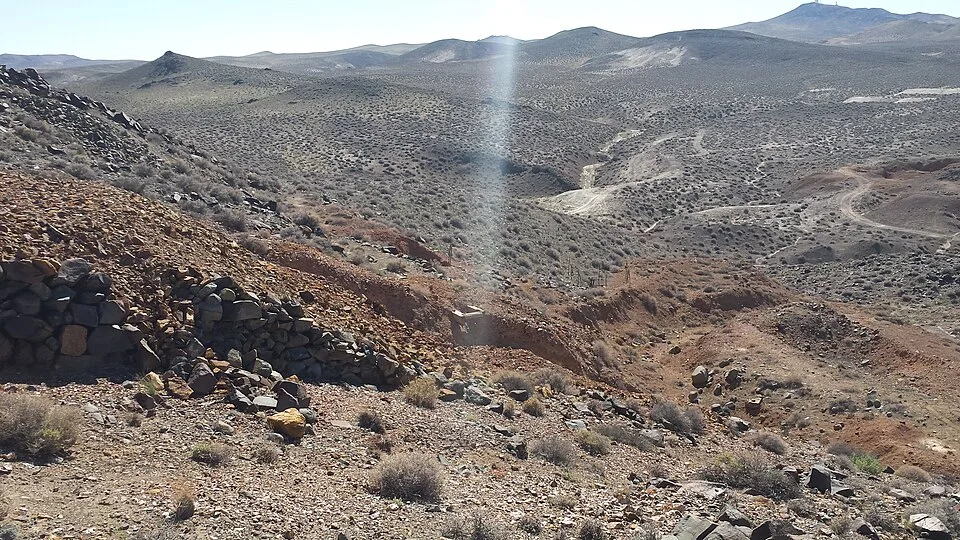
In late November 1981, about five months after Gaston disappeared, someone out gathering firewood in a rugged stretch of desert near Sugarloaf Mountain stumbled across severely decomposed human remains. The Riverside County sheriff's office confirmed that detail this week. For over four decades, nobody could say who those remains belonged to.
That is not a knock on anyone in particular. Identifying badly decomposed remains found in a remote area, in 1981, was genuinely hard. The science was not there. The databases were not there. The funding was definitely not there.
What changed, according to the Guardian, was a Missing and Unidentified Human Remains grant that came through in May 2026. Investigators used genetic genealogy and dental records to finally put a name to those bones. The woman who had lain unidentified in the desert for 45 years was Thelma Gaston.
The Genealogy Work That Actually Matters
Genetic genealogy has become the quiet workhorse of cold case resolution over the past decade. The same technology that lets people find out they have a distant cousin in County Cork is now regularly being used to name unidentified remains and crack cases that sat in filing cabinets for generations. It is one of the genuinely good developments in forensic science, and it costs money, which is why that grant matters.
The Riverside Sheriff's Coroner's Bureau said in a statement, as reported by the Guardian, that they extend sincere appreciation to everyone whose "dedication, expertise, and perseverance" made the identification possible. They also said something that cuts through the bureaucratic language in a real way: that these efforts "have ensured that Ms. Gaston has her name and her story returned to her."
She was a woman who built a fortune from scratch, got taken in by someone she trusted, and then spent 45 years as an unnamed set of remains in the California desert. Getting her name back is the least that could happen. It took longer than it should have.
What Happens Now
Remsen was convicted and sentenced to life. The Guardian reports the identification of Gaston's remains brings the case to a close. There is no indication in the reporting whether Remsen is still alive. Given that he was 40 in 1982 or 1983 at sentencing, he would be in his early to mid 80s today if he survived.
Gaston's estate was worth $20 million in 1981 dollars, which is somewhere north of $70 million in today's money depending on which inflation calculator you use. She had no surviving husband or son. What happened to the money, the properties, the assets Remsen tried to peel away, the Guardian's reporting does not say. That is a separate story for another day.
What the story ends with, for now, is a set of remains in a desert finally getting a name after 45 years. SFGate, which covered background on Gaston's life, noted that she built her fortune through buying and selling repossessed properties after losing both her husband and her son. She survived a lot before she did not.
The Dingo Take
There is something specific and infuriating about this case that gets lost in the procedural details. Thelma Gaston was 80 years old. She had already buried a husband and a son. She had built a real-estate fortune through decades of hard work at a time when women doing that kind of thing were not exactly encouraged by society. And then she trusted someone, and that someone allegedly killed her and dumped her in the desert and then had the audacity to claim in court that he was only a fraudster, not a murderer, as if that distinction were going to save him.
The part that should haunt you is that Remsen's defense was essentially: I did not kill her, I just disposed of her body and stole her money. That was the version of events he offered as exculpatory. The jury called it second-degree murder, which means they found it was not fully planned, which means some part of this system decided that scenario was not quite premeditated enough to be first-degree. He still got life. But still.
And then she sat in the desert, unnamed, for 45 years, until a grant came through and some investigators did the work and gave her back her name. That is the whole story. A woman who survived everything life threw at her finally gets identified by bones in the sand nearly half a century later. Do not let the cold case procedural framing make this feel tidy. It is not tidy. It is just, at long last, finished.





Comments