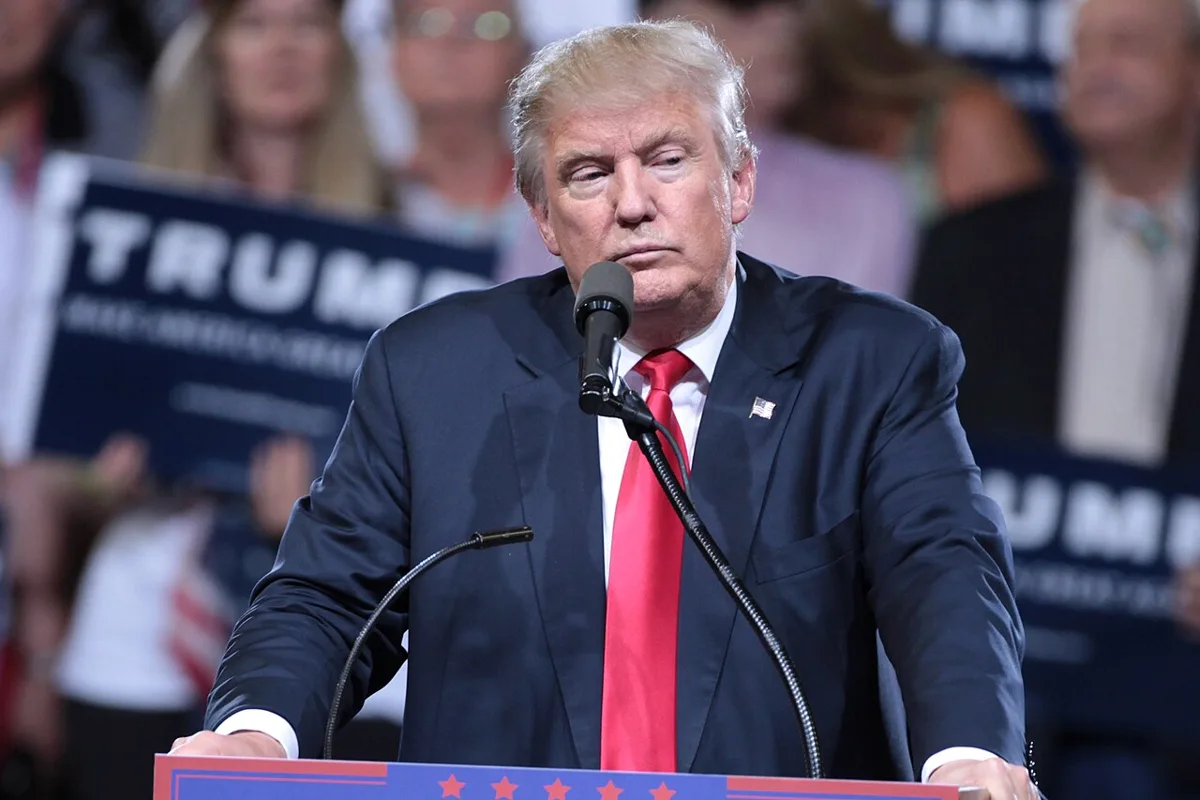
On Thursday night, Donald Trump stood in the White House and told America that its own intelligence agencies have been lying to everyone about China and the 2020 election. The same 2020 election he lost. The same intelligence community he has been trying to gut, purge, and bend to his will since the day he got back into office. Funny timing, that.
What Trump Actually Said
During a prime-time address from the White House, Trump accused U.S. intelligence agencies of covering up alleged Chinese efforts to target the 2020 election, according to Axios. He promised the White House would release evidence showing that Beijing had been operating, in his words, 'over a period of years, starting during the 2020 election cycle.'
That is the core claim. China interfered. Intelligence agencies knew. They hid it. Trump is now, heroically, revealing the truth. That is the story he is selling.
The problem is that U.S. intelligence agencies already assessed China's role in 2020 and concluded that Beijing did not try to influence the election's outcome. That is not a fringe finding from one rogue analyst. That is the official, consensus position of the American intelligence community. Trump is not adding new information to an open question. He is contradicting a settled answer.
The Intelligence Assessment He Wants You to Forget
Here is what the record actually shows. After the 2020 election, the intelligence community evaluated foreign interference attempts and found that while China did consider ways to influence U.S. politics, it assessed that Beijing ultimately decided the risk of blowback outweighed the benefit and pulled back from any direct effort to swing the election. Russia, by contrast, was assessed to have actively worked to help Trump win. That finding has never been seriously disputed by credible analysts.
So when Trump claims the agencies 'covered up' Chinese interference, he is not correcting the record. He is attempting to flip it. The subtext is obvious: if China was the real bad actor in 2020, then maybe Russia was not. And if Russia was not, then maybe the whole story of foreign interference benefiting Trump collapses. It is revisionist history wearing a national security costume.
None of this is subtle. The political logic writes itself.
Why Thursday Night, Why Now
Trump does not call prime-time addresses for fun. There is always a reason, and the reason is almost always about Trump. So what is the reason this time?
He has spent the better part of his second term working to restructure, defund, and in some cases decimate the institutions that produced those inconvenient 2020 assessments. The CIA, the FBI, the Director of National Intelligence's office: all have been subjected to loyalty tests, politically motivated firings, and reorganizations that look a lot less like reform and a lot more like revenge. Accusing those same agencies of a years-long cover-up is a useful way to justify everything that came before it. You cannot be the villain for dismantling institutions that were themselves corrupt. That is the argument he is building.
It also does not hurt that relitigating 2020 keeps his base engaged, angry, and focused on enemies. Six years on, the 2020 election is still the most powerful fuel in MAGA politics. Trump understands that better than anyone.
Where Is the Evidence
Trump promised the White House would release evidence. As of this writing, that evidence has not materialized in any form that independent analysts or journalists have been able to verify. That pattern should be familiar to anyone who has followed this man for more than fifteen minutes.
Axios is reporting on the address and the promise of forthcoming proof, but the actual substance of what Trump claims to have remains, at this moment, entirely inside his administration's control. That means we are being asked to take the word of a man who has demonstrably lied about election-related matters hundreds of documented times, who has political incentives to muddy the 2020 record, and who has already hollowed out the agencies that would ordinarily push back.
What exactly are we supposed to do with a promise of evidence from an administration that controls what counts as evidence?
Who Benefits From This Story
Not the American public, who now has to sort through another round of claims, counterclaims, and carefully timed document drops designed to produce maximum confusion and minimum accountability.
China, weirdly enough, might benefit in certain ways. If Trump's narrative takes hold, it repositions Beijing as the villain of 2020 rather than a cautious bystander, which paradoxically gives China more credit for sophistication and reach than the intelligence community actually assessed it to have had. That is an odd gift to hand an adversary in a prime-time address framed as exposing them.
The people who benefit most clearly are Trump and his political operation. A new China-interference story gives surrogates something to talk about on cable news, gives supporters a new grievance to rally around, and keeps attention away from whatever else is happening in Washington this week that might otherwise dominate the coverage. That is not a conspiracy theory. That is just reading the incentives.
The Dingo Take
Let's be honest about what this is. Trump stood at the most powerful podium in the world and told the country that the people whose entire job is to track foreign interference were lying about foreign interference, specifically the interference that occurred during the election he lost. He has offered a promise of evidence in an administration that treats declassification as a political weapon and transparency as a threat. That combination should set off every alarm you have.
The intelligence community is not above criticism. It has gotten things catastrophically wrong before, it has been politicized before, and healthy skepticism of its conclusions is not naive or misplaced. But there is a difference between legitimate oversight and a president using the bully pulpit to pre-emptively delegitimize findings that do not serve his political mythology. One of those things is accountability. The other is a cover story.
Watch what gets released, watch when it gets released, and watch which inconvenient stories it lands next to when it does. The timing will tell you more than the documents.


Comments