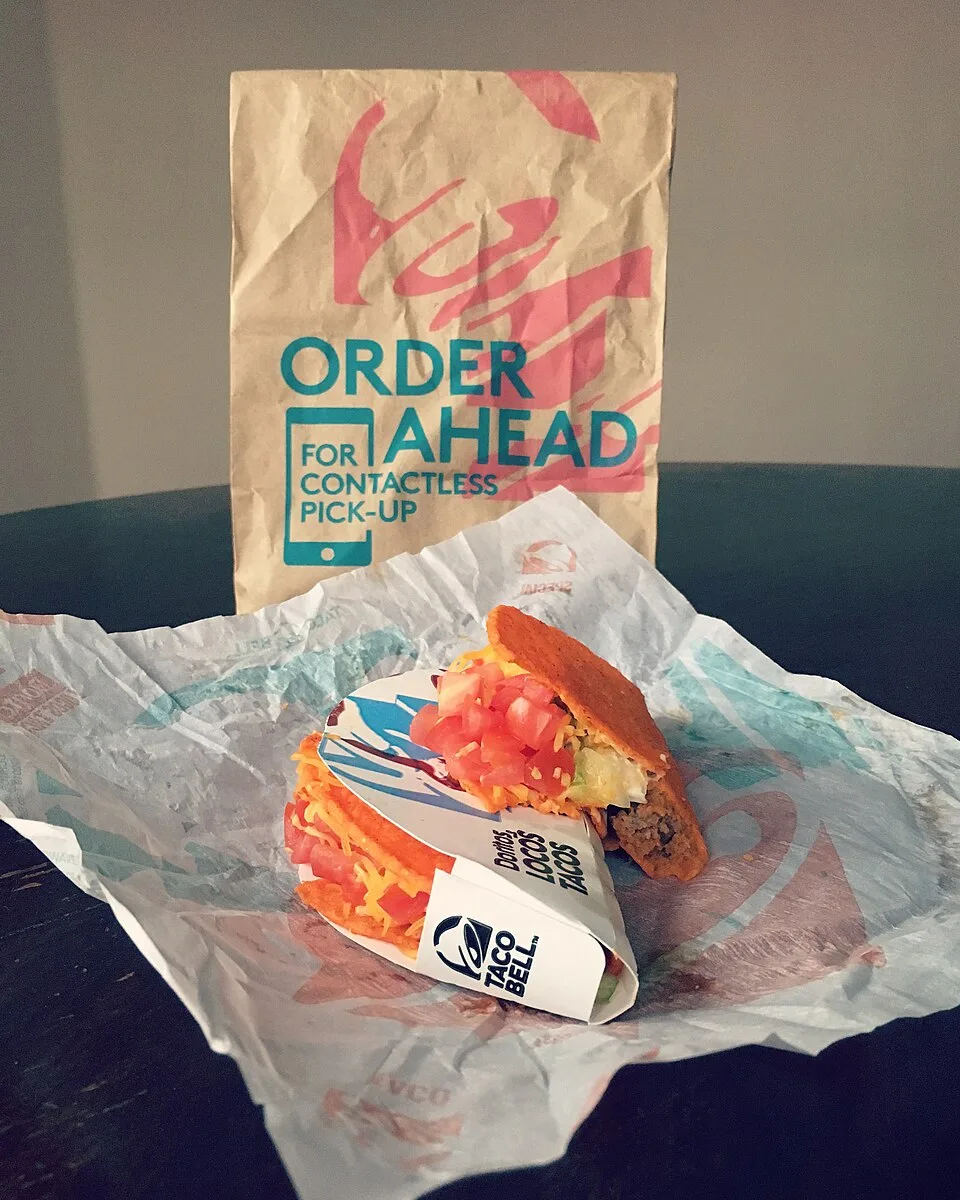
Yum! Brands, the parent company of Taco Bell, told the Securities and Exchange Commission that cyclospora, the parasite responsible for weeks of "explosive" diarrhea, was its single biggest business risk, ranking it ahead of every other threat on earth. That filing sat quietly in a government database. Then thousands of people ate Taco Bell lettuce and found out what cyclospora actually feels like.
The Filing That Should Have Raised Every Red Flag
Here's the thing about SEC annual filings: companies write them specifically to tell investors what could go wrong. They are, by legal design, a list of things the company is genuinely scared of. And Yum! Brands, in its most recent filing, did not bury cyclospora somewhere on page 47 between "geopolitical uncertainty" and "currency fluctuation." According to Forbes, the company named it the number one threat. Above everything else.
The company wrote, and we are not paraphrasing, that food or beverage-borne illnesses "have occurred and may occur within our system from time to time," and flagged that such concerns "may have an adverse effect on our business and/or our growth prospects." Which is corporate-speak for: we know this could happen, we've told the government it could happen, and now you can't say we didn't warn you.
Yum! Brands also specifically flagged its growing reliance on third-party suppliers, distributors and delivery platforms as factors that push contamination risk beyond anything the company can directly control. They wrote all of that down. Filed it with the federal government. And then, apparently, kept buying lettuce from Taylor Farms.
7,000 People, 34 States, One Lettuce Supplier
The CDC estimates that roughly 7,000 people have likely been sickened by cyclospora in the current outbreak, with cases now reported across at least 34 states. Michigan is taking the worst of it, with 4,312 cases and 102 hospitalizations reported in that state alone, according to Forbes.
Lettuce supplied to Taco Bell by Taylor Farms has been identified as one source of the outbreak, with the chain pulling the ingredient from locations in Indiana, Kentucky, Michigan, Ohio and West Virginia. That lettuce is tied to more than 1,600 illnesses on its own. The remaining roughly 5,500 sick people didn't necessarily eat at Taco Bell, which is somehow both reassuring and more alarming at the same time.
Here's why. Taylor Farms doesn't just supply Taco Bell. As Forbes reports, the company sells ready-to-eat chopped salad kits and pre-made stir-frys in tens of thousands of supermarkets, including Walmart, Target, Wegmans, Costco, Kroger and Trader Joe's, and also supplies McDonald's and Chipotle. If you've eaten a pre-packaged salad in the last few months and you live in America, the math gets uncomfortable fast. Taylor Farms was also linked to a 2024 E. coli outbreak tied to McDonald's Quarter Pounders, which is the kind of fact that should haunt a supplier's Wikipedia page forever.
Taco Bell Wasn't the Only One Taking Notes on Intestinal Parasites
What makes this story genuinely strange is that it wasn't just Yum! Brands doing the pre-outbreak paperwork. Forbes found that Sweetgreen and Arcos Dorados, the largest McDonald's franchisee in Latin America, both named cyclospora by name in their own SEC filings as a material business risk.
Sweetgreen's filing, per Forbes, acknowledged that the chain's model of fresh, in-restaurant preparation may expose it to greater contamination risk than competitors who rely on processed foods or centralized commissaries. The filing even warned that employees "may fail to identify or report unsafe or unsanitary conditions." Sweetgreen's stock has dropped 24% in the last month as fears about raw leafy greens spread through the investing class. So at least the market is reading the filings, even if the food safety system apparently wasn't.
Arcos Dorados made nearly identical disclosures, warning that dependence on third-party suppliers raises the odds that a single contamination event could hit multiple locations at once. Three separate publicly traded restaurant companies told the SEC, in writing, that this exact scenario was their nightmare. We are now living inside the nightmare.
What Cyclospora Actually Does to You
In case the phrase "explosive diarrhea parasite" isn't self-explanatory: cyclospora is an intestinal illness caused by the Cyclospora parasite, transmitted through food or water contaminated with feces. The CDC says it can cause weeks of, yes, explosive bowel movements. Weeks. Not days. Weeks.
The good news, such as it is, is that cyclosporiasis is typically not fatal or life-threatening. The CDC has been tracking the current outbreak since cases started appearing in May, and investigators spent weeks trying to figure out what was making people sick before identifying Taco Bell's lettuce supplier on Thursday. The parasite does not spread person to person, which means investigators are now racing to figure out where else Taylor Farms sent the same contaminated lettuce.
The CDC Factor Nobody Wants to Talk About
Forbes has also reported separately that the unresolved nature of this outbreak is raising questions about recent CDC cuts. That is not an incidental detail. The agency that is supposed to catch contamination events like this, trace them back to a source, and stop more people from getting sick has been gutted in the last year and a half.
The outbreak started in May. It took until July to identify even one source. There are still thousands of cases with no clear origin. Whether the delay is a staffing problem, a complexity problem, or some combination of both, the result is the same: thousands of people got violently ill for weeks before the government figured out what was happening.
The Dingo Take
Let's be clear about what happened here. Yum! Brands did not hide the ball. They wrote it all down, filed it with the SEC, and called cyclospora their single biggest risk. The system worked exactly as designed, in the narrow sense that investors were informed. In every other sense, it failed completely. Knowing a risk exists and actually preventing it are two very different things, and the gap between them is currently occupied by 7,000 sick Americans.
Taylor Farms is at the center of this and deserves a great deal more scrutiny than it's currently getting. This is the same supplier linked to a McDonald's E. coli outbreak in 2024. It supplies half the grocery stores in America. It's woven so deeply into the food supply that when something goes wrong, the contamination doesn't hit one restaurant or one region. It hits everywhere at once, which is precisely what Arcos Dorados warned the SEC about in its filing. The consolidation of the food supply into a handful of massive suppliers isn't an accident. It's a decades-long business decision optimized for efficiency and profit, and the public health bill comes due in outbreaks like this one.
And then there's the CDC. The agency is trying to trace a 34-state outbreak affecting 7,000 people while operating with fewer resources than it had two years ago. That's not a conspiracy theory or a partisan talking point, it's a budget reality. Somewhere, someone made the calculation that a leaner CDC was an acceptable tradeoff. The 102 people hospitalized in Michigan alone are the real cost of that calculation.




Comments