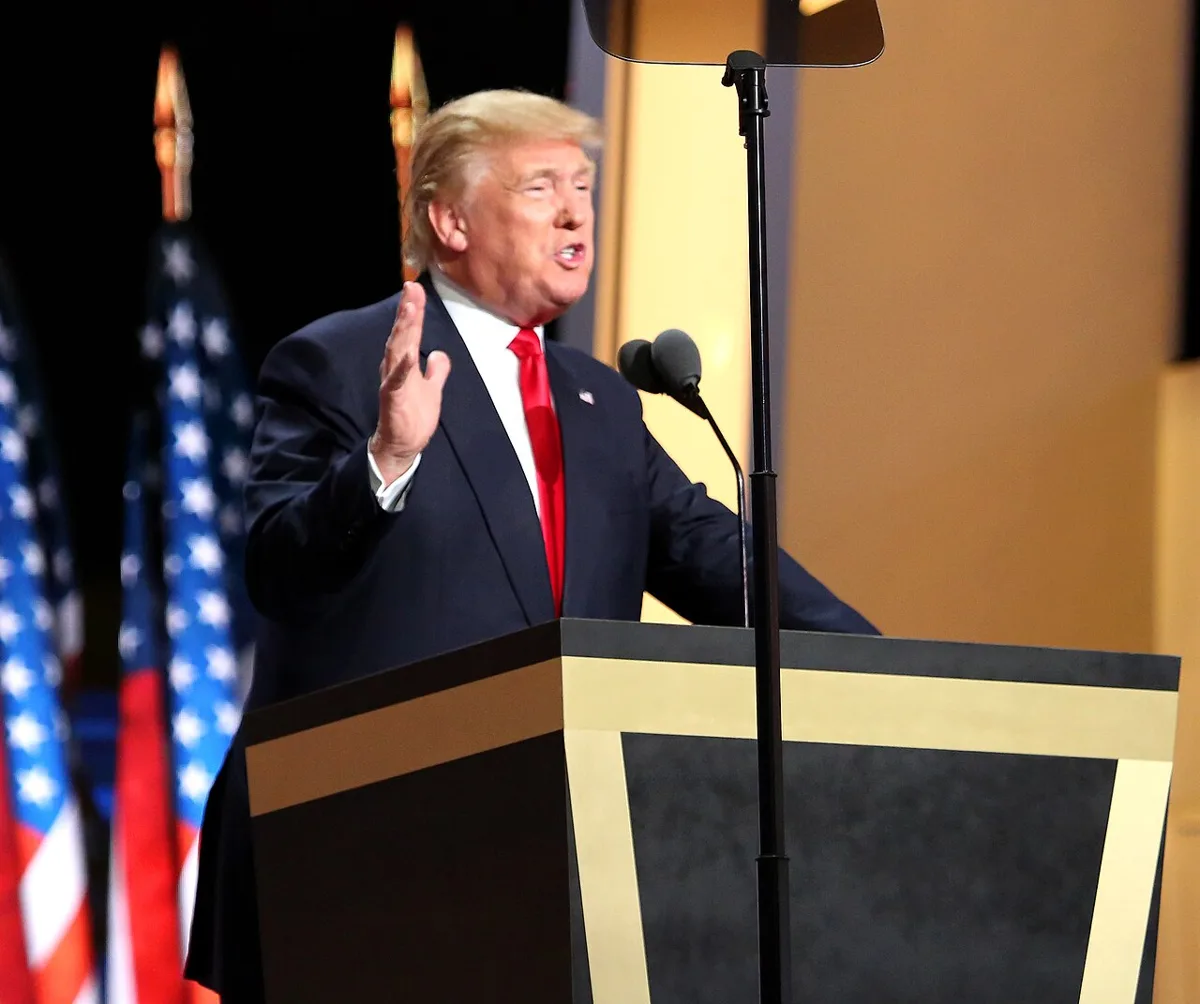
At some point in the early hours of Saturday morning, while most of America slept, workers on scaffolding were scraping Donald Trump's name off the side of one of the country's most celebrated cultural institutions. A federal court had ordered it done by midnight. The Justice Department asked for more time. The judge, apparently, was not in a generous mood.
A Deadline, a Dodge, and a Very Late Night
The Hill reports that workers began removing Trump's name from the exterior of the Kennedy Center in the early hours of Saturday morning, hours after a court-ordered 11:59 p.m. Friday deadline had already passed. The job got done, just not on time.
Late Friday evening, Justice Department attorneys representing the Kennedy Center filed a request with the district court asking for a 12-hour extension. Their stated reason was safety concerns. The court, as far as we can tell from the available reporting, did not grant that extension. The workers showed up anyway, in the dark, and got to work.
Let that image sit with you for a second. The United States Justice Department, the same institution responsible for federal law enforcement and the prosecution of crimes against the nation, was in court on a Friday night arguing that it needed more time to remove a man's name from a building. This is where we are.
How the Name Got There in the First Place
To understand why a federal court is ordering people to scrape letters off a wall at midnight, you have to back up a bit. When Trump returned to the White House, he moved aggressively to remake the Kennedy Center in his image, installing loyalists on its board and rebranding the storied Washington institution with his name on the exterior. Critics called it a vanity project. Supporters called it patriotic. The courts, eventually, called it something else.
The Kennedy Center has been a flashpoint in the broader war Trump has waged on cultural institutions since returning to power. It is a federally chartered nonprofit that has, for decades, operated with a degree of independence from whatever administration happens to be in office. That arrangement has not survived the second term intact.
The DOJ's Safety Argument
The Justice Department's attorneys cited safety concerns in their extension request, according to The Hill. They did not elaborate publicly on what those concerns were, at least not in what has been reported so far. Which means we are left to speculate, or more accurately, to raise an eyebrow very slowly.
Safety concerns are a real thing when you are doing exterior work on a large building at night. Nobody is dismissing that outright. But it is also true that when you want to buy more time complying with a court order that is politically embarrassing to your client, citing safety is a tidy way to do it. The court apparently weighed those two possibilities and landed on its answer. Workers were on-site hours later.
Courts Keep Telling This Administration No
This episode is small in the grand scheme of things. It is letters on a building. But it fits into a pattern that has defined the Trump second term from almost the first week: the administration does something legally questionable, a court orders them to stop or reverse it, the administration drags its feet, and compliance eventually happens under pressure and past deadline.
Federal judges across the country have repeatedly ruled against the administration on everything from immigration enforcement to agency shutdowns to, now, building signage. The DOJ has in many of those cases pushed back hard, sought delays, filed appeals, and in some instances openly questioned whether courts have the authority to tell the executive branch what to do. The Kennedy Center name removal is almost comically minor by comparison, which makes the foot-dragging feel even more revealing. If they fight this hard over a sign, imagine the internal temperature on the stuff that actually matters.
What Happens to the Kennedy Center Now
The immediate question is whether the name comes off cleanly and the legal matter closes, or whether this becomes another prolonged fight. The Hill's reporting focuses on the removal itself rather than any next steps in the litigation, so the full picture is still developing.
What is clear is that the Kennedy Center remains a contested institution. The programming, the board composition, the direction of the place as a cultural venue, none of that gets resolved by removing letters from a wall at 2 a.m. The sign was a symbol. But symbols matter, which is exactly why the administration put it up in the first place, and exactly why the court ordered it taken down.
The Dingo Take
There is something almost poetic about this story. An administration that has spent eighteen months telling federal judges they do not get to run the executive branch spent Friday night sending lawyers to beg one of those same judges for extra time to comply with his order. The judge said no. So the name came down in the dark, past deadline, because a court said it had to.
The Kennedy Center was never really about the Kennedy Center. It was about the same thing everything is about with this administration: dominance, branding, the compulsive need to stamp a name on every available surface and dare someone to object. The courts objected. That is, at minimum, a data point worth holding onto as this administration continues to test exactly how much the judiciary will tolerate.
The workers who showed up at midnight to pull letters off a building did not make this news. The DOJ lawyers who filed a last-minute extension request to delay doing what a court told them to do made this news. There is a version of this story where the administration just complies quietly and no one writes about it. They chose a different version. They always do.



Comments