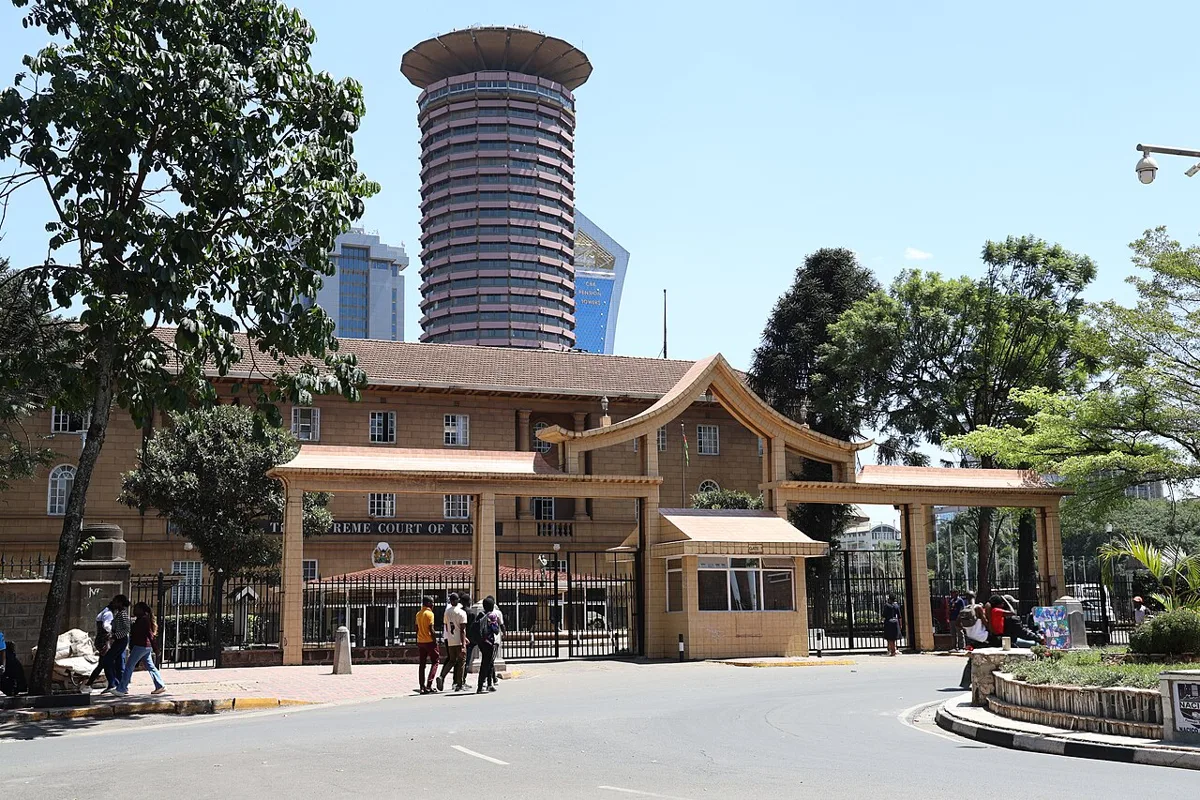
The Supreme Court is sprinting toward summer recess with 23 unresolved cases, and the pile looks less like a legal docket and more like a referendum on whether the United States still has a functional system of separated powers. Birthright citizenship. The Federal Reserve's independence. A million and a half people's right to stay in the country. All of it, hanging on nine people in robes who are apparently also racing some kind of internal deadline nobody told the public about.
Welcome to Flood Season, Where Democracy Goes to Drown
Inside the Supreme Court, the final weeks of June have a nickname: flood season. That's the annual sprint to get opinions written, circulated, and finalized before the justices pack their bags and head out of Washington. According to Fox News, 23 cases remain from a term that saw the court hear arguments in nearly 60 disputes. Twenty-three. That's not a backlog. That's a controlled detonation.
Several of these cases share a common thread, and it is not a subtle one. They are all, in one way or another, asking the same question: how much can one man do without anyone stopping him? The rulings will shape not just Trump's second term but the legal architecture that every president after him inherits. This is the part where the stakes get genuinely enormous and the dark comedy becomes very difficult to enjoy.
The Citizenship Case That Made History for All the Wrong Reasons
Start with Trump v. Barbara, which Fox News describes as arguably the most closely watched case left on the docket. The dispute centers on Executive Order 14160, Trump's attempt to end birthright citizenship for children born in the United States to parents who entered the country illegally or are here on temporary visas. This is the 14th Amendment. This is settled constitutional law. This is the kind of thing law professors teach on the first week of semester.
Trump made history by personally attending oral arguments in March, the first sitting president ever to do so. It did not go well. The justices pushed back openly and, in some cases, sharply. The court seemed skeptical of the administration's claim that automatic citizenship has been historically abused, which is a polite way of saying they did not buy it. A ruling against Trump would simply reaffirm what has been the legal, political, and social consensus in this country for over a century. The fact that reaffirming the obvious now qualifies as a win tells you a lot about where we are.
A Million People's Lives, Technically a Discretionary Matter
Then there are Mullin v. Doe, Dahlia and Trump v. Miot, two cases about the administration's push to terminate Temporary Protected Status for Haitian and Syrian migrants. TPS currently covers roughly 1.3 million people from 17 countries, people who fled war zones and natural disasters and were given legal permission to live and work here, often for years. The administration's argument is that DHS has broad discretion to end those protections whenever it feels like it. The opposing argument is that federal law actually requires a specific process and allows courts to review those decisions.
Fox News reports that the conservative court majority has already signaled its support for the Homeland Security secretary's discretionary power here. So if you were hoping the court would be the firewall on this one, you may want to sit down. Over a million people are waiting on a ruling that the current court composition has essentially already telegraphed, and the only open question is how wide the door swings.
Can Trump Fire the Fed? The Court Seems Uncomfortable With the Answer
Trump v. Cook is the one keeping economists up at night. The question: can the president fire Federal Reserve Governor Lisa Cook? The Federal Reserve is explicitly designed to be independent from presidential interference, which is a feature, not a bug, because central bank independence is one of the things that keeps the dollar from becoming a novelty item. But the Trump administration argues that the president has broad unilateral authority to remove her anyway.
Based on January oral arguments, Fox News reports the court looks ready to hand Trump a significant legal setback on this one. Justice Brett Kavanaugh, not exactly a member of the resistance, told Solicitor General D. John Sauer directly: "That's your position that there's no judicial review, no process required, no remedy available? Very low bar for 'cause' that the president alone determines? I mean, that would weaken, if not shatter, the independence of the Federal Reserve." When Brett Kavanaugh thinks you've gone too far on executive power, you have gone genuinely far.
But the companion case, Trump v. Slaughter, involving former FTC Commissioner Rebecca Slaughter, could carry even broader implications for presidential firing authority across the entire executive branch. Cook might survive. The principle keeping her in place might not.
The Bigger Picture Nobody Wants to Say Out Loud
Zoom out and the pattern is hard to miss. Across birthright citizenship, TPS protections, the Federal Reserve, and firing authority, these cases are all variations on one argument: that the president can do what the president wants, and the courts and Congress should get out of the way. That argument is not new. Presidents have always pushed at the edges. But the scale and the speed of it, 23 major cases in the final weeks of June, reflects something different.
The court gets to define the answer. This particular court, with its 6-3 conservative supermajority, has already shown it is willing to hand significant wins to executive authority when it chooses to. The question is how far it goes before it starts worrying about what those precedents look like in the hands of the next person who holds the office, whoever that turns out to be.
The Dingo Take
Here is what is actually happening right now. The Supreme Court has a few weeks to issue 23 rulings that will determine whether one man can unilaterally rewrite who is an American, whether 1.3 million people get deported, and whether the institution that controls your mortgage rate is subject to presidential whims. This is not a normal docket. This is a constitutional stress test being administered in real time, with the results due before the Fourth of July.
The small mercy, if you can call it that, is that the court has not rolled over on everything. Kavanaugh's comments about the Federal Reserve suggest at least some justices understand that building unlimited firing power into the presidency is not something you can easily walk back once the next person shows up. But "some justices understand this is bad" is a very low bar to feel good about.
Twenty-three cases. One month. The entire argument is basically: how much is too much? The court is about to tell us. If you have been waiting for an obvious moment to start paying closer attention to the Supreme Court, this is it. Not the abstract, law-school version. The version where the decisions come out in batches and reshape the country before most people have finished their summer reading list.




Comments