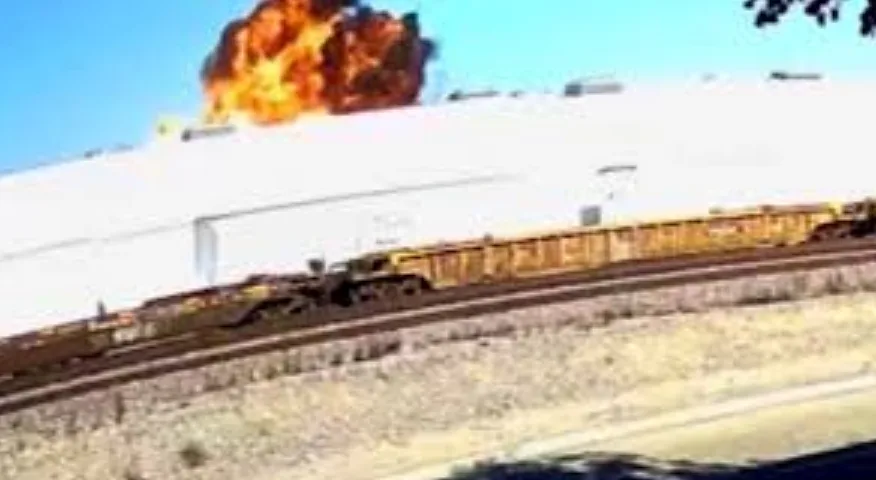
Twelve people boarded a skydiving plane in rural Missouri on Sunday morning and none of them came home. The aircraft spun out of control and slammed into the ground near Butler at around 11:20 a.m. local time, killing all 11 passengers and the pilot before a single parachute could open.
They Didn't Have Time to Jump
Witness Bailey Reed watched the whole thing happen. She told CBS News the plane was "completely perpendicular" and "going fast" when it hit the ground. "They didn't have time to jump," Reed said. "They were so low to the ground, the parachutes wouldn't have deployed, and there was no way anyone could have jumped and survived that."
That detail is brutal in the most specific possible way. These were skydivers. Jumping out of planes at altitude was the entire point of being on this flight. The aircraft failed them before they ever got the chance to do what they came there to do.
The FAA confirmed the plane was a Pacific Aerospace P750, a turboprop specifically built for skydiving operations. It crashed while departing the airport, according to the FAA. A post-crash fire then destroyed what was left of the aircraft, NTSB Vice Chairman Michael Graham said at a Monday afternoon press conference.
A Community That Knew Everyone on Board
This wasn't a plane full of strangers. Charles Crinklaw, a regular skydiver from Kansas City roughly 50 miles north of the crash site, told a local NBC affiliate: "Everybody on that plane was somebody that I know. I know four of them very, very well. They jumped with me at Falcon Skydiving on a regular basis."
Skydive Kansas City, which runs the regional skydiving operation, called it a "devastating loss" for the "wider skydiving community" and said it was cooperating with federal investigators. The victims have not yet been publicly identified as of this reporting.
Skydiving communities are tight. These are people who spend their weekends hurtling toward the earth together, who trust each other with their lives on a routine basis. When something goes this wrong, it doesn't just hit the families. It hollows out an entire scene.
The NTSB Is On It, But Don't Hold Your Breath
NTSB Vice Chairman Graham confirmed that investigators arrived at the scene Monday to document the wreckage and collect what he called "perishable evidence." Not all investigators had made it out yet, and Graham cited an unusual culprit for the delay: the World Cup in Kansas City was causing logistical headaches.
Graham was upfront about the timeline. A preliminary report should arrive within 30 days. A full investigative report? Twelve to eighteen months. "This is the beginning of a long process," he said. "We will not be determining what happens overnight."
The FAA added one more detail worth sitting with: the plane was not in communication with air traffic control at the time of the crash, because it wasn't required to be given the type of airspace it was operating in. That's not unusual for small aircraft operating out of smaller airports. It's also just a grim reminder of how much can go catastrophically wrong without anyone on the ground knowing until it's already over.
What We Know About the Aircraft
The Pacific Aerospace P750 is a New Zealand-built turboprop that has become something of a workhorse in the skydiving industry. It's designed to carry jumpers to altitude efficiently, with a large door and configurations that allow multiple divers to exit quickly. It's not a flashy plane. It's a utility aircraft built for a specific job.
What caused this particular P750 to spin out and go perpendicular to the ground on takeoff is not yet known. Engine failure, mechanical failure, pilot incapacitation, a load shift during climb-out: the investigators will work through every possibility. BBC News reports that the NTSB's full findings are still 12 to 18 months away, which means the families of twelve people are going to be waiting a very long time for answers.
The Dingo Take
Here's the thing about aviation accidents in the United States: the investigation process is genuinely one of the most rigorous on earth. The NTSB is serious, it is thorough, and it usually gets to the bottom of what happened. That's real. The 12-to-18-month timeline isn't bureaucratic foot-dragging; it's what a real investigation actually takes. If you want the truth about why a plane fell out of the sky, you have to be willing to wait for it.
But twelve people are dead on a Sunday morning in Missouri, and the World Cup logistics are slowing the response, and the plane wasn't even required to be talking to air traffic control. None of that is scandal. All of it is just the particular texture of how something this awful can happen in a country this large, with this many small planes, operating under rules designed for normal days. Sunday was not a normal day for anyone near Butler.
The skydiving community already knows most of the people they lost. The rest of us are still waiting on names. Whatever the NTSB finds in the wreckage, that's where this story actually lives: in the people who got on a plane on a Sunday to do something they loved, and didn't get to come back from it.




Comments