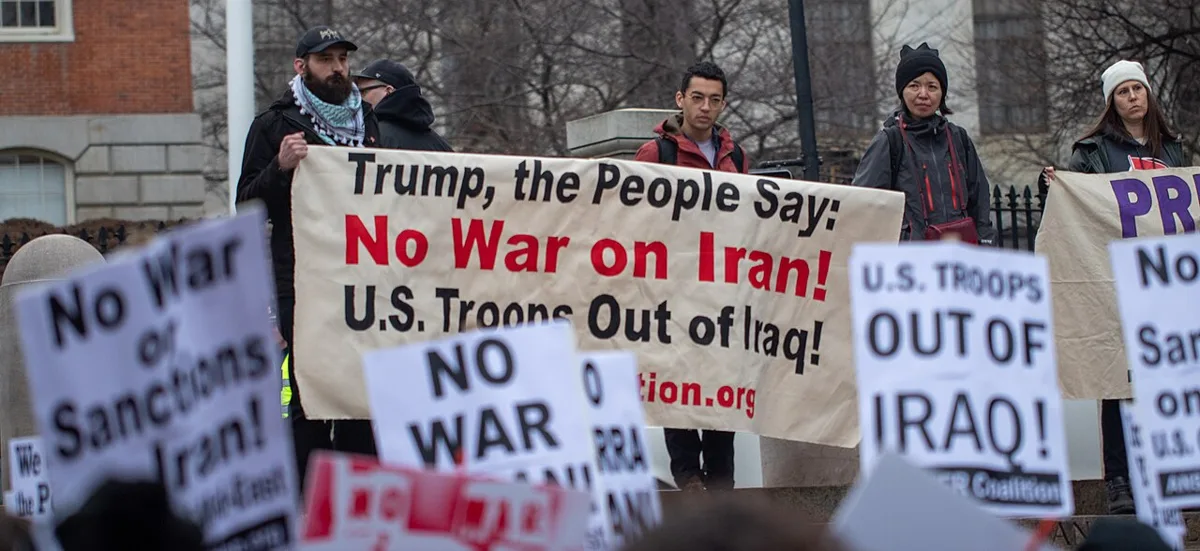
Donald Trump promised the Iran war would be over in a few weeks. That was February. It is now the end of July, Egypt is on fire, Kuwait just took a hit, and two-thirds of Americans have decided this whole thing wasn't worth it. The war that was supposed to be a quick win has become something else entirely: a spreading regional disaster with no clear objectives, no exit, and a body count that keeps climbing.
What 'A Few Weeks' Looks Like Five Months Later
The war with Iran began February 28. Trump said it would be brief. He was wrong in the way that people are wrong when they haven't thought something through and don't want to admit it.
Five months later, according to CBS News, 18 American service members have been killed, though the Trump administration has been trying to massage those numbers in ways that should make everyone deeply uncomfortable. Iran's Revolutionary Guard says U.S. strikes killed three of its soldiers Thursday in the northwestern province of Zanjan. Three members of the same family died when American jets hit Qeshm island in the Strait of Hormuz. That is what the fifth month of a 'few weeks' war looks like.
A four-day diplomatic pause that was supposed to create space for talks collapsed overnight when Iran launched a surprise attack on a U.S. base in Jordan. Trump vowed to hit Iran 'very hard.' U.S. Central Command then launched what it described as a 'powerful response' targeting military command centers, missile and drone facilities, and coastal defense sites. The pause is over. The cycle continues.
The War Just Showed Up in Egypt
Here is a sentence that would have seemed alarming five months ago and now barely makes the top of the news cycle: drones attacked Egypt on Wednesday.
The Egyptian government confirmed Thursday that a drone strike caused fires at the port of Damietta, damaging two natural gas vessels. According to CBS News, maritime tracking firm Kpler identified the ships as the Energos Winter storage and regasification vessel and the GasLog Salem tanker, both moved offshore after the fires. Kpler also said the strike disrupted operations at a key LNG import hub on the Mediterranean.
No one has claimed responsibility. Egypt's government says its investigation is ongoing. Iran's Houthi allies have been targeting ships in the nearby Red Sea throughout the conflict, which makes them the obvious candidate, though nothing has been confirmed. What is confirmed is that Egypt, which had until Wednesday been spared, is now part of the story. The blast radius of this war keeps getting wider.
Jordan, Kuwait, Iraq: The Regional Scoreboard
Jordan intercepted Iranian missiles for the second consecutive day on Thursday, per CBS News. Kuwait reported that a strike killed one person in the north of the country. Saudi Arabia, for the first time, joined the U.S. in a joint bombing campaign targeting Iranian-backed militias in Iraq, after those militias launched multiple drone strikes against Saudi oil facilities.
CBS News has learned that Iranians were among at least 20 people killed in those Iraq strikes. Coffins draped with both Iranian and Iraqi flags were carried through the streets during funeral processions. That detail alone tells you how tangled this has become.
This is not a contained conflict. This is a war that is actively recruiting new participants. Every week the map gets a little bigger, the list of affected countries grows a little longer, and the Trump administration's original framing of a swift, decisive operation looks a little more delusional.
The Poll Numbers Are Brutal and Getting Worse
The Associated Press and the NORC Center for Public Affairs Research released new polling this week, and the numbers are not kind. About two-thirds of U.S. adults say the war with Iran has not been worthwhile. That includes essentially all Democrats and independents, and, critically, 37% of Republicans.
Just 28% of Americans approve of how Trump is handling Iran, down from 34% last month. Among Republicans specifically, approval has dropped from 71% in June to roughly 61% now. The AP-NORC margin of error for Republicans is six points, so that decline is considered slight in statistical terms, but the direction is unmistakable. The base is getting tired.
Trump's overall approval rating sits at 33%, which AP-NORC notes is slightly below where he stood at this point in his first term, and similar to where Biden stood about a year and a half in, when inflation was at its worst. Congressional Republicans facing reelection in November have been defending Trump's military actions. That is going to be a harder argument to make every week this drags on.
The Dingo Take
You are supposed to believe this war is going well. That is the only conclusion you can draw from the fact that the Trump administration has been quietly revising the American death toll while the conflict expands into new countries every week. Eighteen confirmed U.S. service members dead, Egypt just got droned, Kuwait just took a hit, and the diplomatic pause that was supposed to lead somewhere collapsed in under four days. Going great.
The poll numbers matter here, and not just as a political scorecard. Two-thirds of Americans saying this war wasn't worth it, five months in, with no stated objectives and no visible endgame, is the public telling the government something plainly. The question is whether anyone in power is listening or whether we're in the 'just trust the plan' phase that historically precedes the much worse phase.
Trump told the country this would be over in a few weeks. It has been five months, the war is in Egypt now, and the president's approval on Iran is at 28%. At some point, 'a few weeks' stops being a prediction that aged poorly and starts being a lie that cost lives. We passed that point a while ago.




Comments