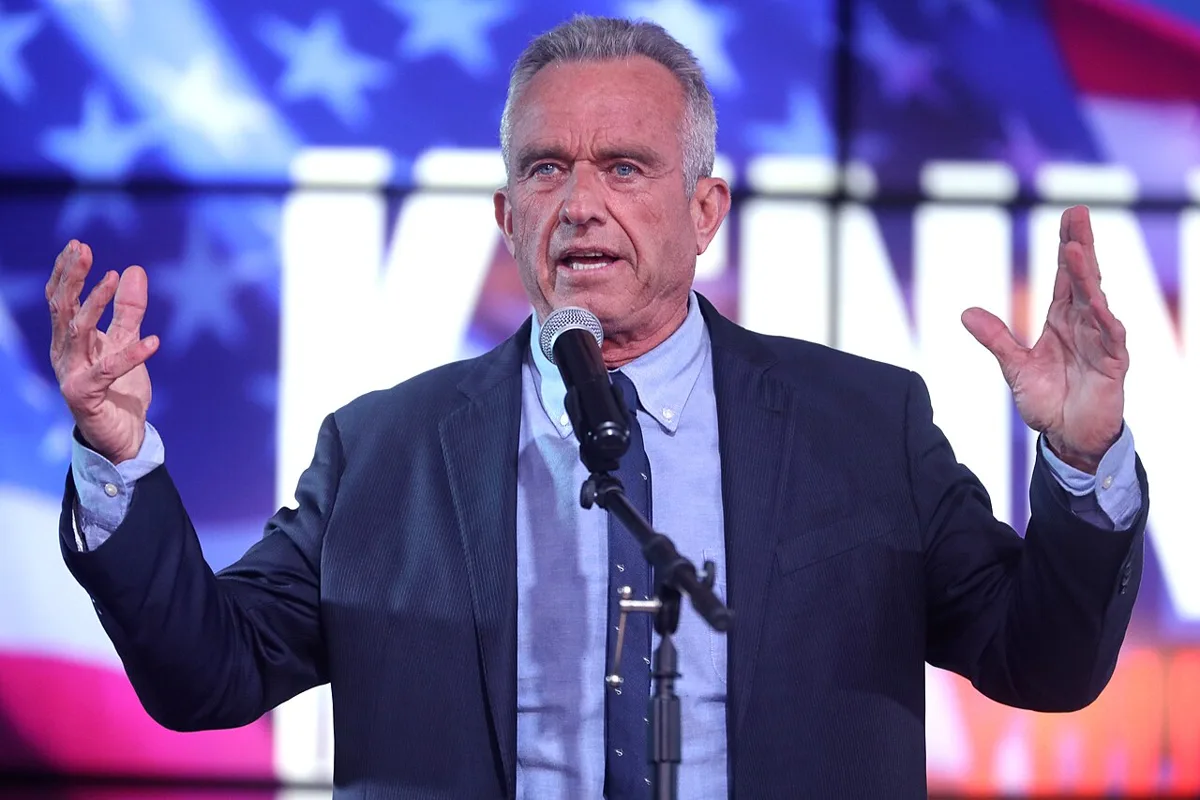
The United States Secretary of Health and Human Services sent a letter to a medical journal demanding they explain why they removed a paper that scientists called 'utter garbage' -- a paper written by a non-scientist that misread federal data to falsely link vaccines to infant death. Robert F. Kennedy Jr. did not do this quietly. He posted the letter on X, set a deadline of June 25th, and let the internet do the rest.
What Got Removed and Why
The journal Toxicology Reports pulled a 2021 paper this past spring after editors determined it was so seriously flawed it posed an actual risk to public health. The publisher, Elsevier, told the Guardian the removal followed careful review and consultation with relevant experts, and that the paper's recommendations 'may pose potential risks to public health and could potentially be applied in clinical practice resulting in harm to patients.' That's a polite way of saying: this thing could get babies killed.
The paper was written by Neil Z. Miller, who the Guardian points out is not a scientist. Miller used data from the federal government's Vaccine Adverse Event Reporting System, known as VAERS, to argue there were 'unusual patterns and safety signals highly suggestive of a causal relationship' between vaccination and Sudden Infant Death Syndrome. The problem, as critics identified almost immediately after it was published, is that Miller fundamentally misunderstood what VAERS data is and what it can show.
VAERS is a passive surveillance system where anyone -- any person, anywhere -- can submit a report about a health event that happened after a vaccination. A child gets vaccinated and then gets in a car accident three weeks later? Someone could report that. The database is a starting point for investigation, not a conclusion. Using it to establish causation is the methodological equivalent of arguing that ice cream causes drowning because both spike in summer.
The Letter That Has Experts Furious
Kennedy sent his letter to Toxicology Reports editor Lawrence Lash one week after the Guardian published its reporting on the retraction. Make of that timing what you will. The letter asked the editor to answer several specific questions about how the journal arrived at its decision, with a deadline of June 25th. Kennedy posted it publicly on X, ensuring maximum pressure and minimum plausible deniability.
Dorit Reiss, a vaccine law expert at UC Law San Francisco, responded directly to Kennedy's post. 'If he is trying to use his position to bully a journal, he is stepping close to violating their first amendment rights,' she wrote. That is not a fringe legal take. That is a law professor telling the sitting Secretary of Health that he may be using government power to coerce a private publisher's editorial decisions.
Dr. David Gorski, a surgical oncologist who has spent years documenting the anti-vaccine movement, put it more bluntly. Kennedy has spent years positioning himself as a free speech champion, Gorski noted, but here he was 'apparently using the power of his position' to lean on a private journal's editorial process. 'To antivaxxers, it's free speech for me, but not for thee,' Gorski wrote on X. Hard to argue with that framing.
The Paper's Author Says He Had No Idea
Miller, the author of the retracted paper, told the Guardian he did not know Kennedy's letter was coming. He said he was grateful for it anyway, and expressed hope it would ensure that 'articles are not removed or retracted solely because their findings are controversial or challenge consensus views.' That would be a reasonable concern if the paper had been removed for being controversial. It was removed for being wrong.
Miller had previously told the Guardian he was asked to respond to eight concerns during the journal's review process and that the concerns were 'either insignificant or plainly incorrect.' Forensic scientist Magdalen Wind-Mozley, who works with the Oxford Vaccine Group and began raising public concerns about the paper in 2021, offered a different assessment. 'Utter garbage from start to finish,' she told the Guardian on Monday. 'It should never have been published.' She called Kennedy's intervention 'low.'
This Is Not Happening in a Vacuum
The Guardian's reporting notes that this retracted paper is one of three the outlet highlighted that Kennedy and his allies have used to justify controversial changes to federal vaccine policy. Read that again. The health policy of the United States government has been shaped, in part, by papers that outside experts describe as methodologically broken, and at least one of which a journal just removed from the scientific record entirely.
Kennedy's office did not return the Guardian's requests for comment on criticism that he was overstepping his authority. The journal editor and Elsevier also had not responded to requests for comment as of publication. So right now we have a Cabinet secretary using his platform and his title to pressure a private scientific publisher, and nobody at HHS is willing to publicly defend the move.
The Dingo Take
Here is the core of what is happening. A non-scientist published a paper misreading federal data to suggest vaccines kill infants. Real scientists immediately identified serious methodological problems. A forensic expert filed a formal complaint in 2022. The journal conducted an investigation and removed the paper this spring. And the United States Secretary of Health and Human Services responded by sending the journal a letter with a deadline, which he then posted on social media for his followers to see.
This is not scientific inquiry. This is not oversight. A private journal made an editorial decision based on expert review, and a Cabinet official used the machinery of his office to make them feel the heat. The chilling effect here is not subtle. Every journal editor in the country just watched a federal official publicly demand answers from a peer because they retracted a paper he liked. What do you think happens to the next retraction decision involving a study that Kennedy's movement has built policy around?
The cruelest part of all of this is that SIDS is real. Infant death is real. Parents who have lost children to SIDS deserve honest science, rigorous investigation, and researchers who understand the data they are working with. What they do not deserve is a Cabinet secretary using their grief as political cover to intimidate journals into keeping bad papers on the record. Kennedy claims to be fighting for the children. The children would be better served by someone who could tell the difference between a causal relationship and a coincidence in a passive reporting database.


Comments