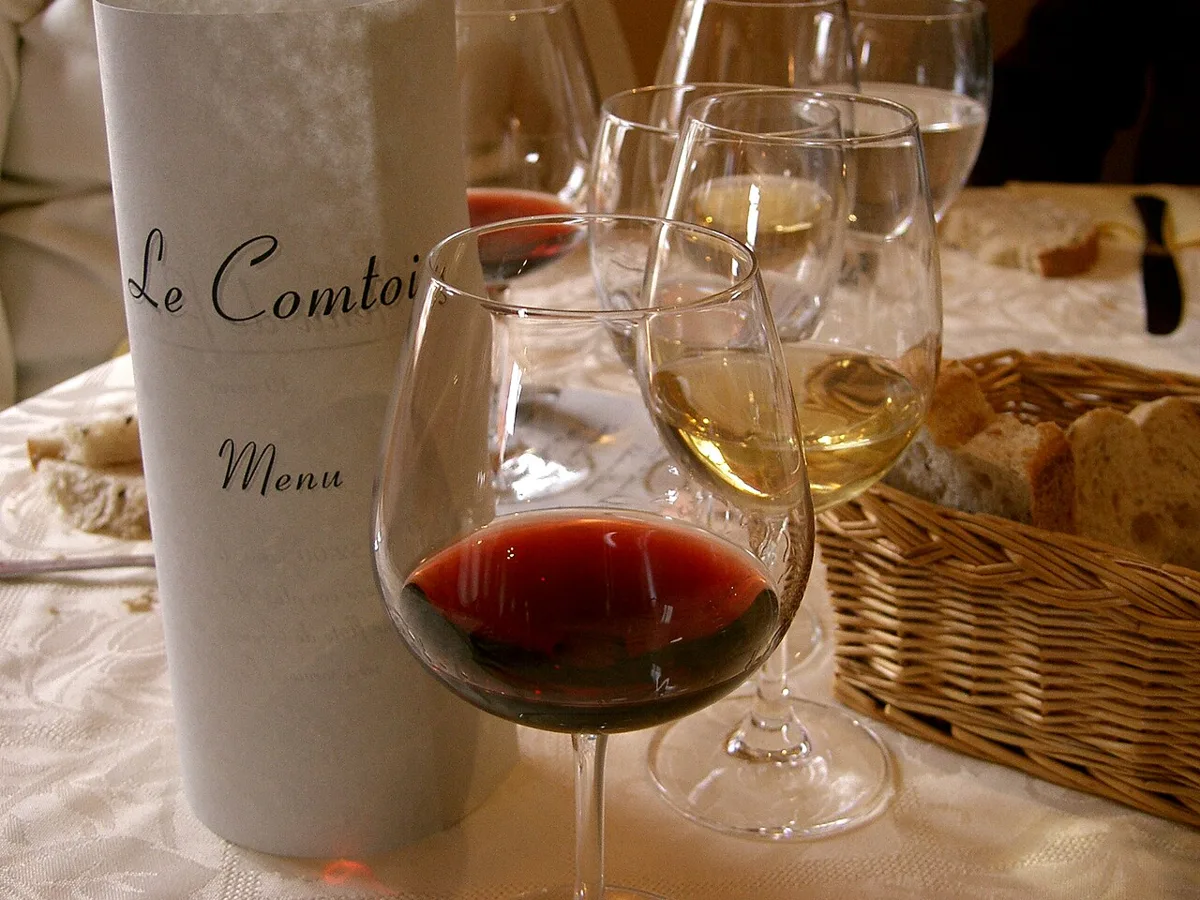
Donald Trump has given France a choice: kill the tax on American tech companies, or watch your entire wine industry get torched in the US market. He delivered the ultimatum directly to Emmanuel Macron, then ran to the New York Post to make sure everyone knew about it before Monday's G7 summit in the French Alps.
The Threat, In Trump's Own Words
The New York Post published an exclusive interview Sunday in which Trump laid out the deal in terms that even a toddler could understand. "I asked him not to charge American companies, and if they do, I have no choice but to charge a 100% tariff on all champagnes and all wines coming out of France," Trump told the Post. "All [Macron] has to do is get rid of the sales tax, and he wouldn't have that kind of pressure."
One hundred percent. On all wine. From all of France. The US accounts for roughly a fifth of the French wine industry's global sales, worth more than $2 billion annually according to the Post. So Trump is essentially threatening to cut off one of France's most important export markets unless Paris plays ball with Silicon Valley. It's a protection racket with better branding.
What France's Digital Tax Actually Does
The tax in question is France's digital services levy, commonly called the GAFAM tax, which has been in place since 2019. It hits Google parent Alphabet, Amazon, Meta, and Apple with a 3% charge on their local French revenue. The key word there is revenue, not profits, which means the biggest players get hit the hardest regardless of how creatively their accountants structure things offshore.
The French finance ministry says the tax pulled in roughly $700 million last year. France's deeply divided National Assembly voted 296-58 last October to double the rate to 6% and narrow the threshold to target only the largest global firms, though ministers eventually vetoed that hike. Lawmakers had originally floated a punishing 15% rate before scaling back under industry pressure. So Trump's current fury is, at least in part, aimed at a tax that France's own government already refused to let get bigger.
Britain, for the record, has kept its own digital services tax under its current trade arrangements with the US. Canada folded on its version in 2025 after Washington broke off trade talks entirely. Italy is reportedly weighing whether to follow Canada's lead. France is increasingly the last one standing, which is either a sign of principle or a spectacular miscalculation, depending on your read of how this G7 summit goes.
Macron Said It Was Settled. It Is Not Settled.
Here's where it gets awkward. A senior source close to Macron told reporters last week that the digital tax dispute was "no longer up for debate" among G7 countries, suggesting the two sides had quietly reached an understanding. A US official immediately told the Post that account was "not accurate."
So either Macron's team was spinning aggressively ahead of a summit they're hosting on their own soil, or the two sides had a genuine miscommunication about where things stood. Either way, Trump's interview blew the whole thing up before Air Force One even landed in the Alps. If Macron was hoping to use the home-field advantage of hosting the G7 to project diplomatic competence, this is not the start he needed.
This Is Not a New Threat, Which Is the Whole Problem
Trump's 100% tariff number is not something his team invented last week in a fit of pique. The US Trade Representative floated that exact figure back in 2019 during a formal investigation into the French digital tax. The Post notes that a temporary truce was reached at the 2019 G7 in Biarritz, in part because Macron was considered something of a "Trump whisperer" who could cut deals with the then-president.
That reputation apparently has limits. The Trump administration is now taking what the Post describes as a harder line globally, which tracks with basically everything that has happened in US trade policy since January 2025. The White House, when asked for comment, pointed to a February 2025 presidential memo declaring that American businesses would no longer "prop up failed foreign economies through extortive fines and taxes." The memo tasked the US Trade Representative and Treasury Department with deciding whether to reopen a formal probe into the French levy. Neither department responded to requests for comment.
The G7 Just Got a Lot More Interesting
The summit runs through Wednesday in the lakeside town of Evian-les-Bains, which is the sort of scenic postcard location that makes diplomatic blow-ups feel even more surreal. The group includes Canada, France, Germany, Italy, Japan, the UK, and the United States, meaning the hosts will spend three days sitting across from the man who just publicly threatened to make their most famous export unaffordable in America's market.
Put yourself in the position of the French trade officials who spent weeks preparing talking points for this summit. Your president's office told the press the wine situation was handled. Then the American president gave a newspaper interview calling that characterization wrong and reissuing the threat at full volume. The agenda items on global security and economic policy are going to have a very weird vibe now.
The Dingo Take
Let's be clear about what's happening here. The United States government is threatening to impose a 100% tariff on French wine, which would effectively price it out of the American market, not because France invaded anyone, not because of a national security threat, but because France is taxing Google and Amazon. A 3% revenue levy on some of the most profitable corporations on the planet is, apparently, the line in the sand. The French finance ministry collected $700 million from the thing. Apple alone made over $100 billion in profit last year. The idea that Silicon Valley needs a presidential ultimatum and the threat of a trade war to protect it from a 3% tax is genuinely difficult to type with a straight face.
The timing is also worth sitting with for a second. Trump gave this interview before a summit that France is hosting on its own soil, on a week when the stated agenda is supposed to be about coordinating the world's wealthiest democracies on trade and security. He used an exclusive with a friendly tabloid to publicly embarrass the host nation's president, contradict the French government's own account of where negotiations stood, and remind every other country at the table what happens when you get on Washington's bad side. That is not diplomacy. That is a demonstration.
Macron earned his "Trump whisperer" reputation by finding ways to flatter and finesse his way through difficult moments with the American president. The 2019 Biarritz truce was real. But Trump is in a second term now, and the guardrails that occasionally slowed things down in the first one are gone. France can either drop the tax and hand a domestic political victory to a government that has been cozying up to Silicon Valley since day one, or hold the line and watch the champagne pile up in French warehouses. Some choice. Enjoy the lakeside views, everyone.




Comments