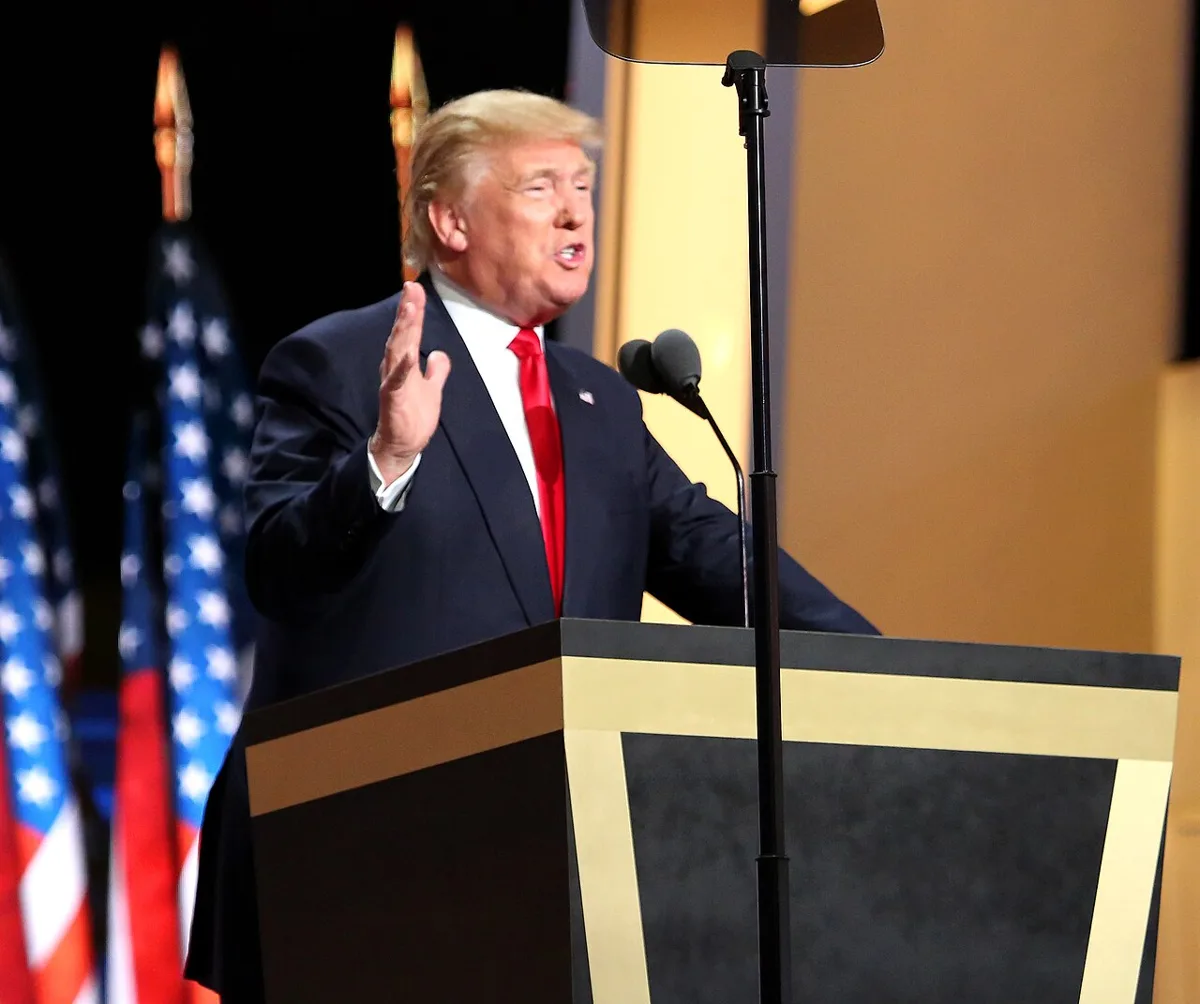
A sitting president traded between $212 million and $695 million in stocks during the first three months of 2026, made 3,642 individual transactions across more than a thousand companies, and somehow the story isn't leading every single newscast in America. CBS News dug through Trump's latest financial disclosure form and what they found is either the most brazen conflict of interest in modern presidential history, or an extraordinary coincidence factory that just keeps producing coincidences.
The Numbers Are Genuinely Insane
Let's just put the figures on the table. According to CBS News, which extracted and organized the data from Trump's OGE Form 278-T filed in May, the president's investment accounts made 2,346 purchases and 1,296 sales between January 6 and March 30, 2026. That's 3,642 total transactions. In three months. While he was also, theoretically, running the United States government.
To put that in context: his January disclosure listed just 191 transactions over the entire final two months of 2025. Something changed dramatically between December and January, and whatever it was, it sent the trading volume through the roof. One investment professional who reviewed the transactions for CBS News said he had "never seen a strategy out there that would warrant that amount of trading." The Trump Organization, for its part, says the president and his family have zero influence over the portfolio, which is run by "independent third-party investment managers." Sure. Totally normal.
The Timing Is Where This Gets Ugly
Here is where you need to slow down and actually read this carefully. On January 6, 2026, Trump's financial managers bought between $500,001 and $1,000,000 worth of Nvidia stock. The very next week, CBS News reports, the administration relaxed export controls on Nvidia's AI chips, opening the door for the company to sell them to China. Nvidia's stock, as you might imagine, was not hurt by this development.
Then there's Palantir, the defense contractor with a massive book of government business. Trump's accounts bought hundreds of thousands of dollars in Palantir stock throughout March. On April 7, Trump posted on Truth Social praising the company by name and including its stock ticker, writing that Palantir "has proven to have great war fighting capabilities and equipment. Just ask our enemies!!!" This is a sitting president pumping a stock he owns. We have the receipts.
And then there's Eli Lilly. According to KFF Health News, Trump's accounts bought as much as $730,000 in Eli Lilly stock over the first quarter, with the timing coinciding with what KFF described as "several favorable government decisions benefiting the drugmaker's GLP-1 business." Three companies. Three convenient timings. One president.
The Suspicious Spike Nobody Can Explain
The trading volume itself tells a story, and it's not a subtle one. CBS News reports that Trump's accounts made roughly 400 purchases in each of January and February. Then March arrived, and suddenly the accounts made 1,565 purchases in a single month. On March 23 alone, the accounts executed 283 purchases and 17 sales in one day.
There was also a notable sell-off on February 10, when the accounts dumped large positions in Microsoft, Amazon and Meta, with each transaction valued between $5 million and $25 million. What happened around February 10 that might prompt someone with access to privileged government information to liquidate major tech holdings? That's a question CBS News is raising by publishing the timeline. It's a question nobody in the administration appears eager to answer.
Warren Is Calling It What It Looks Like
Democratic Senator Elizabeth Warren of Massachusetts has called for an investigation into what she is describing as "potential insider trading." At a recent Capitol Hill hearing, Warren pressed Treasury Secretary Scott Bessent directly, pointing to the Nvidia trades and other transactions as evidence that the president "is enriching himself by taking advantage of his position." Bessent's response to this request is not detailed in the CBS News reporting, which tells you something about how that conversation probably went.
The professional investment managers CBS News consulted offered a split verdict. One suggested the volume of trading likely reflects a tax-reduction strategy by Trump's money managers. The other said the sheer scale of it was unlike anything he'd encountered. The high volume, both agreed, makes it genuinely difficult to isolate whether any specific trades were informed by inside knowledge. Which, cynics might note, is a pretty convenient feature of a portfolio this large and chaotic.
The 'Independent Managers' Defense and Why It Doesn't Hold Up
The Trump Organization's position is that none of this is the president's doing. Independent third-party managers run the portfolio. Trump doesn't make the calls. Therefore nothing to see here. This argument would carry a little more weight if the trades in question didn't keep aligning so neatly with the president's own public statements and his administration's policy decisions.
Federal law requires officials to report securities transactions worth more than $1,000 within 45 days to the Office of Government Ethics. The disclosure Trump signed on May 8 covers January through March. What it cannot easily cover is intent, or what information the managers might have had access to, or what conversations might have happened before any of these trades were placed. That's the gap Warren wants investigators to close. The administration, so far, seems to prefer the gap stay open.
The Dingo Take
Let's be honest about what this looks like. A president buys Nvidia stock, his administration immediately hands Nvidia a massive policy gift. A president buys Palantir stock, then personally promotes the company on social media using its ticker symbol like a hype account with nuclear codes. A president buys Eli Lilly stock while his government is quietly making favorable decisions for Eli Lilly's most profitable product line. If any of this happened at a hedge fund, the SEC would be pulling email records by Wednesday morning. Because it's happening at the White House, we get a press statement about independent managers.
The "I didn't know what my managers were trading" defense is the presidential equivalent of "I didn't know what was in the emails my assistant sent." You still signed the financial disclosure, Mr. President. Your name is on the form. And the idea that the people managing hundreds of millions of dollars on your behalf operate in a hermetically sealed bubble with zero contact with anyone who has access to the most sensitive policy information on the planet is, to use a technical term, completely insane.
Congress has the authority to investigate this. The SEC has jurisdiction. The Office of Government Ethics exists specifically for situations like this one. What we are watching is a test of whether any of those institutions still mean anything, or whether we have simply decided that the rules about self-dealing don't apply to this particular president. Based on the last year and a half, you probably already know how that test is going.




Comments