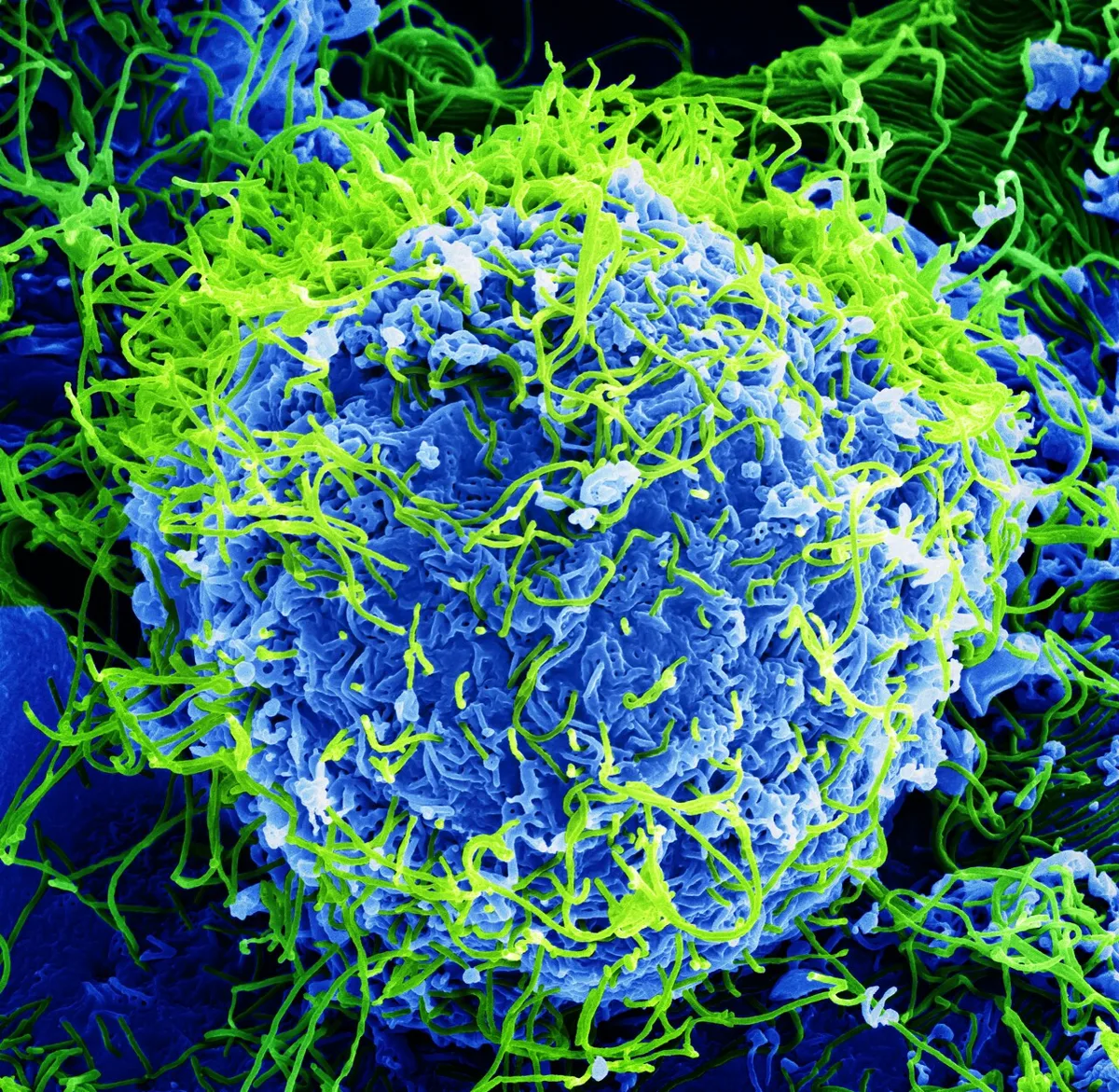
An American doctor who caught Ebola in Congo, was airlifted to Berlin, and survived a strain of the virus for which there is no vaccine or approved treatment landed back on U.S. soil this week with his wife and four kids. Dr. Peter Stafford is, against some pretty steep odds, fine. The 782 people still confirmed sick in Congo are a different story.
The Part Where He Actually Had Ebola
Dr. Peter Stafford was working in Congo as part of Serge, a Pennsylvania-based Christian missions organization, when he contracted the virus last month. He was evacuated to Charité hospital in Berlin on May 20, spent more than two weeks receiving care there, and was discharged on June 6. He has been confirmed Ebola-free since May 30, according to Serge.
"I am filled with gratitude to God for preserving my life, to all those who prayed on my behalf, and to the many medical providers who cared for me," Stafford said in a statement. He arrived home Monday alongside his wife Rebekah, also a doctor who had been volunteering with the organization, and their four children.
Rebekah and the children were evacuated and quarantined as a precaution. According to Charité hospital, none of them ever developed symptoms. Other missionaries and their families who had been serving in Congo with Stafford have also been released from monitoring and returned to the United States, Serge confirmed.
The Strain Nobody Has a Fix For
Here's the thing that should be getting more attention. This is not the Zaire strain of Ebola, the one that nearly ate West Africa alive between 2014 and 2016 and the one scientists have since developed vaccines and treatments for. This is Bundibugyo ebolavirus, a significantly rarer strain, and as CBS News reports, there are currently no vaccines and no approved treatments for it.
Stafford survived essentially on supportive care. His doctors in Berlin managed his symptoms and kept him alive while his immune system did the actual work. That is not a plan you want to be scaling up to thousands of patients.
The fact that this man walked out of a Berlin hospital after contracting a hemorrhagic fever with no pharmaceutical safety net is genuinely remarkable. It is also, let's be honest, not the outcome you can bank on for an epidemic.
What's Actually Happening in Congo Right Now
The outbreak is not contained, and it is not shrinking. As of Saturday, the respective health ministries of Congo and Uganda reported 782 confirmed cases and 178 confirmed deaths in Congo alone. Uganda has recorded 19 confirmed cases and two confirmed deaths as of Sunday, meaning the virus has now crossed an international border.
A case fatality rate hovering around 22 percent puts this Bundibugyo outbreak in rough historical range for the strain, which killed around 25 percent of those infected during its first documented outbreak in 2007. That is cold comfort for the hundreds of families currently in the middle of it.
Stafford himself said as much in his return statement. "Our prayers continue for those in Congo who are facing this devastating epidemic and for the ongoing efforts to control the disease." The man nearly died there. He knows what he's talking about.
What a Medical Evacuation to Berlin Actually Means
It is worth being direct about something the coverage tends to gloss over. Stafford survived in significant part because he had access to a world-class hospital in Germany, a functioning evacuation infrastructure, and an organization with the resources to move a sick American doctor and his entire family across two continents on short notice.
The vast majority of the 782 confirmed cases in Congo do not have those options. The communities facing this outbreak are dealing with it inside a country that has been perpetually devastated by conflict, underfunded health systems, and a history of outbreaks the international community responds to too late and abandons too soon.
Stafford's recovery is a genuinely good news story. The infrastructure gap it quietly exposes is not.
The Dingo Take
Good. Dr. Stafford is home. His kids are home. His wife is home. Everyone should be relieved about that, and nobody should minimize what that family went through over the past month. Surviving Ebola, any strain of Ebola, is not a small thing.
But the story is not over because an American got on a plane. There are 782 confirmed cases in Congo right now, 178 confirmed dead, and a virus spreading into Uganda that has no vaccine and no treatment. The world has a documented habit of treating an outbreak as a closed file the moment the Western patient gets home safely. The cameras follow the survivor to the airport, everyone exhales, and the coverage dries up. Meanwhile the epidemic keeps moving.
Stafford himself seems to understand this better than most of the people writing the headlines. He said his prayers are with the people still in Congo facing the epidemic. That's not boilerplate. That's a man who looked this thing in the face and knows what it is. The question is whether the rest of us are paying attention, or whether we've already decided the story is over because the American is safe.




Comments