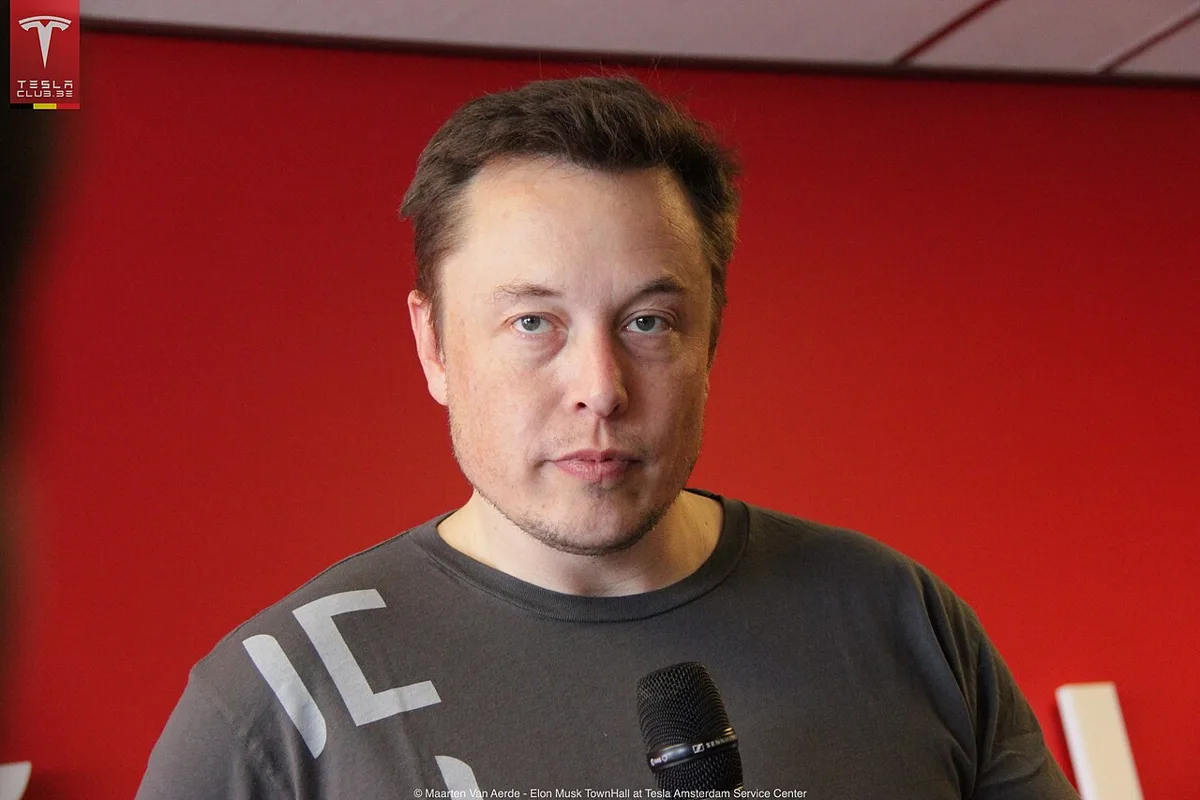
SpaceX went public on Friday, Elon Musk became the world's first trillionaire, and California Senator Adam Schiff immediately took to X to declare something 'terribly wrong' with an economy that allows this. X, of course, is the platform Musk owns. The richest human being in recorded history got a cut of Schiff's engagement before the post finished loading.
The Post Heard Round the Feed
According to the New York Post, Schiff's response to the SpaceX IPO was to log onto Musk's own social media platform and call the whole thing a symptom of a corrupt system. He wanted to talk about people going without health care while a trillion-dollar fortune gets minted in a single trading session. These are not unreasonable things to talk about.
But there is a particular flavor of political self-own involved in choosing X, specifically, as your venue for complaining about Elon Musk's power and reach. That is roughly equivalent to calling your landlord a slumlord from the apartment he owns, using his phone, while he listens through the walls. Schiff has been in the Senate long enough to know how optics work. Apparently not this particular set of optics.
Who Actually Got Rich Here
Here is a part of this story that tends to get lost when politicians start swinging at billionaires. The New York Post points out that SpaceX employees held stock options, and when the IPO landed Friday, those options turned into real money. A welder in Hawthorne, California paid off his house. Engineers who spent years building reusable rockets suddenly had down payments.
This is not nothing. You can have a completely legitimate argument about whether Musk deserved to personally cross the trillion-dollar mark, about tax policy, about how wealth compounds obscenely at the top, and you can be right about all of it. But if the argument flattens out all the workers who just got a genuine financial windfall in the same breath, it starts to sound less like economic justice and more like reflexive rich-guy hatred dressed up in policy language.
Schiff is capable of a sharper argument than what he posted. He chose not to make it.
California: The State That Keeps Losing the Plot
SpaceX moved its headquarters to Texas in 2024. The New York Post notes this was not a mystery or a surprise. California had been making the business case for leaving for years, layering on costs and regulatory friction until the calculation became obvious. The state did not lose SpaceX because of some external market force. It lost SpaceX because it made SpaceX want to leave.
Schiff represents that state. He campaigns on the California dream, the same one, as the Post notes, that his own late father ultimately left the state to preserve, spending his final years in Florida. That is a pointed irony, and not one Schiff has been eager to litigate publicly.
To be clear: Texas is not some policy paradise, and the deregulation-solves-everything crowd has plenty of Texas-shaped counterexamples waiting for them. But the specific, narrow point that California taxed and regulated one of the most consequential aerospace companies in American history right out of its borders, and then sent a senator to complain about where the profits went, is genuinely hard to argue with.
The Critics Who Showed Up to Help
Schiff had company. The New York Post reports that Bernie Sanders also blasted Musk's new status, which is essentially Sanders's entire brand running as scheduled. Paul Krugman went further, calling SpaceX a 'Ponzi scheme' floating on a rigged market.
This is the same Paul Krugman who, as the Post points out, once advised Enron. If you are keeping score at home: the company that committed one of the largest accounting frauds in American corporate history had Krugman's consulting services. SpaceX, which builds rockets that NASA now depends on for rides to orbit because the alternative was literally buying seats from Russia, is the Ponzi scheme. The discourse is in great shape.
None of this means Musk is above criticism. His tenure running DOGE, his manipulation of X's algorithmic amplification for his own political purposes, his increasingly erratic public behavior, his coziness with the Trump administration, all of it is fair game and has been covered accordingly. But calling SpaceX a fraud while standing next to your Enron consulting credit is a choice.
What the Trillion Actually Represents
SpaceX is, whatever you think of Musk personally, a genuinely extraordinary company. The New York Post lays out the case plainly: reusable boosters that land on barges and fly again the next week, a satellite internet grid reaching villages with no roads, a launch rate that embarrasses every national space program on earth. NASA buys its rides from SpaceX because it ran out of better options.
Musk did not inherit this. He built it, which does not make him a saint, and does not mean the trillion dollars should be untaxed, and does not mean the wealth gap it represents is not a real and serious problem. It means the argument against him needs to be better than 'the economy is corrupt and also your rockets are a Ponzi scheme.' That argument loses on the facts, which is why the left, as the Post notes with some accuracy, tends to be better at expressing contempt for Musk than at actually rebutting what he built.
The Dingo Take
Look, there are real and serious arguments to make about what it means for one human being to accumulate a trillion dollars while people ration insulin. Those arguments deserve to be made forcefully and specifically, with actual policy attached, in venues that do not algorithmically enrich the subject of your criticism every time someone hits the like button. Schiff posting on X about Musk is not activism. It is content. Musk's platform, Musk's engagement metrics, Musk's advertisers getting another set of eyeballs. The senator worked for free.
The frustrating thing is that the underlying critique is not wrong. Concentrated wealth at this scale is a policy problem. The carried interest loophole is a policy problem. The way capital compounds at the top while wages stagnate at the bottom is a policy problem. These are all things Democrats could be building actual legislative coalitions around instead of firing off posts that generate heat without producing anything but fodder for the other side's fundraising emails.
Schiff is a smart man and a capable politician. He knows exactly what he was doing on Friday. He was feeding a news cycle and giving his donor base something to forward around. What he was not doing was anything that makes a welder's kid in Fresno more likely to afford health insurance. If the left wants to win the argument about what Musk's trillion dollars says about America, it needs to come with more than a tweet. Especially one posted on his website.





Comments