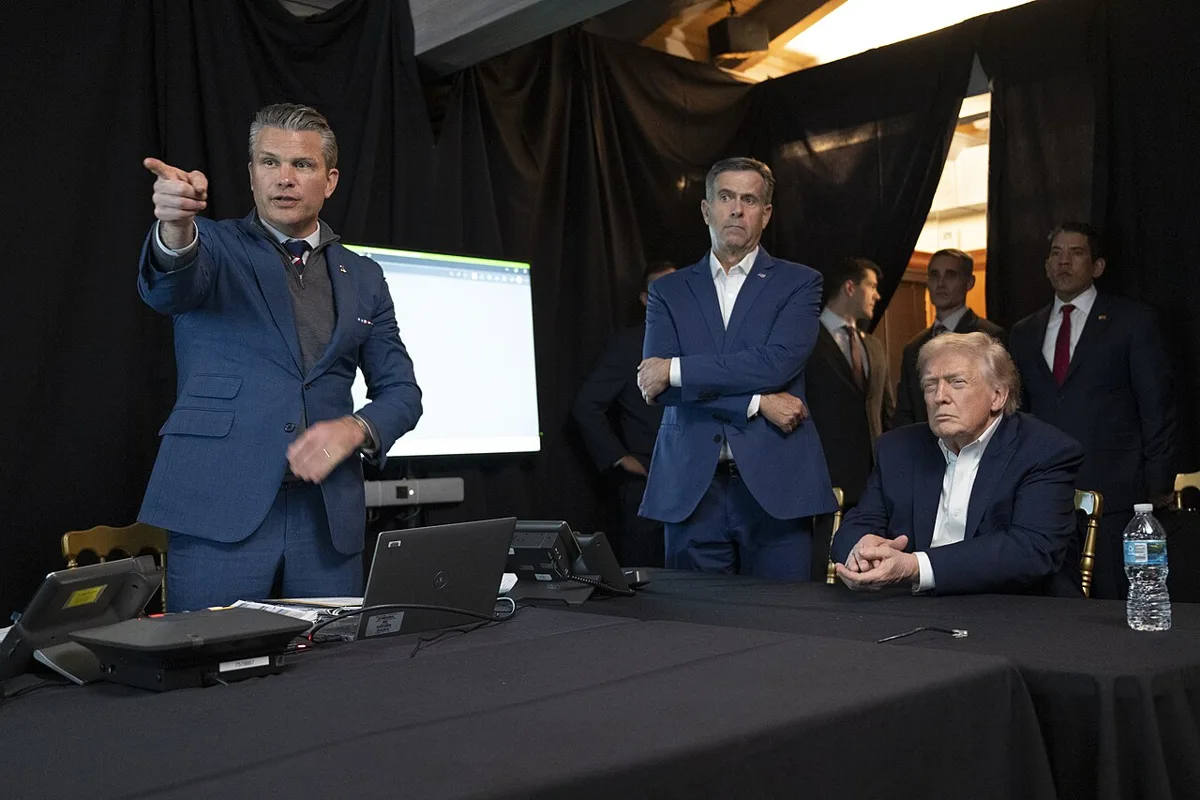
Donald Trump reportedly wants to fire his own Secretary of Defense and CIA Director for the crime of disagreeing with him about a nuclear deal. Not leaking. Not corruption. Disagreeing. Welcome to the second term.
The Loyalty Test Nobody Signed Up For
According to Israel Hayom, sources close to the Trump administration are warning that officials who pushed back on the president's memorandum of understanding with Iran could face serious professional consequences. The outlet quoted a source saying, bluntly, "The debate has been settled. Anyone who opposed it could pay a personal price."
The names getting circulated as potential casualties: Secretary of Defense Pete Hegseth and CIA Director John Ratcliffe. Two of the most senior national security officials in the United States government. Possibly getting fired not for incompetence, not for scandal, but for doing their jobs and offering a dissenting assessment.
This is the part where we pause and let that sink in. The CIA director might lose his job for telling the president something he didn't want to hear about a nuclear-armed adversary. In a functioning administration, that's called intelligence. In this one, it's apparently a fireable offense.
Who's In and Who's Out
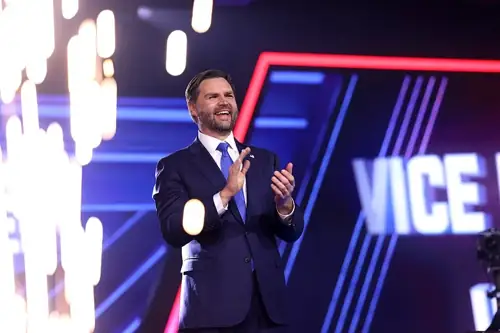
The Mirror US reports that the internal divide tracks pretty clearly along factional lines. JD Vance, Steve Witkoff, and Jared Kushner are the deal's architects and champions. They argued that the Iranian regime isn't going to collapse on its own anytime soon, that Gulf states were pushing hard for a deal, and that the opening of the Strait of Hormuz made some form of sanctions relief essentially inevitable.
On the other side, Hegseth, Ratcliffe, and officials from both the Pentagon and State Department made the case that the Iranian regime was already buckling under economic pressure. Their read: squeeze harder, wait it out, and you might get a genuine capitulation or a collapse of the regime itself. That is, for what it's worth, a coherent strategic argument. It just wasn't the argument the president wanted to hear.
Secretary of State Marco Rubio, who has historically been one of the most hawkish voices in American politics on Iran, appears to have survived the purge by keeping his mouth shut. The Mirror US notes that Rubio has been careful not to publicly criticize the deal. Sometimes survival in this White House really does come down to that.
The Sanctions Problem Nobody Has Solved
Treasury Secretary Scott Bessent reportedly raised another serious objection during internal discussions: lifting sanctions on Iran would be enormously difficult to reverse. This is not a fringe concern. Sanctions regimes, once unwound, require multilateral buy-in to rebuild, and the international community has made abundantly clear it has limited patience for the U.S. toggling them on and off depending on who's in the Oval Office.
The Mirror US reports that with the Strait of Hormuz now reopening as part of the deal framework, at least partial sanctions relief appears to be baked in. Bessent's worry, which is also the worry of basically every sanctions expert who has ever studied this, is that you don't get to just flip that switch back when the deal goes sideways. And deals with Iran have a documented history of going sideways.
Even Lindsey Graham Is Sweating
You know a deal has complications when Lindsey Graham, a man who has spent years performing absolute devotion to Donald Trump, starts hedging publicly. Graham posted on X that he was "pleased" about the memorandum of understanding allowing the Strait of Hormuz to reopen, but immediately followed that with a paragraph that read less like congratulations and more like a pre-written alibi.
"I am somewhat concerned that Iran's view of the agreement seems different than what the American negotiating team is claiming," Graham said. That is a genuinely alarming sentence. Two parties to a deal having fundamentally different interpretations of what they just agreed to is not a minor implementation hiccup. That is the definition of not actually having a deal.
Graham also reminded everyone that under existing law, any nuclear agreement with Iran must go to Congress for review and a vote. He specifically called for Vance and the negotiating team to be the ones to present it, which is either a vote of confidence in the vice president or a very careful way of making sure someone else holds the bag when Congress tears it apart. With Graham, it's genuinely hard to tell.
The 'Weak and Pathetic' Reviews Are Already In
The Mirror US notes that beyond the internal White House drama, the deal itself has drawn sharp criticism from outside the administration, with multiple voices calling it "weak and pathetic." The specific critics aren't named in the sourcing, but the characterization tracks with the broader hawkish foreign policy consensus that any deal short of full Iranian nuclear dismantlement is a concession that emboldens the regime.
Trump, of course, is billing this as a historic win. And to be fair, getting any kind of signed framework with Iran and reopening the Strait of Hormuz is not nothing. But the gap between the administration's triumphant framing and the actual text of what was agreed to, combined with Iran apparently already disputing what the deal means, suggests the celebration may be getting ahead of the facts on the ground.
The Dingo Take
Here is the core problem with purging your intelligence and defense officials every time they deliver an assessment you don't like: eventually, nobody tells you anything true anymore. You end up in an information bubble staffed entirely by people whose primary qualification is agreeing with you. And then you make a nuclear deal with a country that immediately tells the world it means something different than what you said it means, and you have nobody left in the building with the credibility or the job security to say "sir, we have a problem."
The fact that Ratcliffe, the CIA director, might get fired for doing CIA director things, and that Bessent's entirely reasonable concern about sanctions reversibility got steamrolled, and that Rubio's survival strategy is apparently just not talking, tells you everything about how decisions are getting made in this building right now. Vance and Kushner and Witkoff want a deal. Trump wants to announce a deal. So there's a deal. Whether it holds, whether it actually constrains Iran's nuclear program, whether the sanctions relief can ever be reversed if it doesn't: those are questions for later. Possibly much later.
Lindsey Graham's careful, hedged, oddly specific call for Vance to personally present the deal to Congress is the tell here. Graham has been a reliable weathervane for which direction the political wind is about to turn. Right now he's standing very still and making sure his fingerprints aren't on anything. When even the Trump loyalists are building themselves an exit ramp, pay attention.



Comments