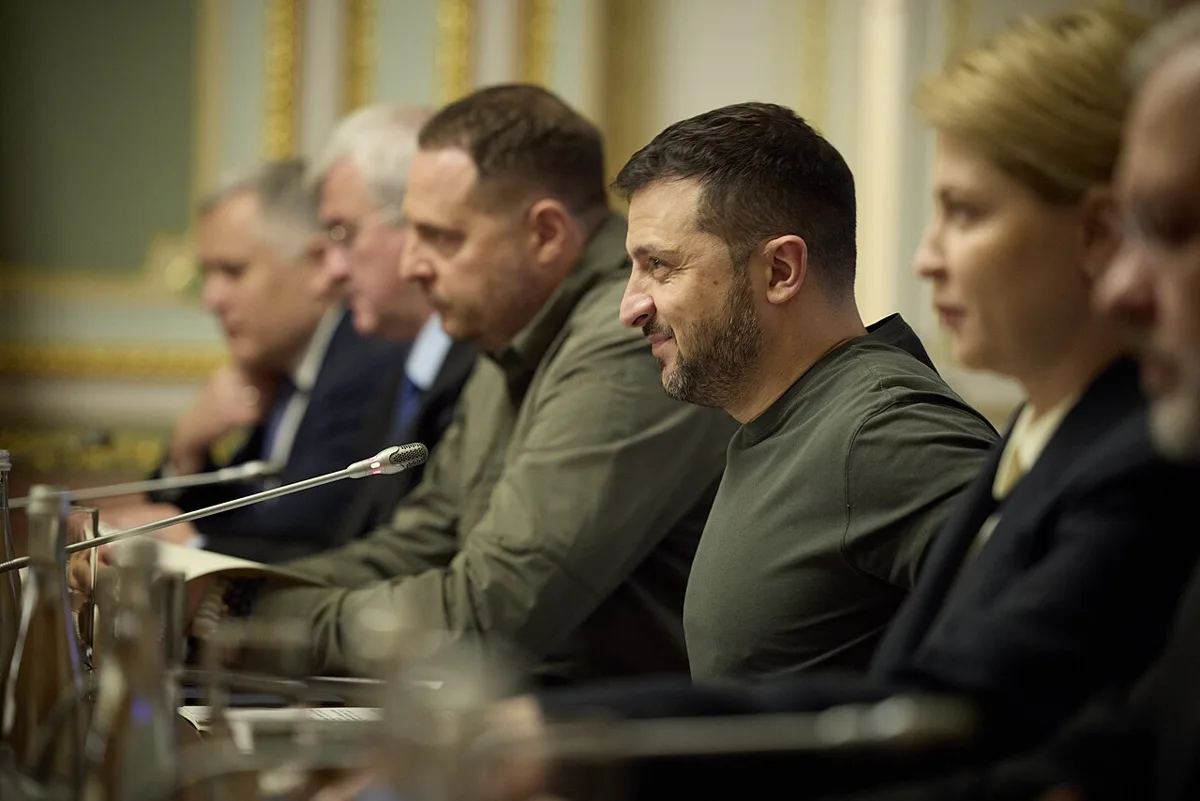
Volodymyr Zelensky flew to a G7 summit in France on Monday without a confirmed meeting with Donald Trump on the books, while Russia greeted the occasion by firing dozens of missiles at Ukrainian cities and killing 11 people. Trump, for his part, showed up 50 minutes late. Welcome to diplomacy in 2026.
The Awkward Hello at the Hotel Royal
Emmanuel Macron personally walked out to the gates of the Hotel Royal in Evian to hug Zelensky when he arrived, which tells you something about the optics everyone was managing. The two held a conversation in English, according to the New York Post, and discussed logistics and, pointedly, how best to handle Donald Trump.
Let that sit for a second. The leaders of France and Ukraine, at a summit technically organized around Western unity, held a sidebar meeting about how to manage the American president. That's not a detail buried in a diplomatic cable. It's the headline.
Macron encouraged Zelensky to extend his stay at the summit. Zelensky said he needed to get to Brussels, likely for meetings around Ukraine's EU membership application. Macron then asked whether Zelensky had arranged a one-on-one with Trump. Zelensky, by all appearances, said no.
Trump Rolled In Late and Skipped the Private Chat
White House officials said before the summit that Trump would not hold a solo meeting with Zelensky, while leaving open the vague possibility of a "sidelines conversation." Trump then arrived at the conference room 50 minutes late, walking in ahead of Macron and Zelensky, who had already been meeting privately. The French confirmed Trump did not join that private session.
So to recap: Zelensky flew to France. Trump showed up late to a meeting that didn't include Zelensky anyway. The sideline conversation that wasn't ruled out does not appear to have happened. This is the state of American engagement with the country it has been arming and funding through an active land war in Europe.
The New York Post reports that European leaders at the G7 want Trump to back a peace deal on Ukraine's terms, not Russia's. That's a pretty significant ask for an American president who has spent months pressuring Kyiv to make concessions and who called both Zelensky and Putin on Sunday with equal warmth.
Trump Called Both Sides and Felt Great About It
On Sunday, before flying to France, Trump spoke by phone with both Zelensky and Vladimir Putin. His takeaway, shared publicly on Monday, was characteristically breezy. "Maybe we can do something," he said. "They're both open to it. I had two very good conversations yesterday."
This is the geopolitical equivalent of calling both parties in a custody dispute and concluding the kids are gonna be fine because everyone was pretty chill on the phone. One of those parties has been bombing civilian infrastructure. The other had 11 of his citizens killed by missile strikes on the morning of the G7 summit itself.
Zelensky, showing considerably more strategic focus than anyone currently in the White House, used his Sunday call with Trump to propose something concrete: a face-to-face meeting between Zelensky and Putin, hosted by the United States. "Yesterday, we discussed with President Trump that such a meeting could be organized in the US, in a format where Putin would find it much harder to refuse," Zelensky said in a video posted to X on Monday. "We will see what comes of it. If Russia refuses this chance as well, additional pressure will be needed."
Russia Sent Its Own Message to the Summit
While all of this was unfolding in a luxury hotel on the shores of Lake Geneva, Russia launched a massive missile barrage at Ukraine's largest cities, killing 11 people. The timing was not coincidental. It rarely is. Putin has a habit of scheduling these things around Western diplomatic gatherings, and the message is always the same: your summits don't scare us.
Zelensky had spent the previous week in London meeting with UK Prime Minister Keir Starmer, Macron, and German Chancellor Friedrich Merz, building the European coalition he increasingly needs to offset Trump's unreliability as an ally. The G7 stop was the next piece of that. He is, at this point, running a one-man diplomatic marathon while his country absorbs daily violence.
The Broader Picture: Europe Is Filling the Vacuum
The story underneath all of this is the story that's been building for over a year. Europe is stepping up because it has to. Macron greeting Zelensky at the gate isn't just a photo op. It's a signal about who is actually invested in this outcome. The G7 summit framing of "European leaders want Trump to support a peace deal on Ukraine's terms" makes it sound like a negotiating position. It's closer to a prayer.
Zelensky's push for Trump to host direct talks between him and Putin in the United States is smart politics. It gives Trump something he loves, which is a starring role in a historic moment, while also creating a structure that raises the cost of Russian refusal. Whether Trump can see past his own need to call both conversations "very good" long enough to actually leverage that remains, to put it charitably, an open question.
The Dingo Take
Here is what happened on Monday: a wartime president flew to a summit where the most powerful leader in the room showed up 50 minutes late and skipped their meeting, while Russia killed 11 people back home to underscore the point that none of this is an abstraction. And Donald Trump's public comment on the whole situation was that he'd had two very good phone calls.
Zelensky is doing everything right, strategically speaking. He's building European coalitions, proposing concrete peace frameworks, and trying to give Trump a deal he can sell as a win. The problem is that Trump seems genuinely unbothered by whether Ukraine wins or loses, as long as he gets to say he tried. That's not a peace process. That's a photo opportunity with a body count attached to it.
The missiles that hit Ukrainian cities on Monday morning didn't pause for the G7 agenda. They never do. At some point, the gap between the luxury hotel setting and the reality of what's happening 1,500 miles east is going to stop being a dark irony and start being a verdict on what Western leadership actually means right now.



Comments