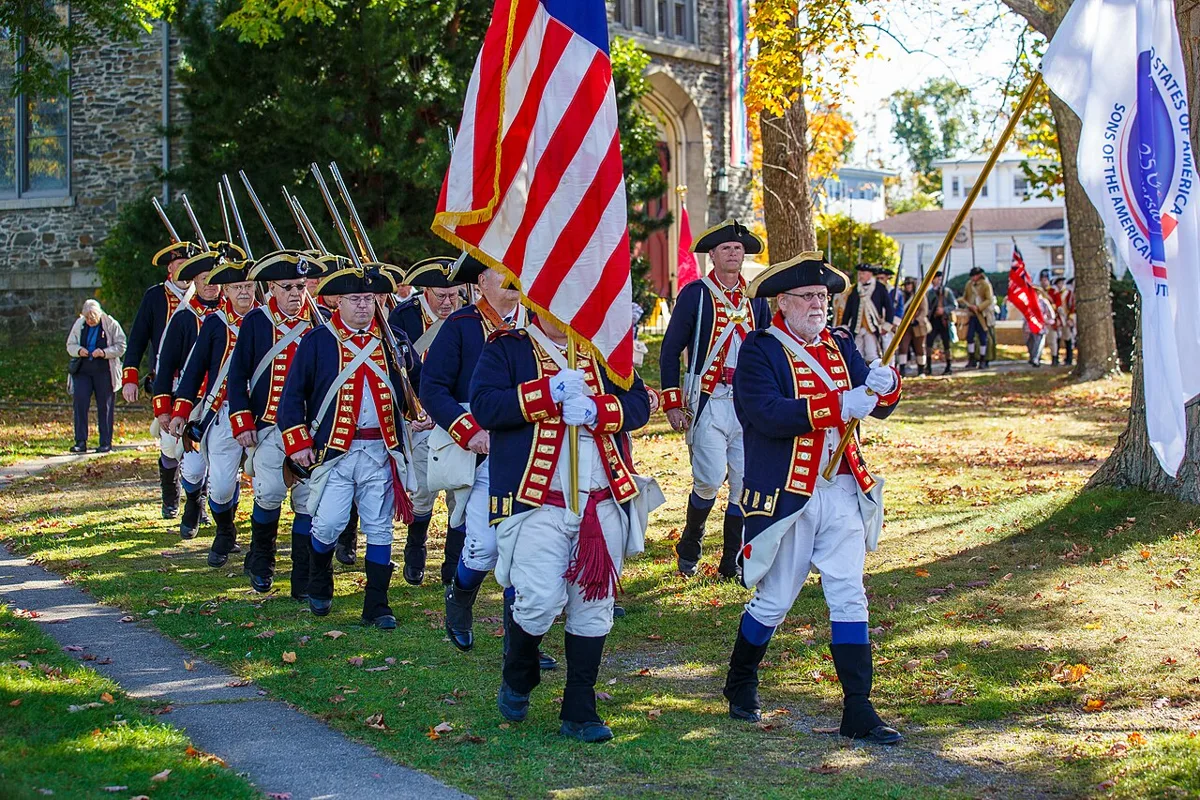
The party invitations are already printed for America's 250th birthday, but the guest of honor apparently can't stand itself right now. A sweeping new survey finds that Americans are less proud of their country, less religiously unified, and increasingly convinced the American Dream is a fairy tale someone's parents used to believe in. Happy birthday, buddy.
The Survey That Crashed the Birthday Party
The Public Religion Research Institute, a nonpartisan research group, released its American Identity Report based on a survey conducted May 1-18, 2026, and the findings land like a warm beer at what was supposed to be a celebration. Americans heading into the semiquincentennial are, by measurable and documented metrics, losing their grip on the shared civic story that democracies depend on to hold together.
Axios, which covered the report, framed the stakes plainly: democracies can survive policy fights. They have a much harder time surviving the moment when citizens stop believing in shared institutions, stop trusting a common national narrative, and start using politics as a substitute for religion, community, and everything else that once organized American life. That is not an abstract concern. That is, apparently, where we are.
Pride, Faith, and the Dream: All Declining at Once
The PRRI findings point to three simultaneous collapses happening in parallel. Pride in being American is down. Religious unity, whatever was left of it, is fracturing further. And confidence in the American Dream, the foundational promise that hard work leads somewhere worth going, is eroding across the population.
Think about what it means for all three of those things to be declining at the same time. National pride is the emotional glue. Religion, historically, provided the moral grammar a lot of Americans used to make sense of civic life even when they disagreed politically. And the Dream was the deal, the implicit contract that made the whole project feel worth defending. Lose all three simultaneously and you are not just dealing with a moody electorate. You are dealing with a country that has stopped believing its own pitch.
The survey was conducted just weeks before the country's 250th anniversary, which gives these numbers a particularly grim poetry. The bunting is going up. The fireworks are scheduled. And a substantial portion of the population is apparently going through something.
When Politics Replaces Everything Else
Here is the dynamic that should worry people across the political spectrum, even though it probably won't. PRRI's framing, as reported by Axios, identifies a specific danger: citizens using politics to replace religion and community. That is not a partisan observation. That is a structural one.
When politics becomes the primary source of identity, meaning, and tribal belonging for millions of people, elections stop being policy debates and start being existential battles. Every vote becomes a referendum on who you are. Every loss feels like an attack on your community, your values, your survival. Sound familiar? It should. We have been living inside that dynamic for most of a decade, and this survey suggests it is getting worse, not better.
The people most vulnerable to this substitution are exactly the people institutions have already failed. If your community has hollowed out, your church has emptied or embarrassed itself, and your economic prospects have stalled, politics is the one arena left where your anger feels legitimate and your side might actually win something. That is not a character flaw. It is a rational response to abandonment. It just happens to be catastrophic at scale.
Two Hundred and Fifty Years of This
To be fair, America has never been a country that handled its own mythology with particular grace. The gap between the founding ideals and the lived reality has been a source of conflict, literature, protest movements, and civil war since roughly 1776. The Dream has always worked better for some people than others, and 'less proud' means something very different depending on who is answering the survey and why.
But there is something different about this particular moment of disillusionment. Previous generations of Americans who rejected the official story, the civil rights movement, the Vietnam-era protesters, were largely arguing that America should live up to its own stated values. They were fighting over the meaning of the country. What the PRRI data suggests is something more like a shrug. Not outrage at the gap between promise and reality. More like a growing conviction that the promise itself was always hollow.
The Dingo Take
The timing of this survey is either deeply ironic or perfectly appropriate, depending on your mood. America is about to throw itself a 250th birthday party while simultaneously polling as a country that is not sure it even likes itself anymore. The fireworks will still happen. The speeches will still get made. And somewhere in the middle of all of it, a very large number of Americans will be sitting with this low-grade feeling that the whole thing is performance.
The PRRI findings are not a call for despair. But they are a call for honesty about what is actually happening to the social fabric, and that conversation is the one nobody in power particularly wants to have right now. It is much easier to debate flag lapel pins and anthem protests than to reckon with why millions of Americans no longer believe the system is designed to work for them. The identity crisis is real. The people who caused the most damage to civic trust are currently running the government. Those two facts are not unrelated.
Turning 250 while going through an identity crisis is, at minimum, relatable. Countries, like people, can come out the other side of these moments having figured something out. Or they can double down on the mythology, refuse to examine the rot, and wonder years later why nobody believed in anything anymore. America gets to choose. It does not currently look like it is choosing wisely.



Comments