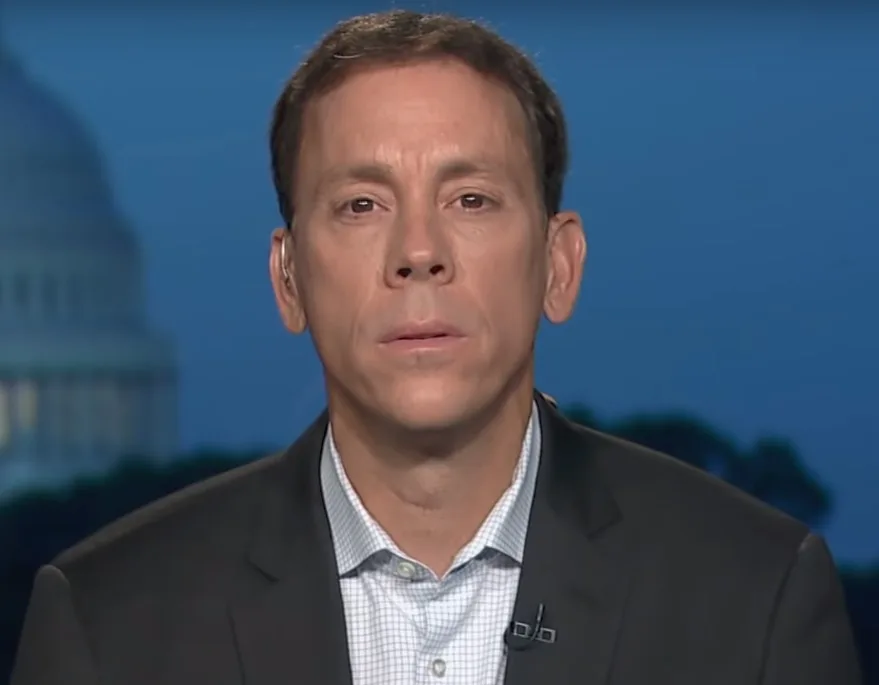
Jim VandeHei, co-founder of the media company built on the gospel of Smart Brevity, has written a column explaining that he uses artificial intelligence to help produce his writing and that you should probably do the same. He has wired his entire persona into an AI's memory, fed it four of his own books including two that haven't been published yet, and has a bot that wakes up before he does to draft newsletter items in his voice. He wants you to know this is fine.
What He Actually Did Here
According to Axios, VandeHei has spent considerable time turning himself into what he calls an 'AI lab rat.' He uses Claude for a writing project loaded with his past columns, memos, and strategic documents. He uses a ChatGPT agent powered by Codex that autonomously scans publications and research while he sleeps, then writes up ideas in his style and delivers them to his inbox before he wakes up.
He also uses Claude in voice mode while he goes rucking, which is what wealthy people call walking with a heavy backpack. He has long conversations, Claude takes notes, pulls out his best phrases, challenges his assumptions. That voice-memo-turned-AI-draft process is, he says, how the very column explaining all of this came to exist. Yes, he used AI to write the article about using AI. The ouroboros has logged on.
The Rules He Set for His Robot Ghost-Editor
VandeHei is specific about how he's configured this setup. He writes directly into the AI's memory: challenge me, never flatter me, press me with wise skepticism, then write like me. He has his style wired in as a formal skills document. Short sentences. Clinical, fact-based emphasis. Bullet points in order of importance. The AI, he reports, has gotten genuinely good at this.
He also notes, with what reads as either genuine self-awareness or stunning lack of it, that he naturally writes in 'an AI kind of way.' Direct. Sparse. Lots of dashes. So the AI, it turns out, naturally writes a lot like him. Whether this is flattering to VandeHei or quietly damning about the range of his prose style is left as an exercise for the reader.
He says the AI output is sometimes better-edited than the work done by his favorite human editor, Mike Allen. Mike Allen, for his part, is presumably having a very normal week.
His Wife Is Not Convinced
To his credit, VandeHei includes a dissent from his wife Autumn, who he describes as 'more of an AI skeptic.' Her quote, included verbatim in the Axios piece, is worth reading in full: 'Don't conflate the way you write and the utility of AI to convey information with soul writing that many of us need to live, breathe and understand the world around us. Living without that is like trying to live without air for many of us.'
That is a precise and thoughtful objection, and it is the most memorable sentence in the entire column. It was written by a human. Make of that what you will.
The Larger Question Nobody Is Quite Asking
VandeHei's core argument is reasonable enough on its face: lazy AI use produces lazy thinking, but disciplined AI use can sharpen both. He is careful to note he went in aware of the dangers, has decades of writing experience, and is not suggesting everyone just hand their brain to a chatbot.
But there is a specific wrinkle here that deserves more attention than the piece gives it. VandeHei is not just a writer experimenting with tools. He is the co-founder and CEO of a major news organization. Axios publishes journalism. And his column, which Axios says is part of ongoing transparency about AI use at the outlet, describes a workflow where a bot drafts newsletter content in his voice while he sleeps, and where AI edits are increasingly indistinguishable from what his human editor would do.
The Axios website does include a detailed explanation of AI use in its journalism, which is more than most outlets bother with. But the line between 'AI-assisted thinking' and 'AI-produced content carrying a human byline' is exactly the line the entire media industry is currently trying not to look at directly. VandeHei looked at it, at least. That puts him ahead of most.
The Kilimanjaro of It All
One detail in the Axios piece that deserves its own paragraph: VandeHei mentions, as a casual aside, that he is preparing to hike Kilimanjaro and has been using Claude in voice mode during his training walks to brainstorm column ideas.
This is the life being described here. Rucking toward Africa. Dictating thoughts to an AI that takes notes and pushes back on your assumptions. A robot in your email before dawn, writing like you. The newsletter goes out Saturday. The CEO is 55 and thinking and writing more and better than ever. Whether this represents the exciting future of human creativity augmented by machine intelligence, or the world's most elaborate way for a very busy man to avoid sitting alone with his thoughts, we leave to you.
The Dingo Take
Look, the honest version of this piece is that Jim VandeHei tried a thing, it worked for him, and he wrote about it. That's more transparency than the industry norm, which is to quietly use these tools while making no disclosure whatsoever. Points for that. The tips are specific. The cautions are real. His wife's objection is the best part of the whole thing and he was smart enough to print it.
But there is something quietly disorienting about the founder of a journalism outlet publishing a piece, under his byline, that was substantially shaped by a voice conversation with Claude during a rucking session, drafted in part by an AI agent, and edited by a tool he has trained to sound exactly like him. At what point is the byline a brand rather than an authorship claim? Nobody has a clean answer to this. VandeHei doesn't either, but at least he's asking out loud.
The real story is not VandeHei. He's one guy with one newsletter. The real story is that every publication in the country is running some version of this experiment right now, most of them in secret, and the people reading the news have no idea how much of what they're consuming was written by a person versus polished, structured, or outright drafted by a machine trained on the internet's entire written output. VandeHei wrote a column about using AI and used AI to write it. That's not hypocrisy. It's just the clearest possible picture of where we actually are.




Comments