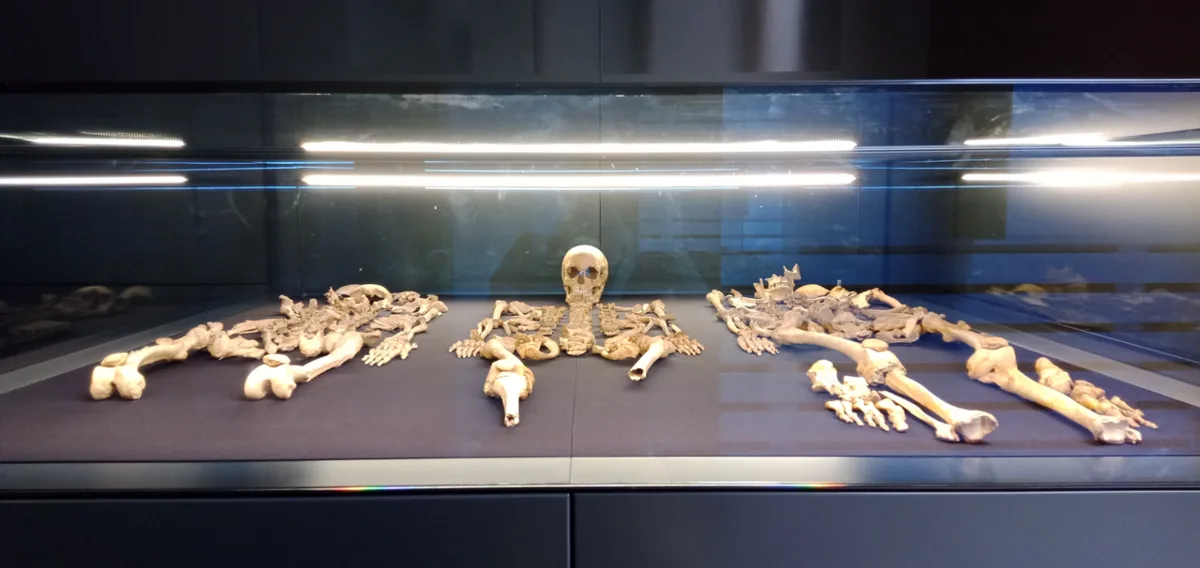
A Connecticut man bought a foreclosed home at auction, sight unseen, and discovered three decomposed human bodies when he walked through the front door for the first time. The house in Burlington had sat abandoned for at least a year, neighbors hadn't seen the residents in years, and nobody thought to check inside before putting it up for sale. Perfectly normal real estate transaction.
What Actually Happened When He Opened the Door
According to The Guardian, Connecticut state police received a call at 4:46pm on Sunday from the new homeowner reporting the remains. Three people. Skeletal. In an advanced state of decomposition, per a court motion filed this week by the court-appointed attorney managing the sale.
The medical examiner has not yet determined a cause of death. Police stated there is "no indication of anything suspicious and no indication of any criminal aspect," which is a sentence that will haunt at least one person's dreams for the foreseeable future. The identities of the three individuals have not been confirmed.
The home was purchased in 2019, according to property records. The foreclosure process began in August 2025. The court approved it for auction on March 23rd, the auction was held June 6th, and the new buyer walked in shortly after that to find out what exactly he had purchased for $82,000.
Nobody Could Reach the Previous Owners. Nobody Looked.
Connecticut marshal Grant Carragher told CTInsider that the couple who bought the home in 2019 could not be reached throughout the entire foreclosure process. Not once. Carragher believes the property had been abandoned for at least a year, and neighbors reportedly told him they hadn't seen the residents in years. Years.
Let that sit for a second. Multiple neighbors. Multiple years. Three people inside. A foreclosure that wound its way through the court system for months. And at no point did anyone physically open the door.
The home was sold, as The Guardian reports, in "as is condition." Which is one of those real estate phrases that usually means a leaky roof or outdated kitchen cabinets, not an undiscovered mass death event in the living room.
The Letter Nobody Answered
Chris Thogmartin, the independent attorney appointed by the court to manage the sale, explained to NBC Connecticut why auction buyers often can't inspect a home's interior before bidding. He said he always sends a letter to the owners the week before the auction asking if bidders can have interior access.
"I always send out a letter, like the week before the auction saying, listen, you know, there's a foreclosure auction scheduled. It would be helpful for the bidders to have interior access. You're not required to provide this, but I think it might be in your best interest," Thogmartin told NBC Connecticut. "We never got a response to that, which is not unusual."
They never got a response. Which is, reportedly, not unusual. What was unusual, it turns out, was why they never got a response.
The $82,000 Question and the Legal Mess It Opened
Thogmartin filed a motion in court this week laying out the situation in clinical, deeply unsettling detail. He wrote that the bodies were "in an advanced state of decomposition, indicating that they had been there for some time," and flagged that the discovery raises a "possible question as to the validity of the foreclosure judgment, depending upon the identity of the bodies and the time of death."
Here's what that means in plain English: if one or more of those bodies turns out to be the homeowner who was supposed to receive foreclosure notices, and they were already dead when those notices were being sent, the entire legal process may have been built on a procedurally invalid foundation. You cannot legally foreclose on a dead person who never received notification of the proceedings.
Thogmartin asked the court for guidance, including whether to return the winning bidder's $82,000 deposit if the auction and closing get canceled. The buyer, who signed up to buy a distressed property and ended up discovering a genuine mystery, may be walking away from this with nothing but a story that will clear rooms at dinner parties for the rest of his life.
The Part Where the System Quietly Shrugs
What makes this story genuinely hard to process is how thoroughly routine every step of it was. The foreclosure process started. Letters went out. No one answered. The court approved the auction. Bidders showed up. Someone won. The deed transferred. The buyer drove over.
No single person in that chain did anything explicitly wrong. Thogmartin sounds like a conscientious guy doing his job. Police are investigating without apparent panic. The court is being asked to sort out the legal fallout. Everyone is behaving appropriately now that there is an undeniable problem in front of them.
But three people were apparently dead inside a house in Burlington, Connecticut, for years, while the machinery of property law hummed along around them, and the system's answer to "we can't reach the owners" was, essentially, to keep mailing letters.
The Dingo Take
There is a version of this story that is just a bizarre, tragic mystery: three people dead, identities unknown, circumstances unclear, a house that became a sealed tomb while the suburb went about its business around it. That version deserves real grief and real answers about who these people were.
But there is another version running alongside it, and it is a story about what happens when bureaucratic process becomes completely untethered from human reality. A foreclosure is a legal mechanism designed to handle property when owners stop paying. It is not designed to ask whether the owners stopped paying because they are dead on the floor. That gap, it turns out, is big enough to swallow three people whole and not notice for years.
The buyer wants his $82,000 back. He will probably get it. The courts will sort out the procedural validity. The medical examiner will eventually have answers. And somewhere in Connecticut, a neighborhood of people who "hadn't seen the residents in years" will have to sit with what that sentence actually meant.





Comments