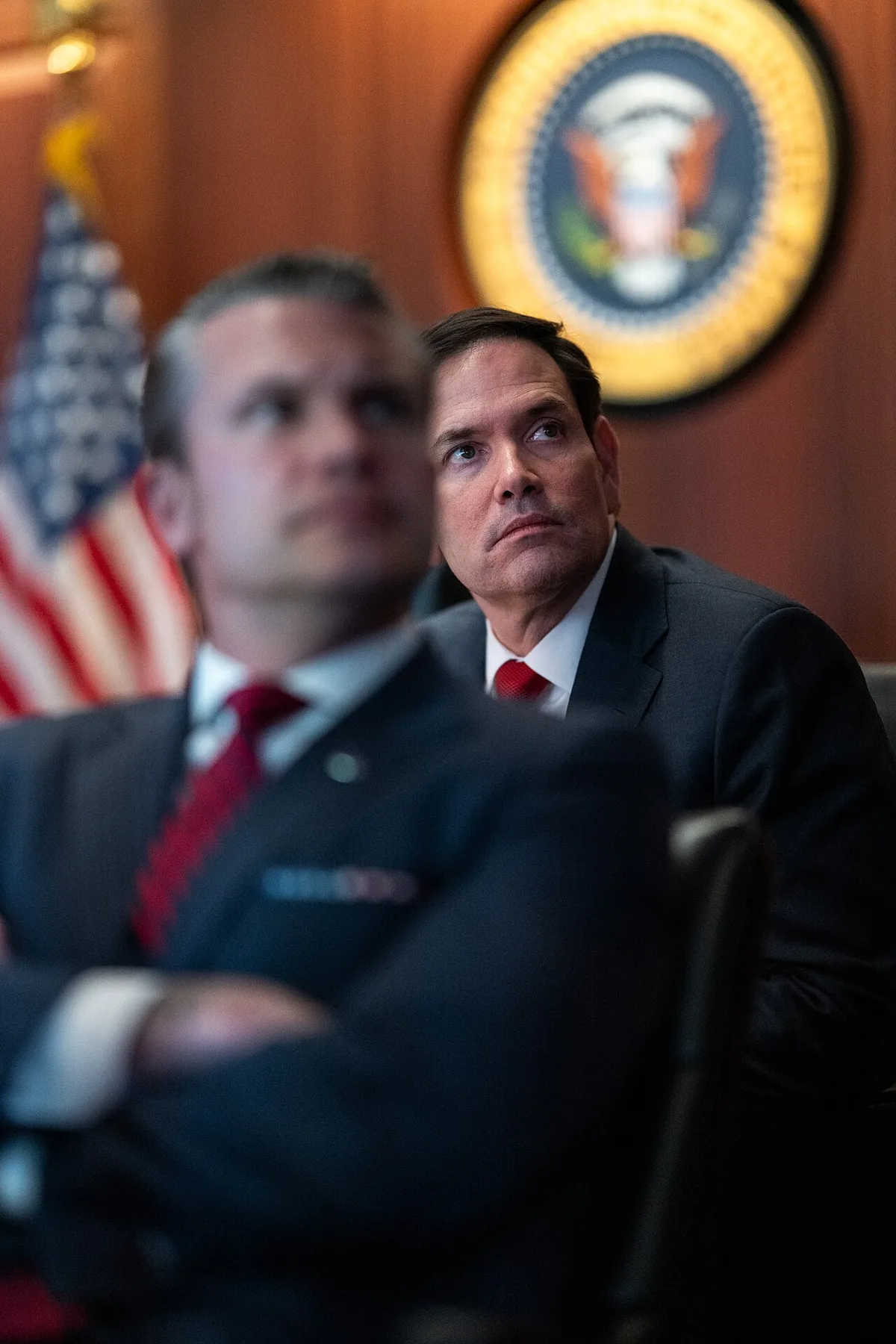
Congressional Democrats are doing something unusual: praising the Trump administration for pursuing diplomacy with Iran while simultaneously demanding to know what on earth they actually agreed to. Top ranking members on the foreign affairs, defense, and intelligence committees sent a three-page letter to Secretary of State Marco Rubio asking for a full briefing on the U.S.-Iran memorandum of understanding. The State Department, in a move that will shock absolutely no one, did not immediately respond.
A Deal Exists. Details Are Apparently Optional.
Here's the thing about signing a memorandum of understanding with one of the most consequential adversarial states in the Middle East: people tend to want to know what's in it. According to Axios, senior Democrats overseeing foreign policy, defense, and intelligence in Congress sent a formal letter to Rubio demanding exactly that. A briefing. Some facts. Basic transparency about a document that could reshape American foreign policy in a region that has been on fire, literally and figuratively, for years.
The letter reportedly ran three pages long. That's three pages of asking, in carefully worded diplomatic language, what we can summarize as: "Hey, what did you guys actually do here?" The State Department's non-response speaks volumes about an administration that treats congressional oversight as a minor inconvenience rather than a constitutional obligation.
Give Credit Where It's Due, Grudgingly
To their credit, these Democrats aren't simply torching the deal to score political points. That would be the easy move, and frankly, the move that roughly half of Washington seems to be making right now. Instead, according to Axios, the letter explicitly welcomed the administration's turn toward diplomacy and acknowledged the decision to end what the lawmakers called a "war of choice."
That's a significant phrase. "War of choice" is not accidental language. It's a deliberate framing that places blame squarely on decisions made to escalate rather than de-escalate tensions with Iran. These lawmakers are threading a needle: applauding the outcome while raising serious questions about the process. That's what responsible opposition looks like, and it's rarer than it should be.
Unlike some of the hawkish Republicans in Congress who, per Axios, are dismissing the deal more or less out of hand without much apparent interest in the details either, these Democrats are asking for substance. Which is the whole job. That's literally the whole job.
What Congress Actually Deserves to Know
A memorandum of understanding with Iran is not a minor administrative paperwork situation. This is an agreement with a country that has been under sweeping U.S. sanctions, that has been accused of funding proxy forces across the region, and whose nuclear program has been a central flashpoint in global security conversations for two decades. The contents of any formal understanding between Washington and Tehran matter enormously.
Congress has constitutional authority over foreign policy. Not advisory authority. Not "we'd love to be kept in the loop" authority. Actual, real, written-into-the-founding-document authority. When an administration signs a significant international agreement and the response to congressional oversight requests is silence, that's not just bad optics. That's a structural problem with how this executive branch treats the other branches of government. Which, to be fair, has been a recurring theme since approximately January 20, 2025.
Rubio's Silence Is Loud
Marco Rubio has had a fascinating arc. Once the establishment Republican that the MAGA base loathed, he is now the Secretary of State executing foreign policy for an administration he once called dangerous. And right now, executing that policy apparently means not telling Congress what agreements the United States has made with Iran.
Axios reports the State Department offered no comment. Not a "we'll get back to you." Not a "the Secretary is reviewing the request." Nothing. For an agreement significant enough to involve a formal memorandum, for a diplomatic development significant enough that even skeptical Democrats are cautiously praising it, the total silence from Foggy Bottom is a choice. A deliberate, contemptuous choice.
The Dingo Take
Look, diplomacy with Iran is not inherently a bad thing. Talking is better than bombing. Most adults understand this. The fact that Democrats on the foreign affairs and intelligence committees are acknowledging that much, publicly, in a letter they knew would be reported on, is actually a sign of good faith. They're not reflexively opposing the deal because Trump touched it. They're asking what the deal is. That's the minimum.
The problem isn't the memorandum of understanding. The problem is an administration that treats transparency as weakness and congressional oversight as an obstacle course to be ignored. Every time a major policy move gets made and the response to legitimate congressional inquiry is a wall of silence, it chips away at the basic functioning of American government. This isn't about Democrats versus Republicans. It's about whether the executive branch believes it has to answer to anyone at all. Based on current evidence, the answer is a resounding "not if they can help it."
Rubio should brief Congress. He should do it promptly, thoroughly, and with something resembling respect for the institution he used to be a member of. If the deal is good, sell it. If the details are complicated, explain them. Governing in secret isn't strength. It's just arrogance wearing a suit.



Comments