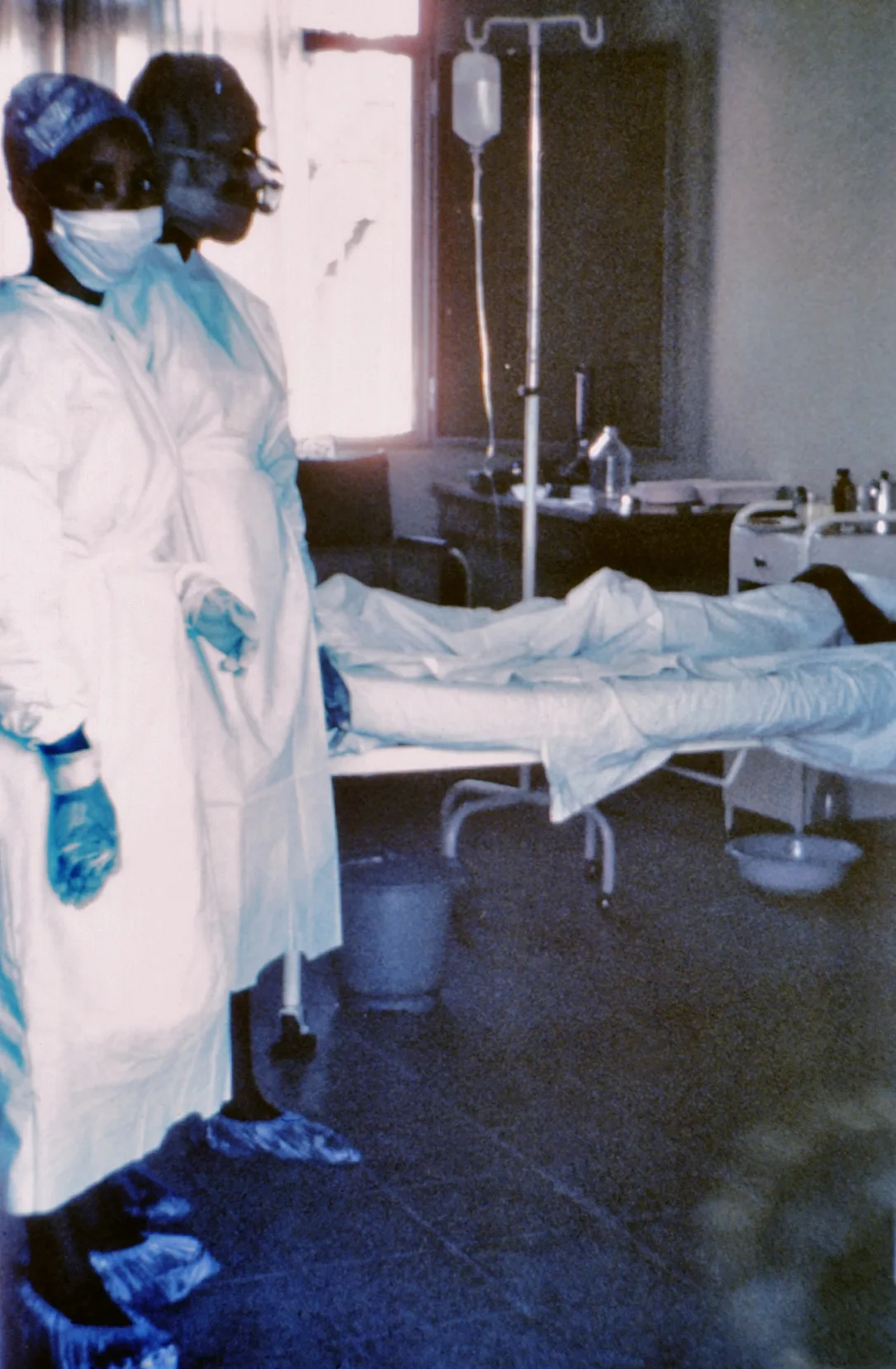
The Ebola outbreak in the Democratic Republic of Congo has blown past 800 confirmed cases, and the head of Africa's CDC is warning it could surpass the deadliest outbreak in recorded history. Meanwhile, a man just crossed an international border into Uganda for ten dollars, a six-hour boat ride, and no health screening to speak of. Everything is fine.
The Numbers Are Bad and Getting Worse
This outbreak was declared on May 15. In the weeks since, confirmed cases have surged past 800, according to CBS News. That's not a slow burn. That's a fire picking up wind.
Africa CDC Director Jean Kaseya did not mince words about where this is headed. "If we don't stop this outbreak very soon, it will be even worse than what we had in West Africa," he said. For context: the West Africa Ebola crisis between 2014 and 2016 killed more than 11,000 people and infected more than 23,000. It was the worst outbreak since the virus was first identified in 1976. That's the bar Kaseya is telling us we might clear.
The outbreak is centered in the Democratic Republic of Congo, a country already torn apart by decades of conflict. The people most exposed to the virus are often the same people who have already lost everything else.
The $10 Border Crossing Nobody Can Stop
CBS News visited a quarantine site in Uganda, just across the border from the DRC, where refugees fleeing the conflict are being monitored. The most recent arrival was a man named James Peter, who had spent a week in solo quarantine when reporters found him. No TV, no radio. Just a bed and a conversation through barbed wire.
Peter told CBS News he fled his hometown of Goma after anti-government forces raided the city. He paid 40,000 Ugandan shillings, roughly ten U.S. dollars, for a six-hour overnight crossing of Lake Albert into Uganda. His reasons for fleeing were completely legitimate. His desperation is not hard to understand.
But here's the problem that his journey makes undeniable: an international border in the middle of an active Ebola outbreak is crossable for a ten-dollar boat fare and a willingness to travel at night. The virus does not respect borders. It never has. And the infrastructure meant to catch it at those borders is clearly not built for this moment.
Displacement Camps Are a Petri Dish Nobody Wants to Talk About
The camps near the Congo-Uganda border are packed with tens of thousands of people displaced by the ongoing conflict in the DRC, CBS News reports. Crowded, under-resourced, and filled with people who have been moving across regions for months, these camps are exactly the kind of environment where infectious disease finds its footing.
Health officials on both sides of the border are watching this with dread. A displaced population that is already exhausted, already traumatized, already skeptical of government institutions, is not an easy group to reach with public health messaging. That's not a criticism of the people in those camps. That's just the truth about what happens when a society has been systematically failed for generations.
The Misinformation Problem Is Not Small
Aid worker Jean Marie Lipe is out there doing the work, according to CBS News. He holds information sessions. He explains how the virus spreads. He teaches people that even touching a dead bat or chimpanzee can be enough to start a chain of infection.
And it works, sometimes. Grandmother Passy Nzali attended one of Lipe's sessions and came away understanding the basics of how Ebola transmits. That's a genuine win. But CBS News is also reporting that many Congolese still don't believe the virus is real at all, with explanations ranging from a mystical curse to a Western conspiracy.
This is not a uniquely Congolese failure of reasoning. Populations that have been exploited, lied to, and abandoned by outside institutions for generations tend to develop a healthy suspicion of those same institutions showing up and telling them what to be afraid of. The DRC has plenty of reasons to distrust foreign health interventions. Working through that distrust while a clock is ticking is brutal, grinding, thankless labor. Lipe is doing it anyway.
What the 2014 Outbreak Should Have Taught the World
The West Africa Ebola crisis is the closest comparison we have, and it is not a comforting one. More than 23,000 infections. More than 11,000 dead. A global response that arrived late, moved slowly, and left the affected countries to deal with the wreckage long after the cameras went home.
The virus was first identified 50 years ago. The world has had half a century to build the infrastructure, the early warning systems, and the international coordination needed to stop an outbreak before it becomes a catastrophe. And yet here we are, watching a man cross Lake Albert in the dark for ten dollars while case counts climb past 800 in under five weeks.
The Africa CDC is sounding the alarm as loudly as it can. Whether the international community listens with the speed this moment requires is, based on past performance, not a question with an obvious answer.
The Dingo Take
There is a version of this story where the world treats a fast-moving Ebola outbreak in a conflict zone as the emergency it clearly is, floods the region with resources, and stops it before the Africa CDC's worst-case scenario becomes reality. That version requires urgency, money, and a level of international attention that Africa's crises have historically struggled to command for more than a news cycle or two.
Instead, what we have right now is a single aid worker holding information sessions in displacement camps, a quarantine site doing its best with people crossing an essentially open border, and a case count that has rocketed past 800 in barely a month. The director of Africa CDC is literally invoking the worst Ebola outbreak in history as the floor for what this could become. That is not a subtle warning.
The conflict driving the displacement is not going to pause for the outbreak. The displacement is not going to slow down. The border crossings are not going to stop. All of those things together create exactly the conditions under which a contained regional crisis becomes something much larger. The time to throw everything at this is right now, before we are looking back at this moment the same way we look back at the early weeks of 2014 and asking why nobody moved faster.




Comments