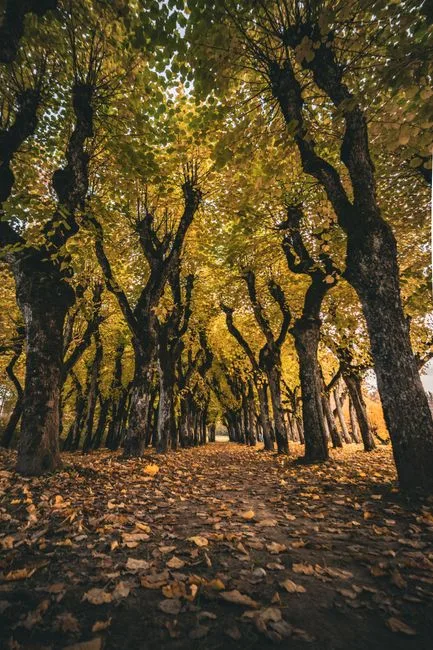
Dozens of scientists just published a paper arguing that trees — yes, trees, the tall wooden things you walk past every morning without looking up — should be treated as mandatory city infrastructure, like roads or sewage systems. Their case is pretty hard to argue with: every dollar a city spends on parks returns three dollars in local economic benefits every year. We're leaving money on the literal ground, and it's covered in leaves.
The Paper That Should Be Obvious But Apparently Needed to Be Written
The essay, published July 24 in the journal PLOS Climate, was led by Manuel Esperon-Rodriguez, an ecologist at Bangor University in the United Kingdom. Dozens of co-authors signed on. Their argument, stripped down, is this: urban forests do an enormous amount of work for cities, cities chronically underfund them, and that needs to change structurally rather than cosmetically.
"We have to elevate it from something that is nice to have to something that we require — like, mandatory," Esperon-Rodriguez told Grist. "In the same way that we treat education, security, transportation, it has to be elevated to that level."
That framing matters. Right now, planting trees is the kind of thing a mayoral candidate promises at a press conference with a shovel. It's photo-op infrastructure. These scientists want it treated like sewage treatment: boring, essential, legally required, and funded accordingly.
What Trees Actually Do (It's a Lot)
Here's the unglamorous truth about urban trees: they are doing heavy lifting that cities would otherwise have to pay enormous sums to replicate artificially. Trees cool the concrete jungle through shade and by releasing water vapor — basically sweating on our behalf. Patches of greenery absorb stormwater rather than letting it pool and flood streets. As Grist reports, those flood-prevention benefits alone will save cities from massive economic damages as a warming climate makes rainfall more intense.
Vegetation also absorbs air pollutants, improves mental health outcomes for people who spend time near it, and provides habitat and food for urban wildlife. Urban farms, as part of the broader green infrastructure picture, produce food and create jobs. Pick any one of those benefits and it would justify a serious budget line. The fact that they come bundled together should make urban forestry one of the easiest infrastructure arguments to win.
And yet, somehow, cities keep losing this argument internally. Green spaces get squeezed. Maintenance budgets get cut. Trees planted in optimistic bursts during election cycles die unwatered two summers later because nobody funded the follow-through.
The Three-Dollar Return Everyone Is Ignoring
The economic case here is not subtle. A recent report cited in the PLOS Climate essay found that every dollar invested in parks and recreation returns three dollars in local economic benefits annually. Not over a decade. Every year. That's because green spaces get people outside and exercising, which reduces public health costs associated with sedentary lifestyles. Parks also draw people into surrounding neighborhoods, where they spend money at shops and restaurants.
"Even for cash-strapped governments, this is an investment proven to bring dividends," as Grist put it. The scientists are not asking cities to be charitable. They're asking cities to be rational.
And yet the funding model for urban forestry typically relies heavily on private donors and philanthropic grants, which are inconsistent by definition. Esperon-Rodriguez's team argues that city governments need dedicated budget lines, not bake-sale money. "We say that it has to be critical infrastructure, because then we need a special budget dedicated just to them," he told Grist.
The Equity Problem That Makes This So Much Worse
Here's where it gets genuinely ugly. Richer neighborhoods are greener. Cooler. More livable. Lower-income neighborhoods, by contrast, get more pavement, more heat-absorbing surfaces, and less shade. The urban heat island effect — where the built environment absorbs the sun all day and radiates it back at night — hits hardest in exactly the communities least likely to have air conditioning to compensate.
"Then what's the cost?" Esperon-Rodriguez asked Grist. "They are missing opportunities, they are missing recreational activities. And if they don't have air conditioning, then on top of that there is the issue of health."
This is not a peripheral concern. Heat is the deadliest weather-related killer in the United States. The people most at risk are the people already living in the most resource-stripped parts of cities. Unequal tree canopy is not just an aesthetic failure. It is a public health failure with a body count.
How the Scientists Say This Actually Gets Fixed
The paper lays out a four-part framework. Dedicated funding. Equitable distribution of green space. Community collaboration on what gets planted and where. And legislative enshrinement rather than campaign promises.
That last one is critical. Esperon-Rodriguez told Grist that expanding urban canopy can't just be a candidate's pledge — it has to be written into law, with measurable targets that citizens can use to hold officials accountable. A promise to increase tree cover by 30 percent means nothing if it dies the moment that mayor loses an election or changes priorities.
The community collaboration piece also isn't optional. Cities can't just roll into a neighborhood with saplings and expect gratitude. Some communities want fruit trees. Some people have pollen allergies and legitimate objections to certain species. Some neighborhoods have specific concerns about maintenance and mess. The scientists argue that genuine collaboration is what makes these campaigns actually work, and they also need to be evidence-based: planting trees that will survive not just this summer but the next 50 years of climbing temperatures. "It's a way to secure that whatever we're planting today is going to survive the next 10, 20, or 50 years," Esperon-Rodriguez said.
The Dingo Take
Let's be clear about what this paper is really documenting. It's not a discovery. Everyone who has ever walked from a parking lot into a shaded park on a hot day already understands on a cellular level that trees make cities livable. What the scientists are doing is providing the political and economic ammunition to force the conversation past the "wouldn't it be nice" phase and into the "this is a legal obligation" phase. That's necessary because apparently three dollars back for every dollar spent is not sufficient motivation on its own.
The equity angle should make every city official uncomfortable. The fact that poorer neighborhoods are systematically hotter, more flood-prone, and more polluted because they have less vegetation is not some mysterious natural phenomenon. It is the accumulated result of decades of decisions about where to invest and where not to bother. Fixing it requires intentional policy, not vibes.
The scientists have done the work. The data exists. The return on investment is documented. What's missing is the political will to treat a tree like a water main instead of a ribbon-cutting prop. Until cities start legislating this stuff with real budgets and real accountability, we'll keep having the same conversation while the asphalt bakes and the poor neighborhoods sweat without shade.


Comments