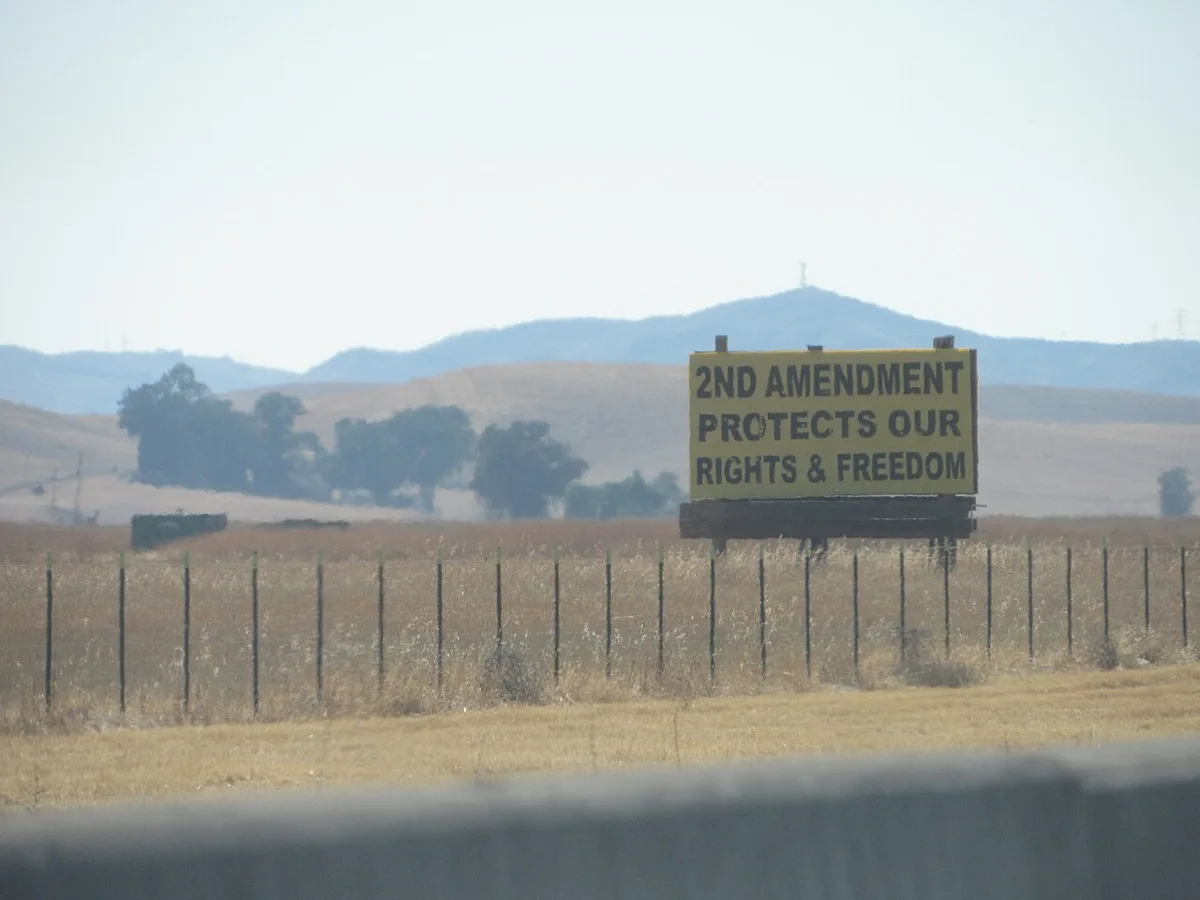
Eight years after a teenager walked into Marjory Stoneman Douglas High School and killed 17 people, Florida just struck down the gun restriction lawmakers passed in response. A state appeals court ruled Wednesday that banning 18-to-20-year-olds from concealed carry violates the Second Amendment, and the state's own attorney general declined to even put up a fight.
The Law, the Massacre, and the Ruling
Here is the backstory, because context matters enormously here. Florida passed its concealed-carry age restriction in 2018 as a direct legislative response to the Parkland shooting, one of the deadliest school massacres in American history. Seventeen students and staff were killed. The age restriction was one of the few concrete policy changes that actually made it through the Florida legislature in the aftermath.
Now a three-judge panel of Florida's Fourth District Court of Appeals has unanimously thrown that law out. The case originated from the 2024 arrest of Jaylen Eubanks, who was 18 at the time. According to the opinion reported by Fox News, officers found an unholstered firearm on his waist after responding to a report of someone displaying a handgun. Eubanks challenged his concealed-carry charge by arguing the age restriction violated the Second Amendment. A trial court disagreed. The appellate court did not.
The Military Argument and Why It's More Complicated Than It Sounds
The court's central argument, as Fox News reports, is one you've probably heard before: 18-year-olds can serve in the military, so restricting their gun rights is inconsistent. Judge Spencer D. Levine wrote that 18-to-20-year-olds "can defend the country without restriction but can only utilize their Second Amendment right to self-defense with severe restrictions." The panel also pointed to founding-era militia laws requiring many 18-year-old men to serve while bearing arms.
This logic sounds clean until you look at it for two seconds. The military does not hand a recruit a weapon and send him to the mall. There is training. There is supervision. There are entire command structures built around ensuring those weapons are used correctly, legally, and accountably. Concealed carry on a Tuesday afternoon in Fort Lauderdale is a somewhat different situation. The court's opinion does not appear to engage seriously with that distinction.
The panel also leaned heavily on the Supreme Court's recent precedents, including Heller, Bruen, and Rahimi, finding that Florida failed to identify a historical tradition that would justify the age restriction. Under the Bruen framework, that test is basically everything now. If you cannot find a 1791 analogue for your gun law, the law is probably dead.
The Attorney General Who Didn't Bother Showing Up
Here is a detail that deserves more attention than it is likely to get. Fox News reports that Florida Attorney General James Uthmeier declined to defend the law earlier this year. The state's chief law enforcement officer looked at a gun restriction passed after one of the worst school shootings in American history and decided, nah, not worth defending.
After the ruling came down, Uthmeier celebrated on X, calling it "another win for the unalienable rights of Floridians" and announcing that the state would not seek further review. He will now work with the Florida Department of Agriculture and Consumer Services to implement the court's order. That's the political posture here: not a reluctant concession to a court ruling, but an enthusiastic victory lap over a law designed to prevent another Parkland.
What Happens Next, Practically Speaking
The immediate effect is that Eubanks' concealed-carry conviction gets reversed and the case goes back for further proceedings, as Fox News reports. The broader effect is that 18-to-20-year-olds in Florida now have a legal pathway to concealed carry that the state legislature explicitly tried to close after 17 people were killed.
It is worth watching whether the Florida legislature attempts any kind of response. The political math there is brutal. Uthmeier is not defending the old law and is actively cheering its demise. Governor Ron DeSantis signed permitless carry into law in 2023. The Parkland families and survivors who fought for the age restriction in 2018 are now watching it get dismantled piece by piece, with no apparent interest from state leadership in doing anything about it.
Nationally, this ruling adds to a growing pile of post-Bruen decisions striking down gun regulations at various levels of government. Courts across the country are working through what the new historical-tradition test actually requires, and the results have been wildly inconsistent. Federal courts have reached opposite conclusions on nearly identical laws in different circuits.
The Parkland Shadow Over All of This
Let's not let the legal architecture bury the human reality here. The restriction this court just struck down was passed because a 19-year-old murdered 17 people at a school. Florida's legislature looked at that specific fact, the specific age of the killer, and said: let's raise the floor on who can carry a concealed firearm. Reasonable people can debate whether that was the right policy. What is harder to debate is whether celebrating its elimination is the correct moral posture eight years later.
The Marjory Stoneman Douglas survivors became some of the most effective young gun reform advocates in the country. They lobbied, they organized, they voted. The law they helped pass is now gone. And the attorney general of their state is posting victory messages on social media about it.
The Dingo Take
The Bruen decision is doing exactly what its critics said it would do. By replacing a straightforward balancing test with a historical-tradition requirement, the Supreme Court handed lower courts a framework that is almost perfectly engineered to strike down modern gun regulations. You are asking judges to find 18th-century analogues for problems that didn't exist in the 18th century, and then ruling against the law when those analogues can't be found. It is a doctrine designed, whatever its authors claim, to produce a specific outcome.
And here is where the Florida situation gets particularly grim. The state did not lose this fight. It surrendered. The attorney general walked off the field before the game started and then took a bow when his team lost. That is not a legal defeat, that is a policy choice dressed up in judicial language. Florida's Republican leadership wanted this law gone and found a defendant whose case gave them a vehicle to get rid of it. The court provided the cover.
The families who drove to Tallahassee in 2018, who testified, who begged their legislators to do something after their children were murdered, got one law passed. One. And Florida's government just spent the better part of a year making sure that law didn't survive. There's no punchline here. Sometimes the story is just exactly as bad as it looks.

Comments