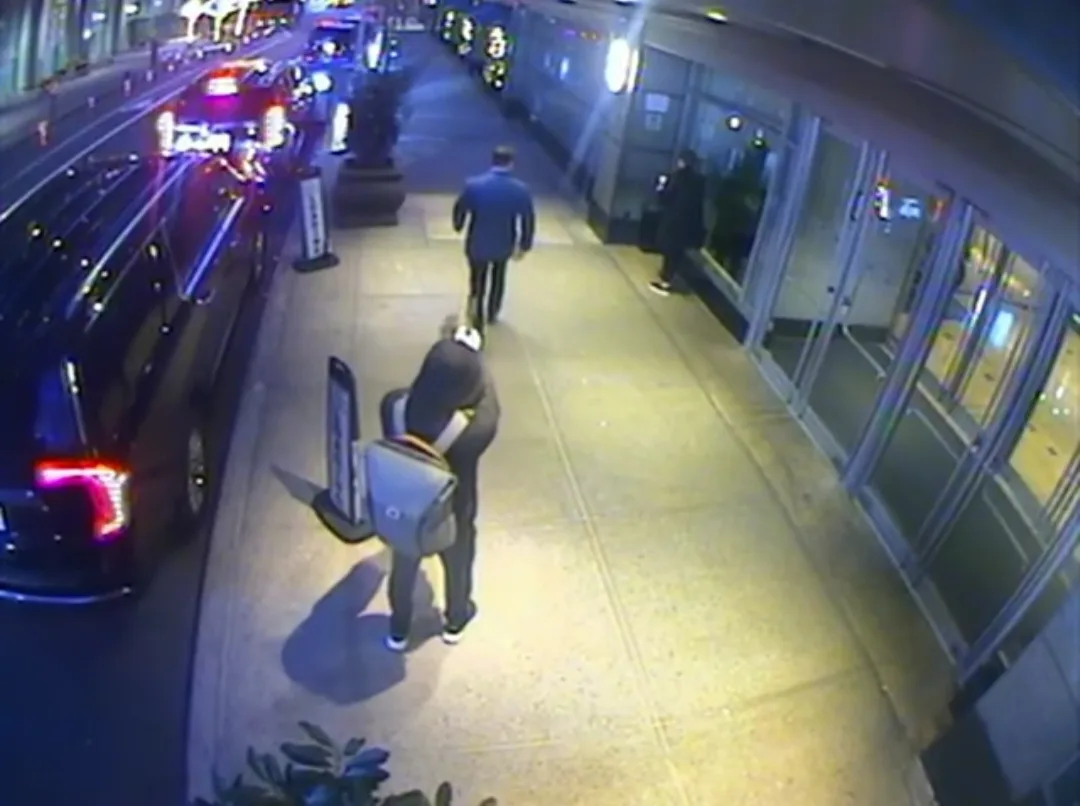
Luigi Mangione's lawyers are going to walk into a Manhattan courtroom in September, look a jury in the eye, and argue that their client was suffering from an extreme emotional disturbance when he shot and killed UnitedHealthcare CEO Brian Thompson on a midtown street. This is the defense. This is the plan. A New York judge confirmed it Wednesday morning, and now the whole country gets to argue about what that means.
What the Defense Is Actually Saying
Here's the thing about an extreme emotional disturbance defense: it is not an insanity plea. It does not mean Mangione's lawyers are arguing he didn't know what he was doing or that he couldn't tell right from wrong. What it means, under New York law, is that they are effectively conceding he pulled the trigger while arguing that something had gone so catastrophically wrong inside his head that it should count for something at sentencing.
As CBS News reports, asserting this defense means Mangione would be admitting to killing Thompson. The trade-off is this: if a jury buys the argument, his second-degree murder charge could be knocked down to first-degree manslaughter. That is not a small distinction. Murder in the second degree in New York carries the possibility of life in prison. Manslaughter carries considerably less.
Judge Gregory Carro, overseeing the case in Manhattan state court, disclosed the defense strategy Wednesday while discussing the unsealing of records related to the psychiatric defense notice, which had apparently been filed back in September. The whole thing had been kept under seal, with Carro holding a closed-door proceeding on June 3rd over press objections, which, by the way, is not how courts are supposed to work.
The Judge Was Not Messing Around
Carro made clear Wednesday that he is done waiting for the defense to get its paperwork together. According to NBC News, he told Mangione's team they need to submit additional documentation about the psychiatric defense no later than Thursday. His exact words: "Get it done."
He also ordered the defense to immediately tell prosecutors what specific "mental defect" Mangione allegedly suffered, and how that defect triggered the emotional disturbance. "They need to know the malady and how that triggered emotional disturbance," Carro said, per The Guardian. That is not the tone of a judge who thinks either side has been particularly organized here.
The next scheduled court hearing is in August and will be held virtually. The trial itself is still on track to begin September 8th.
The Closed Courtroom Problem
Before we move on, let's sit with the secrecy issue for a moment. On June 3rd, Judge Carro held a closed-door proceeding with Mangione, his attorneys, and prosecutors. Journalists petitioned against it, in person and in writing. Carro refused to hear them, according to The Guardian.
Courts in New York and across the federal system are presumed to be open. That presumption exists because the public has a direct stake in how criminal justice gets administered in its name. Carro's explanation Wednesday was that he sealed the June 3rd proceeding to give the defense time to decide whether to pursue the psychiatric strategy, and that revealing the information prematurely could be "very prejudicial" to Mangione. He said a redacted transcript will eventually be made public. That is better than nothing, but the press objections deserved an actual hearing.
He Almost Wasn't There Tuesday Either
Mangione's appearance Wednesday was itself a makeup call. He was supposed to appear Tuesday, but prosecutors managed to not deliver the paperwork required to transport him from jail to court. The whole thing had to be rescheduled.
In court Tuesday, defense attorney Karen Agnifilo was characteristically dry about it: "Mistakes happen. People make mistakes," she told reporters. On Wednesday, prosecutor Joel Seidemann told the court simply, "It's on us." Give him credit for not trying to spin it.
Mangione arrived Wednesday at approximately 9:47 in the morning, wearing a deep blue suit and a pale button-down shirt without a tie, handcuffed. He looked down as he walked in, per NBC News. Whatever you make of the man, he is not exactly projecting the energy of someone who thinks this is going great.
Where the Two Cases Stand
Mangione is facing charges in multiple jurisdictions. His New York state case, the one with the September 8th trial date, now carries eight counts including second-degree murder after prosecutors formally dismissed one charge Wednesday. CBS News reports that count nine, criminal possession of a weapon involving a magazine that had previously been suppressed by the court, was dropped. Prosecutors said they were not moving forward with it.
On the federal side, Mangione faces interstate stalking charges. Jury selection for that trial is scheduled to begin October 5th, with opening statements expected around late October or early November. He has pleaded not guilty to all charges in both cases. Pennsylvania has also filed state charges in connection with the case. The man has a very full legal calendar for the foreseeable future.
Thompson was shot and killed on a midtown Manhattan street on December 4th, 2024. He was 50 years old. Mangione was arrested days later at a McDonald's in Altoona, Pennsylvania. A gun and a red notebook found on him at the time of his arrest were ruled admissible as evidence last month.
The Dingo Take
Let's be honest about the context that every lawyer in this case, every juror in the eventual pool, and every person in America is already aware of: Brian Thompson was killed, and the public reaction was not what anyone in corporate America was prepared for. The outpouring of rage directed not at the alleged shooter but at the health insurance industry itself was loud, sustained, and told you something real about how tens of millions of Americans feel about a system that denies their claims, buries them in paperwork, and books record profits while doing it. None of that makes shooting someone on a sidewalk a reasonable or legal act. But it is the water this trial is going to swim in.
The extreme emotional disturbance defense is a legal tool, not a political statement. But Mangione's attorneys have to know that whatever psychiatric argument they make in that courtroom will land inside a broader national conversation that is not going away. The question of what drove a 26-year-old Ivy League graduate with no apparent financial desperation to allegedly plan and carry out this killing is one that a lot of people are genuinely asking. The defense is betting that at least some jurors will want an answer more complicated than pure premeditated malice.
Whether it works is another matter entirely. New York juries are not pushovers, the evidence is substantial, and the prosecution is going to come in loaded. But this trial, starting September 8th, is going to be one of the stranger and more revealing things American courts have produced in years. Whatever your feelings about any of the parties involved, pay attention.





Comments