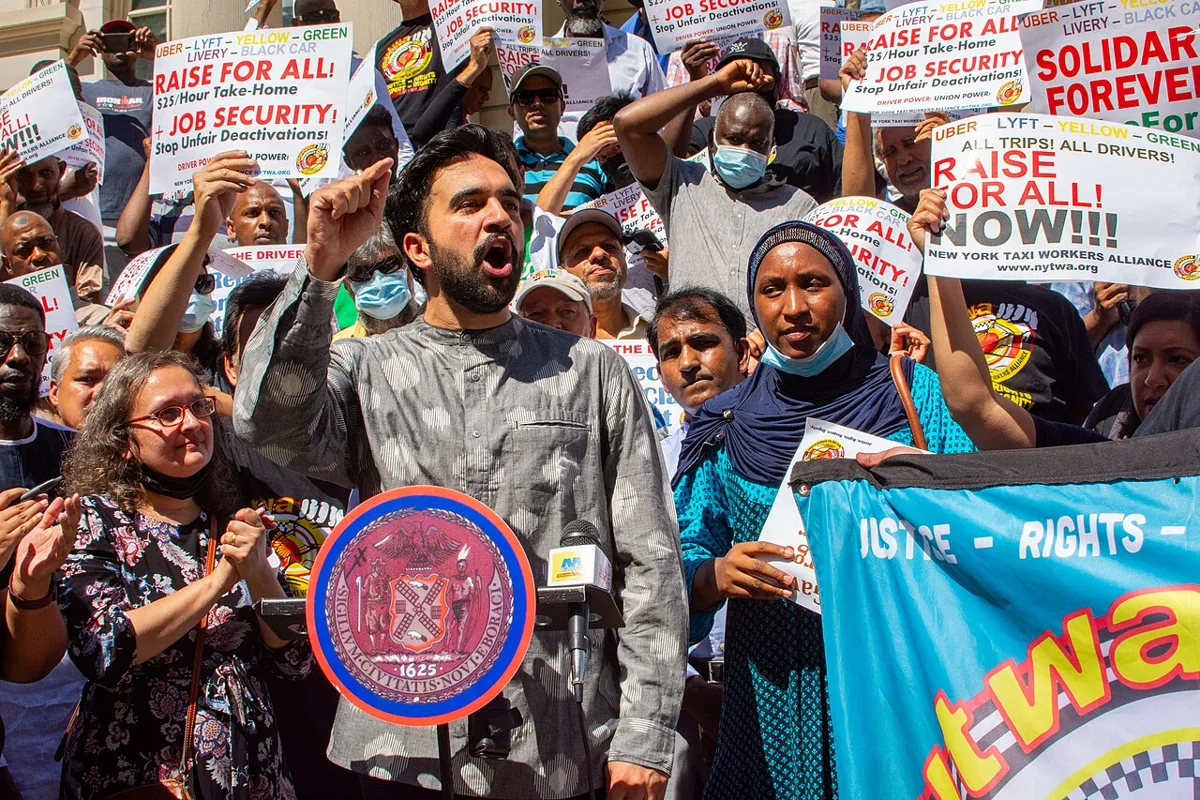
Forget the red-scare rhetoric your civics teacher recycled from the 1950s. A century-old political movement built on boring, functional, life-improving government is making a full comeback in American cities, and the politicians driving it are not here to debate abstract theory. They are here to build you affordable housing and make your bus run on time.
What the Hell Is Sewer Socialism, Anyway
The name sounds like a joke. It is not a joke. Sewer socialism got its name from the Milwaukee politicians of the early 1900s who believed, radically, that government should provide clean water, functional sewers, decent transit, and housing that working people could actually afford. That was the whole platform. Make the city work. Make it work for everyone.
It was not glamorous. There were no manifestos about seizing the means of production. Just a bunch of Wisconsin progressives insisting that public infrastructure was a public good and that local government was the right vehicle to deliver it. They ran Milwaukee for decades. The city was, by most accounts, extremely well-run.
According to Axios, the movement is now the ideological cornerstone for a new wave of Democratic socialist candidates in America's biggest cities. And they are not running as fringe protest candidates. They are running to win.
The Three Names You Should Know
Zohran Mamdani in New York, Katie Wilson in Seattle, and Janeese Lewis George running for mayor in Washington D.C. are the faces Axios points to as the leading edge of this revival. Three different cities, three different political contexts, one shared argument: government at the local level can and should do more, and the model for doing it already exists in the historical record.
Mamdani has become one of the most visible democratic socialists in the country, running a campaign in New York that has focused heavily on housing affordability and public transit. Wilson in Seattle has built her political identity around similar issues in a city that has been grinding through a housing crisis for years. Lewis George in D.C. is making the case that the same framework fits a majority-Black city where affordable housing has become a survival issue.
These are not identical campaigns. The cities have different demographics, different budget situations, different political cultures. But the through line is consistent: expand public programs, treat housing and childcare and transit as infrastructure rather than commodities, and stop pretending the market will solve problems the market created.
Why This Framing Actually Matters
The word socialism still makes certain people in this country lose their entire minds. That's a known variable. The sewer socialism framing is a deliberate attempt to cut through that reaction by pointing at something concrete. Not theory. Not ideology. Pipes. Buses. Childcare slots. Things that exist in physical space and either work or they don't.
It is a smart political maneuver, and it is grounded in real history. The Milwaukee sewer socialists governed for long stretches of the 20th century and produced one of the least corrupt, most efficiently administered cities in the country. Political scientists have written about it. It is not disputed. The results were good.
What the modern version of this movement is betting on is that Americans who flinch at the word socialism do not actually flinch at the underlying policies. Polling on affordable housing, public transit, and subsidized childcare consistently shows broad popular support. The argument is that calling it what it is, historically and honestly, is less of a political liability than the opposition assumes.
The Timing Is Not an Accident
This is happening in 2026 for a reason. Federal housing policy has been either absent or actively destructive for years. Transit systems in major cities are chronically underfunded. Childcare costs have become so absurd in major metros that they function as a second mortgage for families with young children. The market has had every opportunity to address these problems and has, instead, made them worse.
Local government is one of the last functioning levers available when the federal government is busy dismantling its own agencies and the state governments are occupied with passing laws about bathrooms. Cities can build things. Cities can fund programs. Cities have the taxing authority and, in some cases, the political will. Sewer socialism is a bet that this is the moment to use it.
Axios frames this as a broad movement across multiple cities simultaneously, which is the part worth paying attention to. This is not one candidate in one city running an unusual race. This is a coordinated ideological revival happening in New York, Seattle, and Washington D.C. at the same time.
The Dingo Take
Here is the thing about sewer socialism that makes its opponents so uncomfortable: it has a track record. This is not an untested ideology being floated by people who have never governed anything. It was practiced, for decades, in a major American city, and the city worked well. That's the whole argument. It's sitting right there in the historical record, daring anyone to refute it on the merits instead of the vibes.
The predictable response from the right will be to wave the word socialism around and hope that's enough. It has been enough before. Whether it's enough in 2026, in cities where people are paying three thousand dollars a month for a one-bedroom apartment and watching their transit systems crumble, is a genuinely open question. The material conditions have changed. The audience for this message is larger than it used to be.
Mamdani, Wilson, and Lewis George are not promising utopia. They are promising that your bus will show up and your kid will have somewhere to go during the day. That is a remarkably modest ask. The fact that it reads as radical in the current political environment tells you everything you need to know about how badly normal governance has failed.





Comments