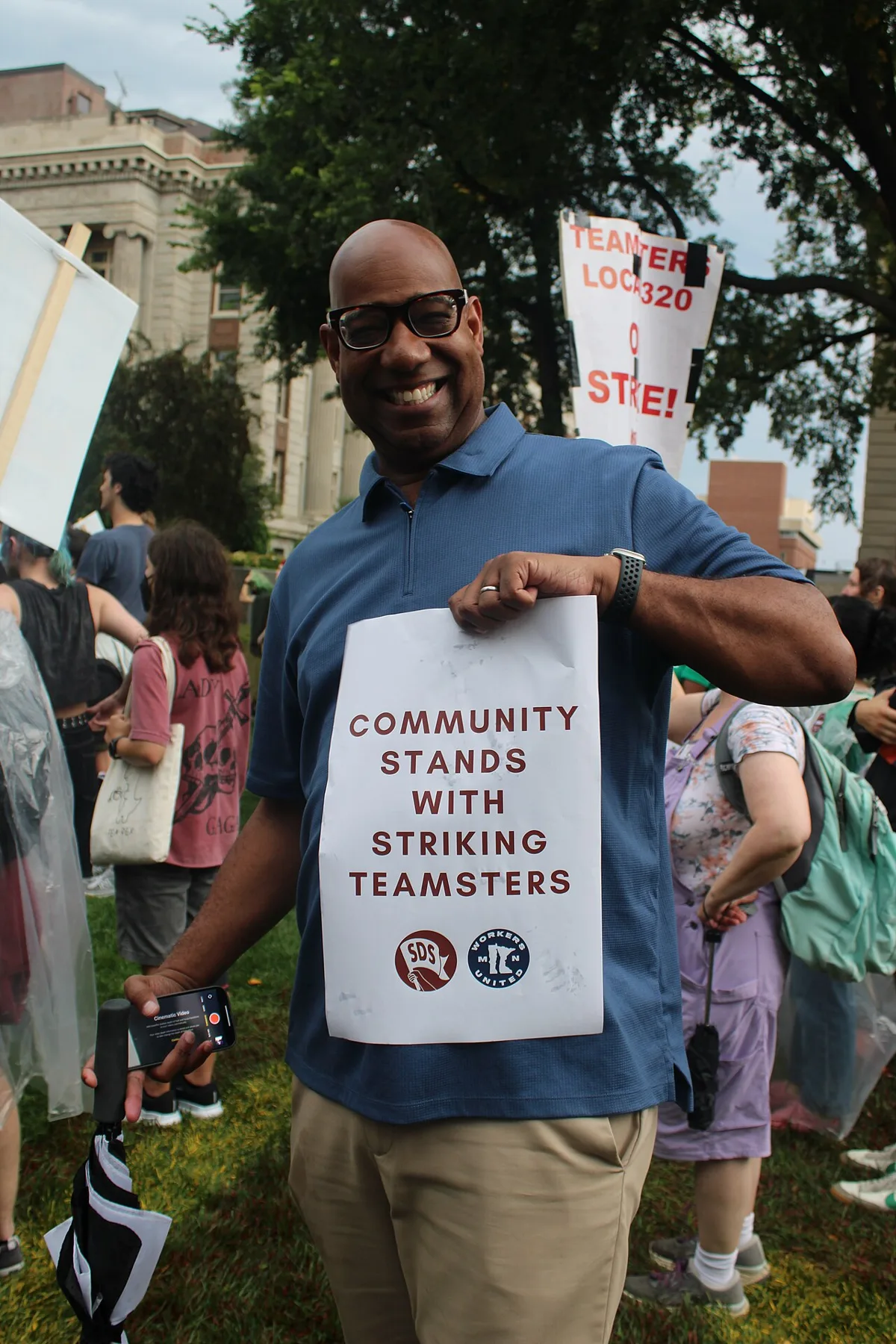
For thirty-seven years, federal prosecutors have kept a watchdog on the Teamsters union because of its well-documented history of mob infiltration. That watchdog is now being put down, courtesy of Donald Trump's Justice Department. Make of that what you will.
What 37 Years of Federal Babysitting Looked Like
The International Brotherhood of Teamsters has been under federal monitorship since 1989, when the union signed a consent decree explicitly designed to drive organized crime out of its ranks. That was not a voluntary character-building exercise. It was the result of the government concluding, with considerable evidence, that the mob had made itself very comfortable inside one of the most powerful labor unions in America.
According to Axios, that arrangement is now poised to end after Trump's prosecutors agreed to cease the federal oversight entirely. The consent decree, which has survived six presidents across both parties, is being wound down under the administration of a man who himself has a fairly well-documented history of doing business with people your grandmother would have crossed the street to avoid.
O'Brien Has Been Cozying Up to Trump for a While Now
This did not come out of nowhere. Teamsters president Sean O'Brien made a splash at the 2024 Republican National Convention, becoming the first Teamsters leader in decades to address a GOP gathering. At the time it looked like a calculated hedge. In retrospect, it looks like it paid off handsomely.
O'Brien has been open about how much the federal oversight chafed. Axios reports he joked on his podcast in early 2025 that 'being the general president of the Teamsters, if I even think it, they want to indict me over it,' referring to the lingering scrutiny attached to the consent decree. Ha ha. Very funny. And now, conveniently, that problem is going away.
The Consent Decree Was Not a Joke
To understand why ending this matters, you have to understand what the 1989 consent decree was actually responding to. The Teamsters under presidents like Dave Beck and Jimmy Hoffa were not merely adjacent to organized crime. They were, by the government's own findings, deeply intertwined with it. Pension funds were looted. Leadership positions were effectively controlled by mob figures. Hoffa disappeared in 1975 and has never been found, which is the kind of thing that tends to stick in the institutional memory.
The federal oversight wasn't bureaucratic red tape. It was a structural response to structural corruption. Thirty-seven years is a long time, and the current Teamsters leadership has by all accounts done serious work to professionalize the union. But 'we've been good for a while now' and 'the government should unilaterally drop all accountability mechanisms during a period of weakened institutional oversight' are two very different arguments, and only one of them is being made here.
The Timing Is Hard to Ignore
The Trump Justice Department, which has demonstrated a consistent interest in rewarding friends and punishing enemies through the machinery of federal law enforcement, is now doing a significant favor for a union president who broke with organized labor tradition to embrace Trump publicly and enthusiastically.
To be clear: we are not saying there was an explicit transaction here. We are saying that when a pattern keeps repeating itself, where loyalty to Trump is followed by favorable government action, a functioning press is obligated to point at the pattern and ask questions out loud. The Axios report does not establish a quid pro quo. But the optics of this administration killing a 37-year mob-oversight program for the union whose president spoke at Trump's convention are not subtle.
What Happens Now
The practical consequences depend entirely on whether the reforms of the last several decades are genuinely embedded in Teamsters culture or whether they were largely the product of external pressure. Federal monitorship is a blunt instrument. But blunt instruments sometimes do real work.
With over 1.3 million members, the Teamsters remain one of the most consequential labor organizations in the country. Truck drivers, warehouse workers, UPS employees, and a significant chunk of the American working class are Teamsters members. Whatever happens inside that union's power structure does not stay inside that union. It ripples outward into wages, working conditions, and the basic economic dignity of people who did not attend any Republican National Convention.
The Dingo Take
Here is the thing about federal consent decrees: they are not issued because the government woke up one morning feeling officious. They are issued because something went badly, demonstrably wrong, and the ordinary mechanisms of accountability failed. The Teamsters got one because the mob genuinely ran significant parts of the union for decades. Ending it is not inherently wrong. The timing, the context, and the administration doing it are what make this worth watching closely.
The Trump DOJ has, in a remarkably short period of time, demonstrated that it views the legal and regulatory apparatus of the federal government primarily as a tool of political reward and punishment. That is not a hot take. It is a pattern documented by reporters across multiple outlets, visible in real time. When that same DOJ decides to hand a significant gift to the union president who showed up and cheered at the Republican convention, the appropriate response is not to assume the best.
Sean O'Brien wanted the oversight gone. He played his cards, he got close to the right people, and now it appears he is getting what he wanted. Whether the Teamsters have genuinely shed their history or whether they just shed the people watching them is a question that, by design, will now be considerably harder to answer.



Comments