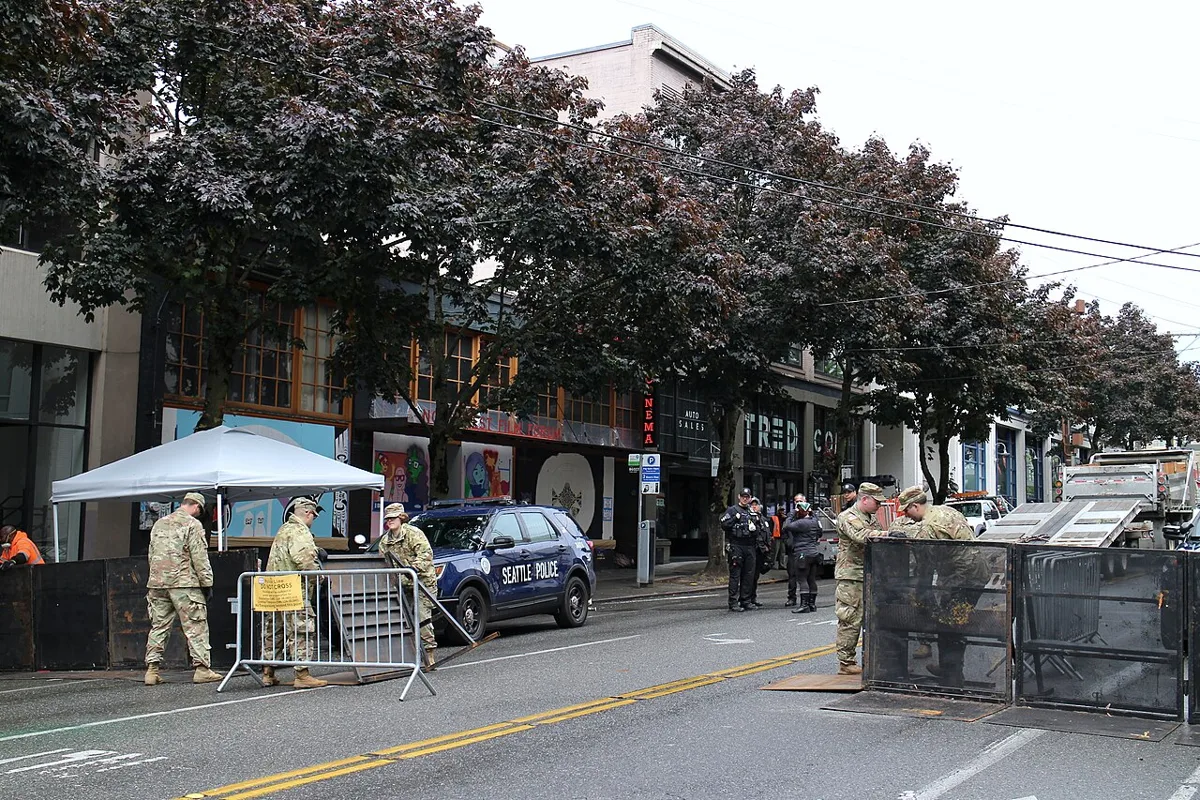
A sixteen-year-old boy traveled a thousand miles to stand up for Black lives in the summer of 2020. He was shot and killed inside the protest zone that was supposed to represent a safer, more just world. Six years later, nobody has been charged with anything, and the version of events that got repeated for years may not be the real one.
Who Was Antonio Mays Jr.?
Antonio Mays Jr. was sixteen years old when he made the trip to Seattle in June 2020. The George Floyd protests were reshaping the country. The Capitol Hill Occupied Protest, or CHOP, had become the symbolic center of that energy on the West Coast, a police-free zone carved out of Seattle's Capitol Hill neighborhood where activists were running things themselves.
Antonio had traveled roughly a thousand miles to be part of it. He arrived during one of the most electrically charged political moments in recent American history, a teenager who believed enough in something to show up for it in person. Less than a week after he got there, he was dead.
He was shot and killed inside CHOP. The case has never been solved. No charges, no convictions, no real public accounting of what actually happened that night.
The Story That Went Unchallenged for Years
When Antonio was killed, the immediate narrative from people inside CHOP was self-defense. Protesters claimed the shooting was justified. And for years, according to NPR's new investigative podcast "We Keep Us Safe," produced with KUOW and The Seattle Times, that version of events went essentially unchallenged.
That's the part that should make you stop and think for a second. A sixteen-year-old is dead. The people present at the scene immediately offered a convenient explanation. And then, somehow, nobody in a position of authority pushed hard enough to find out if that explanation held up.
Reporters Sydney Brownstone and Will James spent months tracking down key figures and eyewitnesses from the night of the shooting. According to NPR, they also surfaced crucial evidence that has never been made public before. Whatever happened that night in CHOP, the public has been getting an incomplete picture of it.
CHOP Was Always More Complicated Than the Headlines
The Capitol Hill Occupied Protest became a political football almost immediately. Conservative media used it as a cudgel, painting it as anarchist chaos. Liberal media largely celebrated it as a bold experiment in community self-governance. Both framings flattened what was actually a complicated, volatile situation on the ground.
The Seattle Times reported at the time that CHOP's existence was genuinely uneasy, a protest camp trying to hold together an improvised community structure while the whole country was watching. When Antonio Mays Jr. was shot and killed there on June 29, 2020, it became the flashpoint that led to the camp's shutdown. That much is established history.
What's less established is the full truth of what led to his death and who is responsible for it. The Seattle Times revisited the case in March 2025, five years on, with a piece headlined "Five years after CHOP in Seattle, teen's death is without answers." The headline says everything. Five years of nothing. Now it's six.
Why an Eight-Part Podcast in 2026?
NPR, KUOW, and The Seattle Times launched "We Keep Us Safe" this month as an eight-part investigative series. The name is a direct reference to the ethos of CHOP itself, the idea that the community could protect its own without police. The irony writes itself: inside that experiment, a teenager was shot dead, and the people who were supposed to keep everyone safe either couldn't or didn't.
The series is doing the work that law enforcement and prosecutors apparently haven't. Reporters tracked down eyewitnesses. They found evidence that hasn't been publicly released. They're interviewing key figures from the night of the shooting. This is investigative journalism filling a vacuum that the justice system left wide open.
That's not a small thing. A sixteen-year-old's family has been waiting six years for answers. Whatever you think about CHOP, whatever you thought about the 2020 protests, a child is dead and no one has been held accountable. That's not a political talking point. That's a failure.
The Politics Around This Story Are a Minefield, and That's Part of Why It Took This Long
Here's the uncomfortable truth: the political environment around CHOP made honest accountability almost impossible in real time. The right wanted CHOP to be a story of left-wing lawlessness. The left wanted CHOP to be a story of righteous resistance. Antonio Mays Jr. didn't fit neatly into either story, so both sides found reasons to move on.
Trump and his allies used CHOP endlessly as a symbol of Democratic failure, of cities surrendering to chaos. That framing made it harder for anyone on the left to critically examine what actually went wrong inside the zone without feeling like they were handing ammunition to bad-faith actors. So the critical examination got quietly shelved.
And a Black teenager who traveled a thousand miles to march for racial justice ended up as a footnote. His death was used as a prop in a culture war argument, and then forgotten by basically everyone except the people who loved him. That's the actual scandal here, sitting underneath all the noise.
The Dingo Take
Let's be completely clear about what we're looking at. The protest movement of 2020 was largely about demanding accountability when Black people are killed and the systems around them fail to respond. Antonio Mays Jr. was a Black sixteen-year-old who showed up to that movement and got killed, and then those same systems failed to produce any accountability whatsoever. The irony isn't subtle. It's brutal.
The fact that it took six years and an eight-part investigative podcast from NPR, KUOW, and The Seattle Times to seriously surface new evidence in this case is an indictment of everyone who touched it. Law enforcement, prosecutors, the political ecosystem that made honest scrutiny feel too radioactive to attempt. Nobody comes out of this looking good, including the people inside CHOP who apparently let a self-serving narrative about that night calcify into the official story without anyone pushing back hard enough.
Antonio Mays Jr. was sixteen. He wrote letters to his dad. He believed enough in something to travel a thousand miles for it. He deserves better than being the unsolved murder at the end of a culture war argument. If the "We Keep Us Safe" series finally gets someone charged with his killing, it will be because journalists did what prosecutors and police didn't bother to finish. And that should make everyone angry, regardless of where they stood on CHOP.



Comments