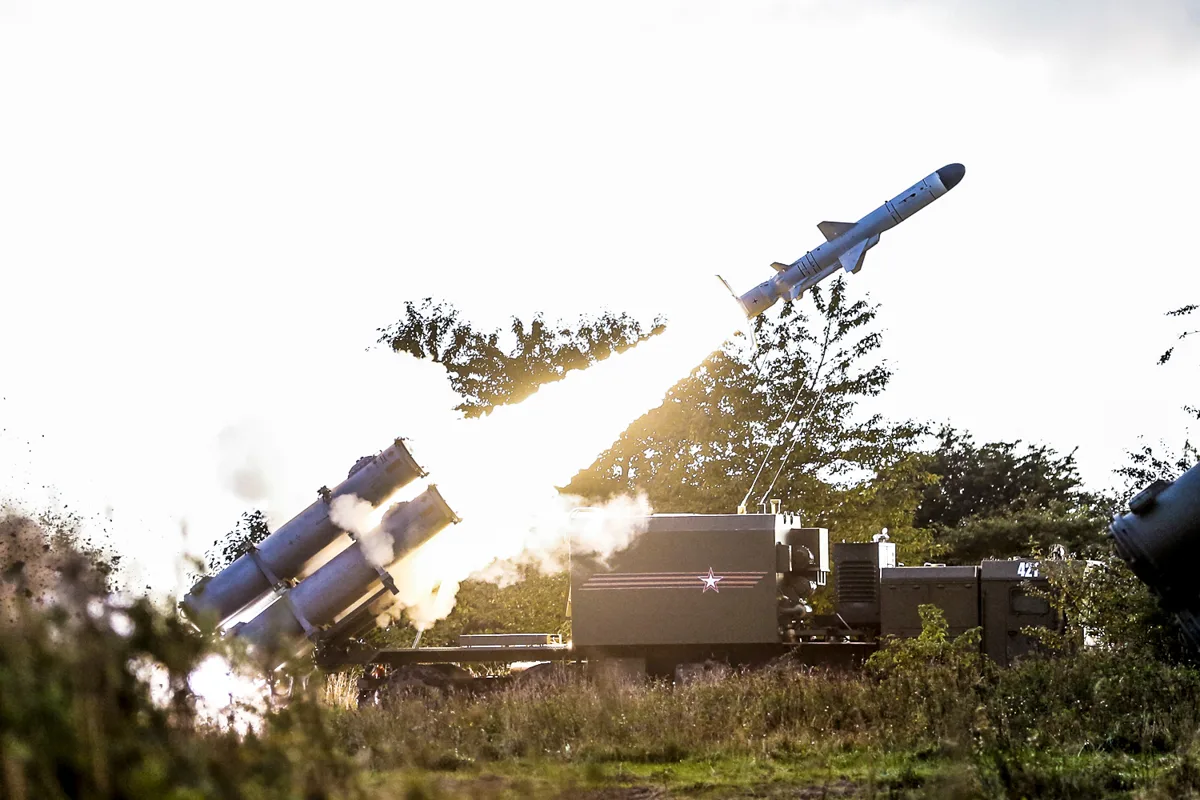
Russia tested a nuclear-powered cruise missile last October that, according to a new MIT analysis, works by pumping air directly through its nuclear reactor core and venting radiation out the back as it flies. So yes, it's a working nuclear-powered aircraft, a genuine first in human history. It also apparently irradiates everything and everyone beneath it like a slow-moving dirty bomb with wings.
The Test Nobody Talked About
On October 21st of last year, a missile launched from a Russian island above the Arctic Circle and flew in loops for hours over frozen, empty terrain. Russia and Western sources both confirmed, according to NPR, that the weapon was the Burevestnik, called 'Skyfall' by NATO, and that it was powered by a nuclear reactor. Beyond that, details were scarce.
Now MIT researchers Jake Hecla and R. Scott Kemp have published an analysis filling in what Russia wasn't volunteering. If their modeling is correct, this was the first time in history that a nuclear-powered aircraft actually flew under nuclear power. That is, depending on your disposition, either a staggering engineering achievement or the most terrifying sentence you've read this week. Possibly both.
How It Works, and Why That's a Problem
Here's where the physics gets genuinely alarming. Hecla told NPR he concluded the missile almost certainly uses what's called a direct-cycle air-breathing nuclear propulsion system, most likely driving a turbojet. In plain language: air from the atmosphere gets forced directly through the nuclear fuel in the reactor core, heats up from the nuclear reactions, and blasts out the back as thrust.
There is no containment. No closed loop. The air that moves through the radioactive core is the same air that gets expelled as exhaust. That exhaust goes into the atmosphere. Over whatever is below the missile. Which, yes, could include people.
Hecla's modeling shows the reactor design puts anyone living or working near the test site at 'enormous risk, potentially.' His words. A nuclear engineer's 'enormous risk, potentially' is not a phrase you want to brush past. These are not people given to casual hyperbole about radiation exposure.
A Dream From the Cold War Nightmare Factory
The idea of nuclear-powered aircraft isn't new. Both the U.S. and the Soviet Union chased it seriously in the 1950s and 60s. NPR reports that in 1955, the U.S. Air Force installed a small nuclear reactor inside a Convair B-36 strategic bomber just to test whether it would fry the crew. The reactor was never connected to the engines. The Soviets ran similar experiments on a modified Tupolev TU-95 bomber in 1961. Both sides eventually dropped it because, among other reasons, safety concerns made the whole enterprise look insane even by Cold War standards.
The appeal was obvious enough. A nuclear-powered cruise missile has essentially unlimited range. It could loiter near a target for days awaiting a launch order, or approach from an unpredictable direction that makes interception far harder. The U.S. pursued exactly that idea under the name Project Pluto in the late 50s and early 60s, ultimately ground-testing a reactor in Nevada that produced 513 megawatts of thrust. They never flew it. The Soviets, apparently, finally did.
The Engineering Detective Work
Hecla didn't have classified intelligence. He had videos. Russian state media had posted footage of the Burevestnik being assembled in a factory, and Hecla spent hours measuring objects of known size in the background, fire extinguishers, utility desks, to build a three-dimensional model of the missile, NPR reports.
From those dimensions, he determined Burevestnik is larger than the biggest Russian cruise missiles, though not enormous. His aerodynamic modeling found it flies at around Mach .75, roughly 575 miles per hour, about the speed of an Airbus A320. Knowing the approximate size and required thrust, he could then model what kind of reactor would actually make it work. He also ruled out the obvious guess. Many assumed Russia had revived Project Pluto's ramjet design, but Hecla dismissed that. A nuclear ramjet requires supersonic speeds to function efficiently. The Burevestnik is visibly, obviously a subsonic system. 'You can see very obviously that it is a subsonic system, and ramjets are not very efficient at subsonic speeds,' he told NPR. So Russia built something different.
What This Actually Means
Hecla told NPR that while this kind of system is technically possible, it is 'wildly expensive and very dangerous.' The danger isn't only to the people on the ground beneath the missile's flight path, though that's obviously a significant part of it. It's also the fact that this weapon represents a genuine escalation in what the 21st century arms race is willing to contemplate.
Cold War weapons programs were stopped not just by politics or budget but by the sheer awfulness of what they involved. The U.S. didn't fly Project Pluto because even American military planners in the 1960s, men who thought deeply and professionally about nuclear war, looked at a radiation-spewing supersonic missile that would irradiate everything beneath it and said that's a bit much. Russia just flew the thing anyway. Over the Arctic, sure, but flew it.
The Dingo Take
Let's be precise about what happened here. Russia didn't just test a new missile. According to MIT researchers, Russia flew a nuclear reactor through the atmosphere and vented its exhaust, carrying radiation from an active nuclear core, into the air above the planet's surface. The arms control framework that was supposed to prevent exactly this kind of weapons development has been gutted over the past decade, with the U.S. and Russia both walking away from treaties that took generations to negotiate. We are now in the era where someone actually builds the weapons the Cold War had the sense not to fly.
The Trump administration's response to any of this, predictably, has been to weaken the international institutions and inspection regimes that might give us some visibility into what Russia is actually building and testing. Meanwhile, the people who live near Russian Arctic test sites are apparently absorbing radiation from a weapons program they have no knowledge of and no say in. 'Enormous risk, potentially,' per MIT. That's the scientific literature's way of saying these people are being poisoned.
Skyfall is a hell of a NATO codename for a weapon that functions by raining radioactive exhaust on the territory below it. Whoever named it either didn't know or knew exactly. Russia has now demonstrated that a nuclear-powered cruise missile can fly. The question is not whether the arms race just got more dangerous. It did. The question is whether anyone in a position to do something about it is paying attention, or whether they're too busy trying to figure out what to rename the next federal building.




Comments