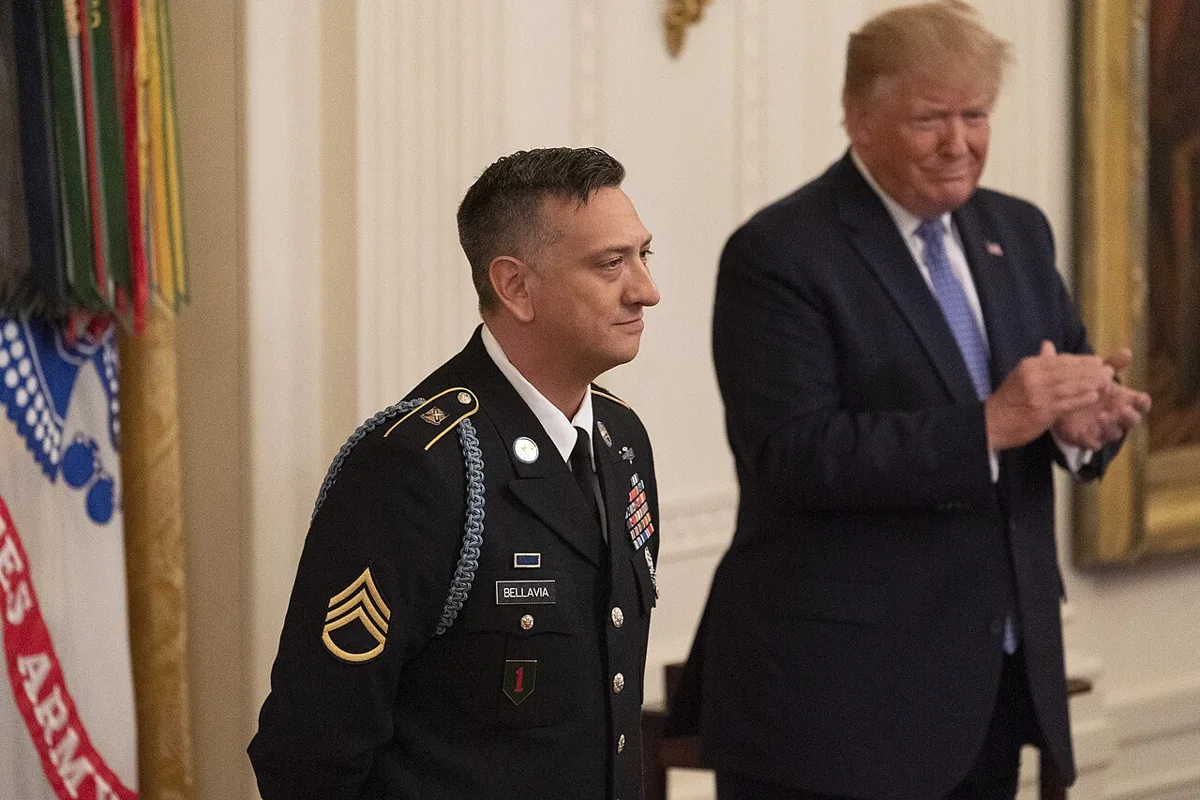
A man dangled alone under a bridge hauling 500 pounds of explosives while enemy fire rained down on him. Another took 17 pieces of shrapnel and refused to board a rescue helicopter until every one of his wounded men was safe. A third killed two Taliban fighters in an alleyway with his bare hands to drag a dying sergeant back from the edge. On Thursday, finally, all three got the recognition they earned.
Better Late Than Never, But Mostly Just Late
President Trump held a Medal of Honor ceremony at the White House on June 18, awarding the nation's highest military decoration to three men: retired Marine Corps Maj. James Capers Jr., retired Army Maj. Nicholas Dockery, and Marine Col. John W. Ripley, who died in 2008. According to CBS News, Capers is 88 years old. Ripley has been dead for eighteen years. The paperwork, apparently, takes a while.
To be clear, Medal of Honor delays are not a Trump-specific invention. The bureaucratic backlog on these awards is a bipartisan disgrace that has dragged on for decades across multiple administrations. But when you are sitting in a ceremony watching an 88-year-old man receive recognition for something he did in 1967, the word 'overdue' starts to feel like a profound understatement.
James Capers: The Man Who Refused to Leave
Start with Capers, because the story is almost too much to process. March and April 1967. A four-day reconnaissance patrol in Vietnam. On the final day, CBS News reports, his battalion was ambushed by a claymore mine and came under heavy enemy fire. Capers was shot multiple times. Shrapnel hit him in seventeen separate places.
Every single one of his fellow Marines went down wounded. Capers, running on a leg that by any medical logic should not have been functional, took a shot of morphine and seized command of the firefight. He got his team to the extraction point. Then, when the rescue helicopter was already groaning under the weight of everyone aboard, he tried to get off to make room. His own team physically restrained him and refused to let him deplane. When the toughest thing about your act of heroism is that your guys won't let you sacrifice yourself again, you have cleared the bar.
John Ripley: Five Trips Under a Bridge, Alone, Under Fire
John Ripley's story is the stuff of war movies that would get criticized for being unrealistic. April 1972. The Easter Offensive, the largest North Vietnamese ground invasion since the war began, is pushing south toward a critical bridge at Dong Ha. If the bridge falls, the assault rolls through. According to CBS News, Ripley was the only man present with the demolition experience to stop it.
What he did was move 500 pounds of explosives under the bridge himself. Hand over hand. Dangling over rushing water. Completely exposed to enemy fire. And he did not make one trip. He made five. When the charges blew, the bridge collapsed into the river and the advance stopped cold. Ripley had already received the Navy Cross for this. His family came to the White House on Thursday to accept the Medal of Honor on behalf of a man who cannot.
Nicholas Dockery: Four Hours, Zero Losses, One Resurrected Sergeant
Dockery's action comes from a different war but the same basic template of a person doing things that human beings are not supposed to be able to do. October 2012, Kapisa Province, Afghanistan. His platoon is ambushed by dozens of Taliban fighters armed with machine guns and rocket-propelled grenades. CBS News reports that Dockery ran across open ground under fire to rally his scattered team and spent the next four hours fighting in urban terrain.
Then one of his men went missing. Dockery searched the compound and found the sergeant being dragged through an alleyway by two Taliban fighters. He killed them both and got the sergeant out. When he found the sergeant was not breathing, Dockery performed CPR and brought him back. He then climbed onto an exposed rooftop to signal American gunships with smoke grenades, directing airstrikes on enemy positions. He was the last man off the battlefield. No one on his team died that day.
Who Showed Up and What It Tells You
The guest list at Thursday's ceremony, per CBS News, included Defense Secretary Pete Hegseth, U.N. Ambassador Mike Waltz, and Sen. Lindsey Graham of South Carolina. Make of that what you will. These are men who have, in recent months, been variously associated with Signal chat scandals, chaotic Pentagon management, and the slow-motion dismantling of the institutions these veterans served.
None of that is the veterans' fault. None of it diminishes what Capers, Ripley, and Dockery did. But there is something uncomfortable about a ceremony where genuine, documented, undeniable heroism shares a room with the architects of some of the most embarrassing chapters in recent American military administration. The men being honored deserved better than the backdrop.
The Dingo Take
Here is the uncomplicated part: these three men are heroes. That word gets thrown around so casually it has nearly lost its meaning, but read what Capers, Ripley, and Dockery actually did and the word snaps back into focus. These are not metaphorical heroes. These are men who absorbed bullets and shrapnel and enemy fire and kept moving toward the people who needed them. The Medal of Honor is the right call, full stop.
The complicated part is that Ripley is dead and Capers is 88, which means at least two of these three men spent the better part of their lives without this recognition. The military's process for awarding its highest honor has been a bureaucratic disaster for generations, and no single administration owns that failure. But the gap between what these men did and when the country got around to saying thank you is genuinely shameful, and it deserves to be said plainly rather than papered over with ceremony.
So yes, honor these men. Learn their names. Look up the details and sit with what they actually did under fire. Capers refusing to board the helicopter. Ripley making that fifth trip under the bridge. Dockery doing CPR in an Afghan compound while a war raged around him. Remember all of it. Just don't let the pageantry of the ceremony convince you that a government that takes fifty years to sign a piece of paper has figured out how to take care of the people who fight its wars.




Comments