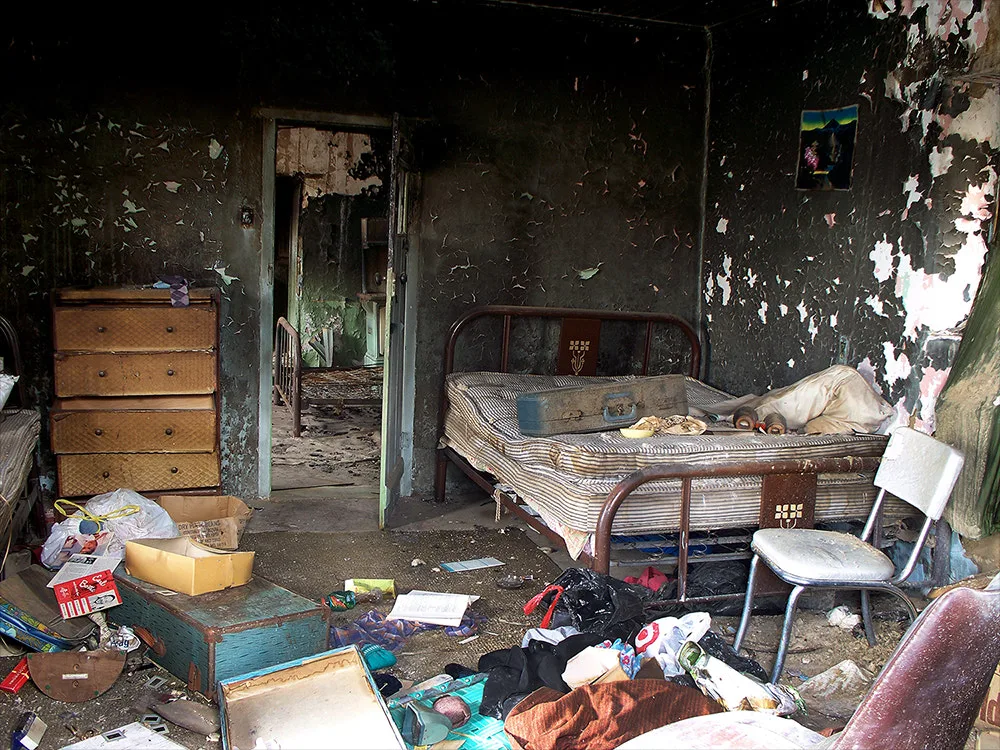
The most powerful man in the world has allegedly been grinding chip wrappers into the White House carpet and leaving his bedroom soaked in spilled drinks while residence staff quietly panic about mold. According to excerpts from a forthcoming book obtained by the Daily Mail, the private quarters of the 47th president of the United States have been described, in a word, as 'filthy.' This is not a satirical premise. This is the reporting.
What the Book Actually Says
The book is called Regime Change: Inside the Imperial Presidency of Donald Trump, written by Maggie Haberman of the New York Times and Jonathan Swan of Axios. These are not fringe bloggers or opposition researchers. They are two of the most sourced White House correspondents working today, with a combined decade of documented access to Trump and his inner circle. The Daily Mail obtained excerpts ahead of publication.
According to those excerpts, Trump has a nightly routine that involves staying up into the early hours watching cable news in bed, surrounded by snacks. Chips, specifically, get a lot of ink. The wrappers apparently end up on the floor. Drinks get knocked over. The carpet gets wet. Repeat. By morning, housekeeping staff are walking into what Haberman and Swan describe as the aftermath of something that looks considerably less dignified than the office its occupant holds.
The carpets in Trump's private quarters were left repeatedly damp, according to the book, to the point where residence workers began quietly raising concerns about mold and a persistent smell. To be clear: no formal health inspection is documented in the excerpts, and the White House has not confirmed any mold problem on the record. But the description of wet carpet patches appearing regularly in the bedroom of an 80-year-old president is, to put it gently, a lot.
The Staff Situation Is Exactly What You'd Expect
Here's the thing about working in the White House residence: you cannot exactly file a noise complaint. Former residence staffers from previous administrations have spoken in other contexts about the impossible power dynamic of being responsible for maintaining a historic building while the person destroying it is also your boss and the leader of the free world. The path of least resistance, almost always, is to clean up and say nothing.
Haberman and Swan relay a mood of quiet exasperation among the people tasked with keeping Trump's suite presentable. The number of staff assigned to his personal quarters is not specified in the excerpts, but the implication is clear enough: whatever the number was, the workload was not what anyone signed up for. Pick up the packaging. Dab at the stains. Do something about the carpet. Be back tomorrow night.
This is not a new phenomenon in Trumpworld. Former aides from his first term have talked for years about the fast food, the late nights, the television, the chaos. What Haberman and Swan are adding here is texture and specificity. The sourcing is unnamed aides and residence workers, as it tends to be with this kind of reporting. That matters, and we'll get to it.
The Building He's Living In Actually Matters
The White House residence is not a hotel suite, though apparently it is being treated like one. It is part family home, part secure government facility, and part quasi-museum. Portions of it are overseen by National Park Service conservators. Previous presidents and first ladies, across both parties, have talked about feeling almost superstitious about their responsibility to maintain it for whoever comes next. George W. Bush and Barack Obama both spoke publicly about the weight of that obligation.
Haberman and Swan frame Trump's private habits as a direct clash with that tradition. The image they construct is of a man who treats the most famous address in American democracy as a place where the rules that apply to everyone else simply do not apply to him. Which, to be fair, is entirely on-brand for an administration that has spent two terms operating on exactly that premise in every other area of governance.
Whether soaked carpets and chip wrappers rise to the level of a genuine institutional problem is debatable. What is not debatable is that a president who demands deference and ceremony in public and apparently cannot be bothered to use a bin in private presents a certain kind of image. The word 'filthy,' used by sources in the book, is doing a lot of work.
A Word on the Sourcing
Let's be honest about what this is and is not. The full text of Regime Change has not been published yet. The White House has not issued a formal on-the-record denial of the specific claims. Everything currently in circulation comes from excerpts obtained by the Daily Mail, attributed to unnamed aides and residence workers cited by Haberman and Swan.
Haberman and Swan have a strong track record. Haberman in particular has broken more documented scoops about Trump's private behavior than almost anyone in the business, and has the receipts to show for it. Swan's access reporting on Trump's second term has been consistently accurate. The sourcing model here, unnamed insiders, is the same one that produced verified reporting about Trump's first term that was later confirmed on the record.
That said, until the book is published and the White House or Trump's representatives address the specifics, this lives in the well-sourced-but-unconfirmed category. Supporters will call it fabricated. Critics will call it the hundredth data point in a coherent picture. Both reactions are entirely predictable, which does not make either of them wrong.
Why This Story Went Viral Instantly
The Daily Mail leaning hard into the 'filthy' angle is not an editorial accident. The most viral political stories in 2026 are rarely about executive orders or regulatory rollbacks. They are about the weird, human, slightly gross stuff that makes powerful people feel mortal. An octogenarian president eating chips in bed and leaving the wrappers on the floor while cable news blares at 2 a.m. is, whatever else it is, an extraordinarily vivid image.
It is also a story that travels across political lines in a way that policy stories rarely do. You do not need to have an opinion about tariffs or immigration to have a reaction to wet carpet and possible mold in the Lincoln Bedroom's vicinity. The image lands immediately, which is exactly why it landed so hard online within hours of the Daily Mail preview going up.
CelebEat, which surfaced the story, framed it accurately as a window into the day-to-day routines of a president who treats the White House as a personal space rather than a shared national institution. That framing is arguably the more important story than the chip wrappers themselves.
The Dingo Take
Two of the best-sourced journalists covering the Trump presidency spent significant time reporting on what happens in his bedroom after midnight, and what they apparently found is a 80-year-old man destroying the carpet of the people's house with spilled drinks and snack debris while the staff silently resents him and worries about mold. This is the presidency. This is the guy his supporters describe as a figure of strength and dominance. He cannot be bothered to pick up his chip wrappers.
There is a version of this story that is just funny. Genuinely, darkly funny. The memes write themselves, as the Daily Mail clearly understood when it led with 'filthy.' But there is another version of this story that is not funny at all, which is that the man making decisions about the lives of 330 million Americans apparently cannot maintain basic standards of personal hygiene in a home that belongs to the country, not to him. The people who clean up after him cannot say anything publicly. They just show up every morning and deal with it. That dynamic, the untouchable boss and the silent staff, is not a bedroom quirk. It is a governing philosophy.
Wait for the book. Read the full sourcing when it drops. But do not pretend the image being painted here is surprising. This is entirely consistent with eight years of documented reporting about how Donald Trump treats spaces, institutions, and people that he considers his to do with as he pleases. The carpet is just the most literal version of what we have been watching him do to everything else.





Comments