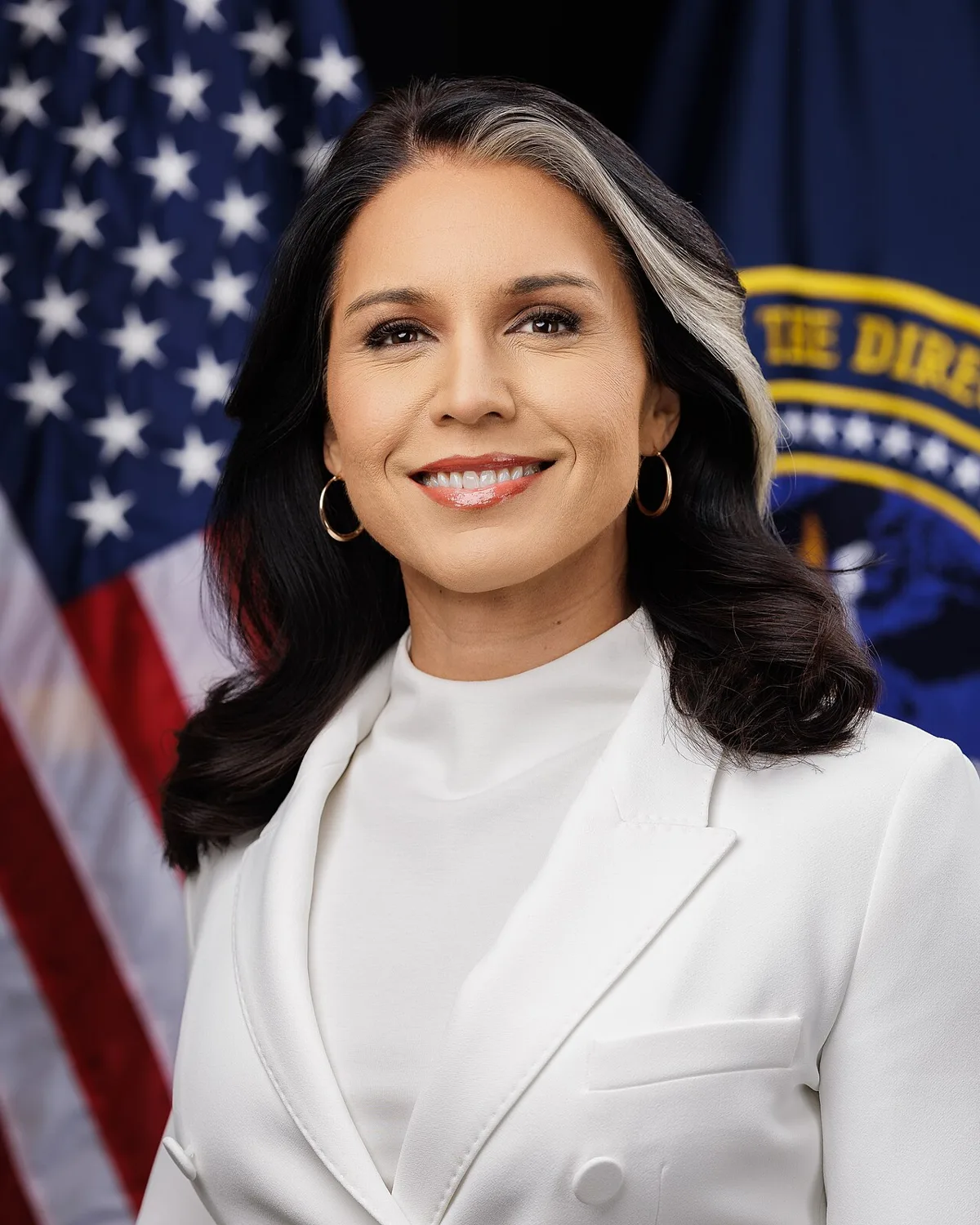
Tulsi Gabbard spent her last days as Director of National Intelligence doing what she always does: making everything about Anthony Fauci. While bipartisan alarm bells rang over who was about to replace her, Gabbard quietly declassified documents spotlighting Fauci's role in the government's COVID origins review and called it a legacy. The man walking into her old office, meanwhile, used to run a housing finance agency and has never worked a day in intelligence in his life.
The Goodbye Nobody Asked For
According to Fox News, Gabbard released a batch of documents Thursday night just before departing her post atop the Office of the Director of National Intelligence. Some of the material was already public. Some of it wasn't. All of it was very on-brand for a woman who has spent the better part of two years treating the intelligence community like her personal Fauci investigation bureau.
The documents she released include newly declassified exchanges showing that intelligence officials considered using Fauci as an outside reviewer for their COVID-19 origins assessment and then rejected the idea, specifically because they worried he would be seen as having a conflict of interest. Which, credit where it's due, is actually a reasonable institutional concern. Intelligence officials having a conversation about conflicts of interest is the most normal thing we've heard out of this administration in months.
The Fauci Debate Nobody Told You About
Here's where it gets interesting. Fox News reports that in a separate exchange, analysts working on the intelligence community's 90-day COVID origins study debated whether they should follow Fauci's recommendations about which scientists to interview. One official, identity redacted, emailed colleagues noting that Fauci had suggested reaching out to co-authors of a specific paper.
Another official pushed back, questioning whether it was appropriate for the intelligence community to take interview suggestions from a "policymaker" on a matter as sensitive as COVID origins, especially given, as they put it, "the various strong views on the subject and statements regarding their own conclusions." A fair point, honestly. A third official disagreed, arguing Fauci wasn't functioning as a policymaker in this context but as a subject-matter expert with, quote, "a wealth of knowledge."
So what we have here is a perfectly ordinary internal government debate about the appropriate role of an outside expert in a sensitive review process. Gabbard is presenting it as something explosive. Whether you find it explosive probably depends on how many hours a week you spend on COVID origin Twitter.
The Actual Crisis Nobody Is Talking About Enough
While Gabbard was busy staging her curtain call, the real story was developing one floor up. Fox News reports that Bill Pulte, a construction businessman who most recently ran the Federal Housing Finance Agency, is set to take the reins at ODNI as an interim director while Trump's permanent nominee sits in confirmation purgatory.
Read that again. A housing finance guy is now leading American intelligence. The man whose previous job involved overseeing Fannie Mae and Freddie Mac is now the person sitting atop the CIA, the NSA, and seventeen other agencies that collectively spend roughly $90 billion a year keeping track of the world's most dangerous people and programs.
Pulte's tenure at FHFA was not quiet. Fox News reports he faces allegations that he used his authority there to target Trump's political opponents, which is precisely the kind of track record that makes senators of both parties break into a cold sweat when they imagine him holding the keys to the entire U.S. intelligence apparatus.
A Rare Bipartisan Freakout
Senate Majority Leader John Thune put it plainly, telling Fox News: "We don't need a weaponized DNI, we need professionals there." That quote came from a Republican. In 2026. About a Trump appointee. Let that sentence sit for a second.
Thune isn't alone. Fox News reports that Senators Cornyn, Cassidy, Murkowski, Collins, and Tillis have all voiced opposition or serious concern about Pulte taking over ODNI. On the Democratic side, Senators Warren, Durbin, Whitehouse, Blumenthal, Peters, Schiff, Warner, and Wyden have raised the same alarms, citing both his lack of intelligence experience and the risk that he weaponizes the community against the president's enemies.
When Susan Collins and Adam Schiff are reading from the same page, something has gone genuinely sideways.
Why the Permanent Pick Is Stuck in Neutral
Trump did nominate someone with actual credentials for the job. Jay Clayton, a lawyer and former SEC chairman, is reportedly someone the Senate could actually confirm without a collective meltdown. Political observers, as Fox News notes, believe he'd face far less opposition than Pulte.
The problem is Trump is holding up Clayton's confirmation as a bargaining chip to pressure Congress into passing a voter identification bill. The Senate has so far refused to move the voter ID legislation. So Clayton sits. Pulte advances. And the most sensitive collection of intelligence operations in human history gets handed to a guy whose biggest prior challenge was keeping the mortgage market from imploding.
This is the governance equivalent of refusing to let the surgeon into the operating room until the hospital board agrees to repaint the lobby.
The Dingo Take
Look, Gabbard's document release isn't nothing. Debates inside the intelligence community about how much influence Fauci had over a COVID origins study are worth knowing about. Transparency from the DNI's office, in principle, is good. But let's be honest about what this actually was: a woman who has spent her entire tenure as DNI treating the job like a vehicle for her pre-existing ideological commitments used her final hours in office to fire off one more round in the same culture war she arrived with. It's less a closing legacy and more a farewell tour for an audience of one.
The story that actually matters is Pulte. The story that should have the entire political press corps working overtime is that the United States, in the middle of a complicated geopolitical moment involving Russia, China, Iran, and roughly a dozen other active crises, is handing its entire intelligence apparatus to an interim director whose main qualification appears to be loyalty and whose main controversy involves allegedly using a housing regulator to settle political scores. That's not a personnel decision. That's a five-alarm fire wearing a business suit.
And here's the kicker: this situation only exists because Trump decided his voter ID bill was more important than having a confirmed, qualified intelligence director. The confirmation of Jay Clayton, a man senators across both parties could apparently live with, is being held hostage to a legislative fight that has nothing to do with national security. The president is gambling with the coherence of American intelligence to squeeze Congress on voting laws. What could possibly go wrong.


Comments