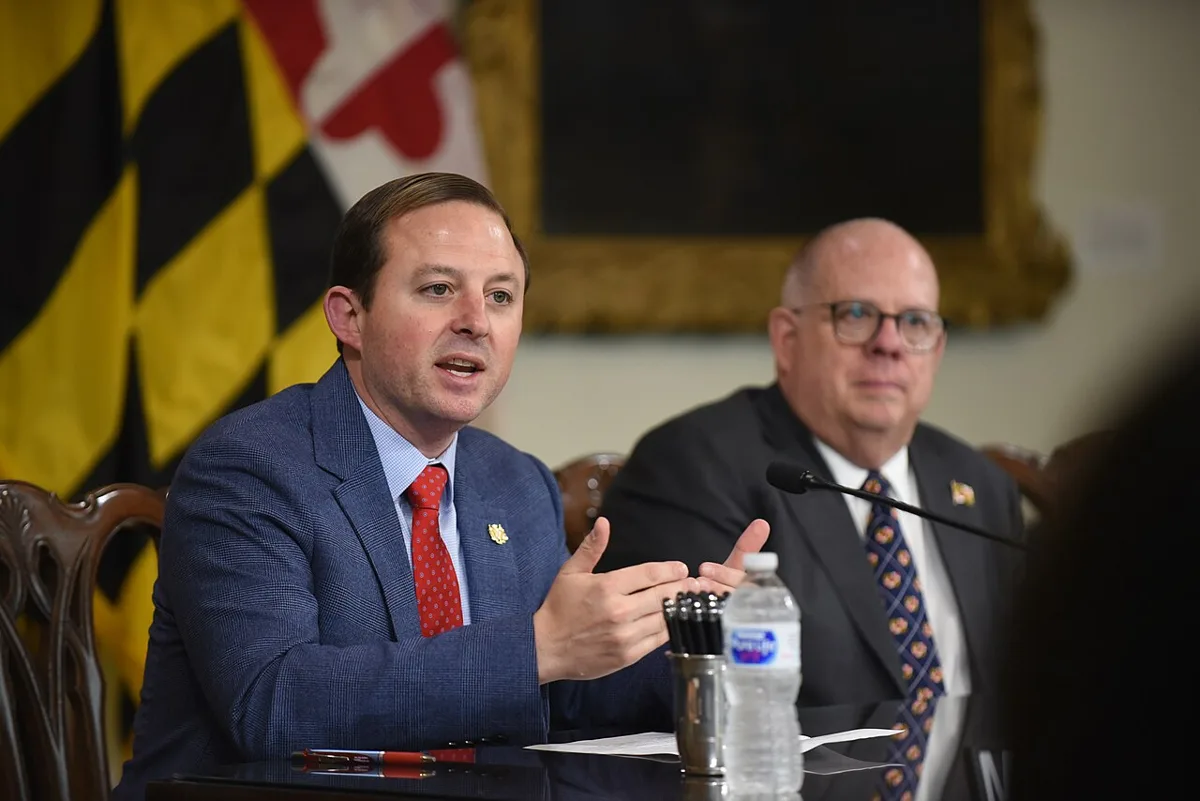
Bill Ferguson has run Maryland's state Senate for years without facing a serious primary challenge. Then he blocked his own party's redistricting push, told Hakeem Jeffries and Wes Moore to pound sand, and suddenly found himself staring down a guy in an Orioles hat who makes lemonade in the park and has a sailing Instagram. Democracy is wild.
A Very Baltimore Kind of Civil War
Ferguson is the president of the Maryland Senate, a 15-year incumbent, and one of the most powerful Democrats in Annapolis. He has never had his own campaign lawn signs before this cycle because he never needed them. According to NBC News, he used to just make signs with his name alongside the local delegates and call it a day.
This year he has signs. Bobby LaPin has signs. South Baltimore front stoops, normally dressed up with Orioles banners and spring flowers, have been turned into a proxy battle over what it means to be a Democrat in 2026. The primary is June 23. The vibes are extremely fraught.
The Block That Started Everything
Here is what actually happened. After Republicans went on a redistricting rampage nationally, Democratic leaders decided Maryland was a perfect place to strike back. The state's congressional delegation was already 7-1 Democratic. With new maps, they could make it 8-0. Governor Wes Moore wanted it. House Minority Leader Hakeem Jeffries wanted it. National Democrats wanted it badly.
Ferguson said no. He told NBC News he didn't think he had the votes in his chamber, and he cited a 2022 ruling by state Judge Lynne Battaglia that struck down the last time Maryland Democrats tried to draw an aggressively partisan map. Ferguson said the legal risk wasn't worth it. Moore apparently disagreed. Jeffries apparently disagreed. And LaPin, who had been building a following on Instagram through his sailing business and community activism, saw an opening and jumped in last November.
The argument Ferguson is making is a genuinely reasonable one. Courts have clawed back gerrymandered maps before, and blowing up the delegation structure only to have it thrown out would be a disaster. But "I was being careful" is a very hard message to sell when your base is furious and wants someone to throw a punch.
Bobby LaPin Would Like You to Know He Is Very Angry
LaPin is a community activist, Army veteran, and small business owner. He knocks doors in an army green Orioles cap. He holds events called "Lemonade for Good Change" in Patterson Park. One of his volunteers, 35-year-old Hadley Anthony, told NBC News she was out squeezing lemons in 95-degree heat because LaPin shows up to every protest, including small ones. That is, genuinely, a compelling organizing pitch.
"The country is on fire," LaPin told NBC News at a coffee shop in Federal Hill. "It is absolutely on fire. It is not okay what's happening outside, and to have politicians that aren't fighting tooth and nail, ten toes dug into the ground, face to face, and pushing back, that's a betrayal to people." Say what you want about the guy, but he does not struggle to find a quotable sentence.
The insurgent energy LaPin is channeling is real and it is not unique to Maryland. Anti-establishment primary challenges are lighting up both parties this cycle, NBC News notes. The difference here is that the establishment figure being challenged isn't some do-nothing centrist collecting a paycheck. Ferguson has a real legislative record. That makes the race genuinely interesting rather than just a vibe war.
What Ferguson Is Actually Running On
Ferguson is not rolling over. He called the primary challenge a "blessing in disguise" and told NBC News it forced him to think harder about communicating his record to voters. That is the kind of thing people say when they are rattled but trying to project calm.
His record is not nothing. He pointed specifically to education and healthcare reforms, and to a 2021 digital advertising tax he sponsored that NBC News reports is the first of its kind in the nation, pulling in hundreds of millions of dollars earmarked for education reform. That is a real thing he did. It does not make the redistricting fight go away, but it is not nothing.
Ferguson's line on the redistricting fight is this: "You don't fight fire with fire, you fight fire with water. You have to be smart, and you have to be tactical." It's a reasonable governing philosophy. It is also exactly the kind of thing that makes a volunteer squeezing lemons in 95-degree weather want to scream.
The Establishment Closes Ranks
Representative Sarah Elfreth, a Maryland Democrat who served six years alongside Ferguson in the state Senate, came out swinging for the incumbent in a way that was probably not designed to help him with persuadable voters. "You shouldn't have to ask where the bathrooms are when you get to the statehouse," she told NBC News, arguing that experience and institutional knowledge are real and undervalued assets.
She is not wrong. Knowing how a bill actually becomes a law, how to negotiate across 46 other Senate districts, how to count votes before you bring something to the floor: those things matter enormously. The problem is that "he knows where the bathrooms are" is now an actual sentence that appeared in reporting about this race. The messaging is not doing the thing they want it to do.
The Dingo Take
Here is the tension at the center of this race and, frankly, at the center of the entire Democratic Party right now. Ferguson's redistricting decision may have been the tactically correct call. Courts have torched Democratic maps before. He had a legitimate read on the legal risk. And his record in Annapolis, a first-in-the-nation digital ad tax that funds education reform, is the kind of thing that actually improves people's lives without generating a single viral moment. Competent governance is deeply unsexy and, occasionally, genuinely important.
But LaPin is not wrong either. The base is furious. Trump is dismantling federal institutions at speed. People are getting killed by federal agents in Minnesota. Vigils are happening. And when your own party's Senate president is the reason an 8-0 congressional delegation didn't materialize, "I had concerns about the legal viability" lands like a very articulate shrug. Voters who are watching the country come apart at the seams don't always want to hear about judicial risk assessments.
The real question this race is asking is not whether Ferguson is good at his job. He clearly is. The question is whether being good at your job is enough anymore, or whether the moment demands something louder, rawer, and angrier regardless of whether it actually works. Maryland Democrats vote on June 23. The answer is going to say a lot about where this party thinks it's going.





Comments