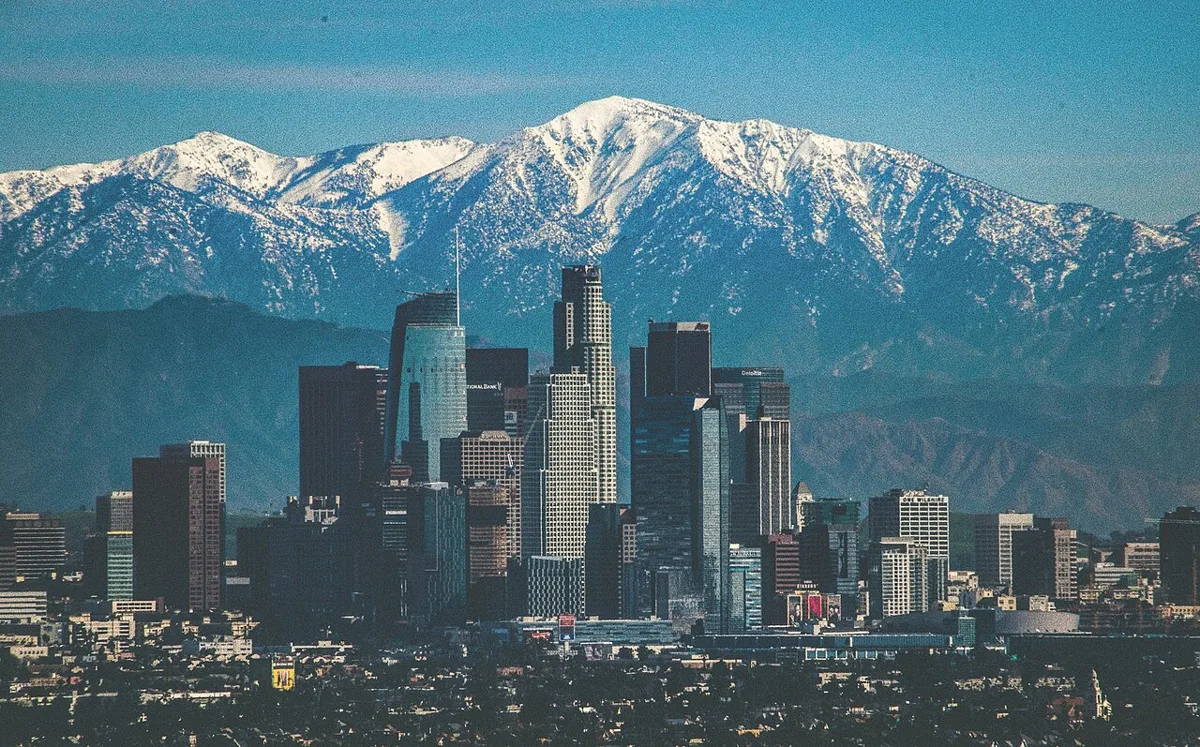
A 500,000-square-foot frozen food warehouse in the Boyle Heights neighborhood of Los Angeles has been burning for days, and the fire itself is almost the least of anyone's problems right now. Inside that smoldering giant steel cooler sits approximately 85 million pounds of frozen food that nobody can reach, slowly thawing in the dark, and officials are now racing to figure out how to remove it before it becomes a full-scale biohazard. No pressure.
A Giant Cooler, On Fire, Full of Rotting Chicken
Here's the thing about cold storage warehouses: they are specifically designed to keep things trapped inside them. Dense foam insulation packed between corrugated steel walls. Reinforced interior steel panels. An ammonia-based refrigeration system running throughout the whole structure. L.A. Fire Chief Jamie Moore described it at a Saturday morning briefing as, quote, "like a giant cooler" — and he meant that as an explanation of the problem, not a compliment.
According to CBS News, the facility clocks in at 500,000 square feet. That foam insulation that made it such a great freezer? It burns slowly once ignited and basically doesn't stop. Crews have had to rely on continuous helicopter water drops just to keep the exterior temperatures down, while aerial ladder pipes push thousands of gallons of water per minute onto the building. And all of that effort, days into this incident, has not put the fire out.
L.A. County Fire Chief Jon O'Brien was blunt about the timeline at the Saturday briefing. "Deep pockets of smoldering fire remain buried under structural debris and solar panels," he said, adding that extinguishing the fire could take days or even weeks. Weeks. In a major urban neighborhood.
So About Those Solar Panels
How did this start? According to Lineage, the company that operates the facility, a third-party contractor was testing solar panels on the roof when something went wrong. "We believe the fire began while testing was being conducted by contractors of the third-party owner of the solar array located on the facility's roof," the company said in a statement reported by CBS News.
So to recap: a contractor was doing rooftop solar work, something ignited, and now 85 million pounds of frozen food is slowly becoming a public health emergency inside a building that firefighters cannot safely enter. That's the chain of events. A solar installation job gone wrong has put an entire Los Angeles neighborhood in a slow-motion crisis that will take, at minimum, weeks to resolve.
Lineage did note in its statement that no team members at the facility were harmed, and that ammonia concentrations in the surrounding community have shown no measurable readings since the fire started. The company says it proactively pumped out the ammonia and transported it offsite. That's genuinely good news in a story that doesn't have much of it.
The Biohazard Clock Is Already Ticking
Here's where the story shifts from "industrial fire" to something more complicated. Chief Moore told reporters Saturday that the immediate hazmat concerns from the ammonia and burning materials have largely been addressed. The new problem is the food itself. 85 million pounds of product, sitting in a building with no functional refrigeration, steadily warming, and completely inaccessible to anyone.
"What we are trying to do now is to figure out the uninvolved area, how we can remove that food before it starts spoiling and becoming a biohazard concern," Moore said, per CBS News. Officials stressed that crews are not entering the building. Zero visibility, unstable conditions, smoldering debris. Nobody is walking in there. So the question of how, exactly, you physically remove 85 million pounds of rotting frozen food from a partially collapsed burning structure is one that apparently does not yet have a clean answer.
Mayor Karen Bass flagged the smoke specifically as her primary public health concern, noting that the chemicals used to keep food frozen at that scale make the smoke potentially toxic. She said she planned to speak with Governor Newsom on Saturday to move toward a joint emergency declaration. "This is about prevention. This is about protecting our public's health," Bass said.
The Neighborhood Is Breathing This
Boyle Heights is not a wealthy neighborhood. It is a dense, working-class, predominantly Latino community on the east side of Los Angeles, the kind of place that has historically absorbed more than its fair share of industrial pollution and environmental burden. Now it has an industrial inferno with a weeks-long burn timeline sitting in its backyard.
Officials have not issued evacuation orders or shelter-in-place mandates, though Chief Moore did advise anyone sensitive to air quality to stay indoors. Two shelter locations have opened for affected residents, including at Pecan Recreation Center and City Terrace Park, and Mayor Bass said the city will be distributing masks and air filters with help from the Red Cross. That's something. It is not nothing.
Residents, per CBS News reporting, are already asking questions about long-term environmental and health impacts on the community. Those are not paranoid questions. Those are completely reasonable questions that deserve specific, transparent answers, not just reassurances that the ammonia readings look okay today.
What Actually Happens Now
The immediate priorities, according to fire officials, are containing the remaining smoldering fire, isolating unaffected sections of the warehouse, and figuring out a plan to extract whatever food can still be removed before it becomes a secondary disaster. There are no injuries reported among firefighters or civilians so far, which is the one genuinely good headline in all of this.
Bass is pushing for an emergency declaration that would unlock state resources to deal with removing and disposing of the toxic materials safely. "The Governor will be prepared to respond to our State of Emergency with whatever resources we need," she said, framing it explicitly as preventing a major environmental disaster rather than responding to one. The key word there is "preventing." The window is open. The question is how fast everyone can move through it.
The Dingo Take
Let's be clear about what we're looking at here. A contractor doing rooftop solar work apparently triggered a chain reaction that has now put an entire Los Angeles neighborhood at risk of a prolonged biohazard situation involving nearly 43,000 tons of decomposing frozen food inside a building that cannot be safely entered. The fire could burn for weeks. The food is rotting right now. And the community breathing the smoke is Boyle Heights, a neighborhood that has been fighting for environmental justice for decades while the city treats industrial proximity as someone else's problem to solve.
The response from officials sounds competent and appropriately alarmed, which is something. Bass pushing for an emergency declaration, Lineage proactively removing the ammonia, fire chiefs being honest about the timeline rather than cheerleading their way through press conferences. That's the floor of acceptable behavior here, and it seems to be getting met. But the floor is not the ceiling.
What comes next matters enormously. How fast does the state actually mobilize? Who pays to remove and dispose of 85 million pounds of biohazardous material? What long-term air quality monitoring gets put in place for Boyle Heights residents, and for how long? These questions will tell you everything about whether the people in charge actually learned anything from years of watching Los Angeles communities get promised protection and handed a liability waiver instead.



Comments